Testing new fertilizer formulations directly on full-scale production lines carries massive operational risk. Formulators constantly face a gap between theoretical nutrient chemistry and physical granule performance. A formula that balances perfectly on a spreadsheet often fails on the production floor, resulting in poor moisture retention, weak crush strength, or uneven solubility. Unpredictable agglomeration behavior leads to wasted raw materials, severe equipment fouling, and delayed product launches. This unpredictability multiplies when dealing with the natural variability found in raw feedstocks, such as fluctuating moisture in manure, inconsistent raw powder bulk densities, or varying water quality.
Dedicated lab-scale equipment solves this problem by de-risking the scale-up process. Moving from a beaker to a continuous production line requires intermediate physical testing to understand how materials bind, roll, and cure. Selecting the right laboratory fertilizer granulator serves as a foundational step for predictable commercialization. It allows engineers to isolate variables, optimize binder ratios, and establish baseline parameters without disrupting commercial output.
Key Takeaways
Scale-Up Fidelity is Paramount: The primary value of lab-scale testing is generating empirical data (binder ratios, retention time) that accurately translates to pilot and production environments.
End-to-End Process Development: Successful granulation requires optimizing pre-granulation steps—specifically the accurate proportioning and mixing of powdered inputs—alongside the agglomeration phase.
Technology Must Match the Material: Different formulations (e.g., sticky organics vs. crystalline NPKs) require specific granulation mechanisms (disc, drum, or compaction) to achieve target physical properties.
Process Control Drives ROI: Advanced laboratory units with precise variable controls (speed, angle, moisture addition) reduce trial-and-error iterations and accelerate time-to-market.
Quality Control Integration: Lab granulation must be paired with rigorous physical and chemical testing to validate commercial viability before capital is committed to pilot scale fertilizer equipment.
The Role of Fertilizer Development Equipment in Modern R&D
Problem Framing (Success Criteria)
A successful lab-scale trial relies on clearly defined physical and chemical metrics. You must achieve accurate proportioning of raw materials before agglomeration even begins. Once the material enters the granulator, success is measured by repeatable yield percentages, a tight and uniform particle size distribution, and homogenous nutrient distribution across every single granule. Utilizing dedicated fertilizer development equipment allows technicians to track these metrics precisely. If a single granule contains too much nitrogen and too little potassium, the batch fails the homogeneity test. The laboratory phase isolates these mechanical mixing and binding variables to ensure the final product delivers nutrients evenly to the soil.
To quantify success during a lab trial, engineers typically monitor specific performance indicators. These indicators form the baseline for all future production runs:
Size Guide Number (SGN): The median granule diameter expressed in millimeters multiplied by 100. Agricultural blends typically target an SGN between 250 and 300.
Uniformity Index (UI): A measure of particle size consistency. A UI of 50 or higher indicates a tight size distribution, reducing segregation during transport and application.
Crush Strength: Measured in Newtons (N) or pounds-force (lbf). Granules must withstand the compressive forces of being stacked in bulk bags or silos without shattering into dust.
Moisture Content: The exact percentage of free water remaining in the granule after curing. Excess moisture leads to caking in storage, while too little causes brittleness.
Attrition Resistance: The percentage of dust generated when granules are subjected to mechanical abrasion. Lower attrition rates mean less product loss and safer handling.
The Cost of Bypassing the Lab
Skipping straight to pilot or production scales introduces massive financial and operational risks. When an untested formulation enters a ten-ton-per-hour rotary drum, a slight miscalculation in binder viscosity can turn the entire batch into a solid, unyielding mass. Consider a scenario where a high-urea NPK blend is run without prior lab testing. The friction inside the large drum generates unexpected heat, causing the urea to melt. The melted urea coats the drum walls, binds with the other minerals, and hardens into a concrete-like layer. This specific type of equipment fouling requires hours or even days of manual chipping with jackhammers, resulting in excessive downtime and potential damage to the drum shell.
Running experimental batches on commercial lines generates tons of off-spec product. This material cannot be sold at full market value. It must be re-milled, re-processed, or sold at a steep discount, destroying profit margins. The laboratory environment prevents these catastrophic failures by identifying sticky phases, abrasive tendencies, and optimal moisture thresholds on a manageable scale. A failed five-kilogram lab batch costs a few dollars in raw materials and takes ten minutes to clean up. A failed five-ton production batch costs thousands of dollars and halts plant operations entirely.
Regulatory & Compliance Lenses
Lab testing ensures new formulations meet strict agricultural compliance standards before mass production begins. Regulatory bodies require exact nutrient composition guarantees on packaging. Laboratory trials provide the small-batch samples necessary to verify these chemical assays through high-performance liquid chromatography (HPLC) or mass spectrometry. Testing validates nutrient release rates, ensuring slow-release polymer coatings perform as designed under varying soil moisture and temperature conditions.
Beyond agronomic performance, the lab is the first line of defense for environmental safety. Technicians screen initial batches for heavy metals, molds, and mycotoxins. Phosphate rocks, for example, naturally contain trace amounts of cadmium and lead. Concentrating these minerals during granulation can inadvertently push the final product over legal heavy metal limits. Catching a contamination issue or a heavy metal spike in a one-kilogram lab batch prevents a costly recall of a commercial-scale run and protects the manufacturer from severe regulatory fines.
Types of Laboratory Granulators: Matching Technology to Formulation
Selecting the correct granulation mechanism dictates the success of the entire R&D program. The physics of agglomeration change drastically depending on whether you are tumbling powders with liquid, compressing dry minerals, or shearing sticky organics. The table below outlines the primary technologies used in laboratory settings and their specific operational parameters.
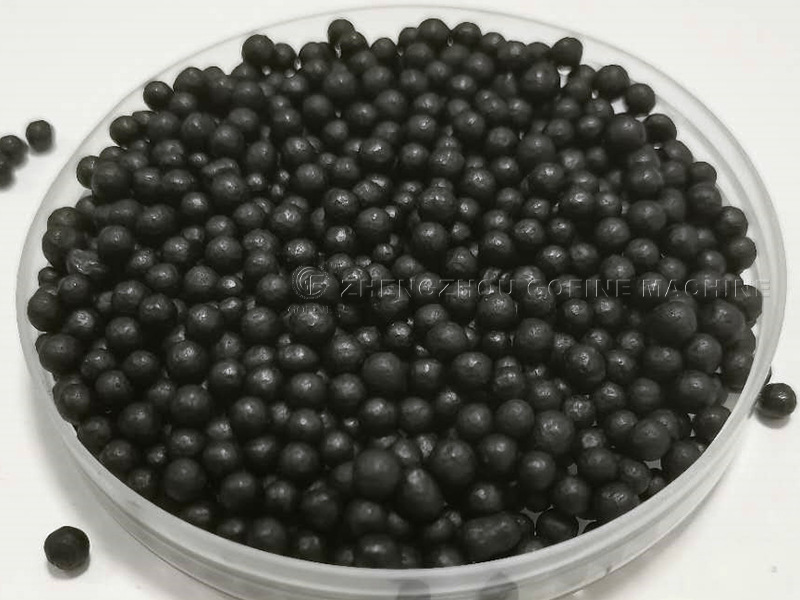
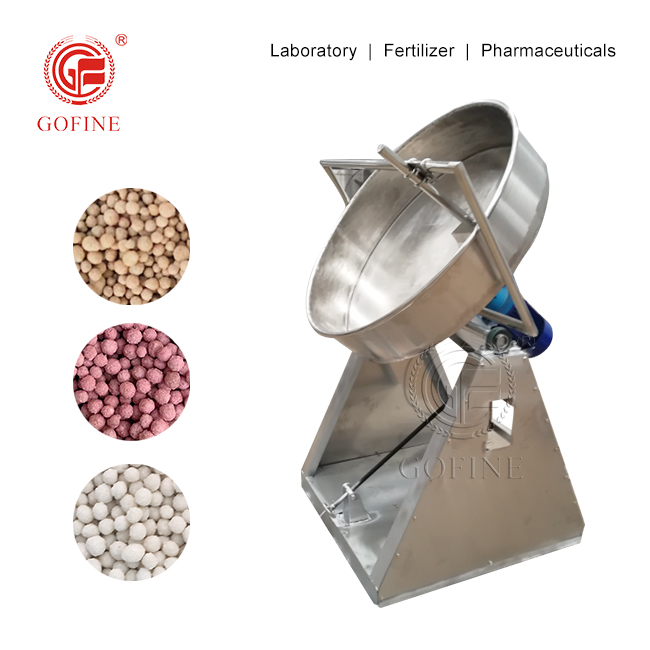
Disc granulators rely on a cascading, rolling action combined with liquid binders to build granules layer by layer. This mechanism is highly effective for organic fertilizer production, where feedstocks like compost, manure, or humic acid exhibit high natural moisture and variable stickiness. The open design offers excellent visual control, allowing operators to watch the nucleation and growth phases in real-time. You can easily adjust granule size during operation by tweaking the pan angle—typically between 45 and 55 degrees—or adjusting the rotational speed.
The pan granulator naturally classifies the material. As granules grow larger and heavier, centrifugal force and gravity pull them to the outer edge of the pan where they discharge. Smaller seed pellets remain near the center to gather more material and binder. This classification effect produces a very tight particle size distribution. However, this flexibility means the equipment requires higher operator skill. The technician must visually gauge the rolling bed and manually adjust the binder spray to prevent the material from turning into mud or remaining as loose dust. Binders used in this process range from simple water to lignosulfonates, molasses, or synthetic polymers.
Rotary Drum Granulators
Rotary drums utilize a tumbling action to agglomerate materials. In many cases, this is combined with steam injection or internal chemical reactions, such as the ammoniation of phosphoric acid. This technology represents the absolute standard for scaling up to traditional NPK fertilizer equipment. The primary advantage of a lab-scale drum is its high fidelity for scaling to massive continuous production facilities. The physics inside a small drum directly translate to a large drum, provided the Froude number and volumetric fill percentages are calculated correctly.
Lab-scale drums often feature internal flights. Lifting flights shower the material through the air, which is useful for drying or cooling, while rolling flights gently turn the bed to promote agglomeration. The main drawback is batch size. Drums require a larger minimum volume of material to establish a proper rolling bed compared to disc granulators. Running a drum with too little material causes the powder to slide along the bottom rather than tumble, preventing granule formation. This makes drums less ideal for highly scarce or expensive experimental ingredients.
Compaction / Roll Press Granulators (Dry Granulation)
Compaction granulators use intense mechanical pressure to force dry powders into solid sheets or briquettes, which are subsequently milled and screened into granules. This dry granulation process completely eliminates the need for a drying phase, saving significant energy and infrastructure space. It is the perfect solution for heat-sensitive or moisture-sensitive materials that would degrade in a wet granulation process. Hydraulic systems control the roll gap and apply specific linear pressure, often measured in kilonewtons per centimeter (kN/cm), to achieve the desired flake density.
The trade-off lies in the physical shape of the final product. Compaction produces irregular, jagged granules compared to the smooth, spherical pellets generated by wet granulation. This angular shape can affect flowability in agricultural broadcasting equipment and increases the likelihood of dust generation during transport. To mitigate this, some facilities run the compacted granules through a secondary polishing drum to knock off the sharp edges, though this adds another step to the process.
High-Shear / Pin Mixers
Pin mixers use a central rotor equipped with high-speed rotational pins to aggressively mix and micro-agglomerate fine powders with liquid binders. The intense shear forces densify the material rapidly. Tip speeds on the rotor can exceed 15 meters per second, creating a highly turbulent environment that disperses liquid binders evenly across microscopic particles. This equipment is excellent for pre-conditioning dusty materials, blending micro-nutrients evenly, and applying seed coatings.
The intense mixing ensures a highly homogenous blend, preventing the segregation of trace minerals like zinc or boron. Pin mixers rarely produce a finished, marketable granule on their own. The output is typically a dense micro-pellet that requires secondary granulation. In many pilot setups, the pin mixer discharges directly into a disc granulator. The pin mixer handles the initial nucleation and densification, while the disc granulator rounds out the final product and builds it up to the desired 3mm to 4mm agricultural specification.
Key Evaluation Dimensions for a Laboratory Granulation Machine
Features-to-Outcomes (Process Control)
When evaluating a laboratory granulation machine, precise process control is non-negotiable. You must assess machines based on the precision of their variable frequency drives (VFDs). A VFD allows you to dial in the exact rotational speed required to achieve the optimal cascading effect for different bulk densities. Adjustable pan angles are equally critical, as a one-degree shift can drastically alter the residence time and final granule size. Automated binder spray systems with adjustable nozzles ensure liquid is applied at a consistent rate and droplet size. When you lock in the speed, angle, and spray rate, you eliminate guesswork and generate reliable scale-up metrics.
Advanced lab units integrate Programmable Logic Controllers (PLCs) to automate these variables. Instead of a technician manually turning a dial, the PLC executes a pre-programmed recipe. This ensures that batch number one is processed under the exact same mechanical conditions as batch number fifty. Consistency in the lab translates directly to predictability in the pilot plant.
Material Handling Versatility
Research and development facilities rarely test just one type of material. Assess the equipment's ability to handle diverse feedstocks. A robust lab unit must process everything from highly corrosive chemical salts and abrasive mined minerals to sticky organic sludges and variable-moisture powders. Look specifically for 304 or 316 stainless steel construction on all wetted parts to prevent corrosion and cross-contamination. Carbon steel pans will rust rapidly when exposed to acidic binders or high-moisture organics, contaminating future batches with iron oxide.
Specialized scraper designs maintain the rolling surface. For sticky organics, Ultra-High-Molecular-Weight Polyethylene (UHMW PE) or Teflon-coated scrapers prevent material buildup on the pan walls without damaging the metal. For abrasive minerals like crushed limestone or phosphate rock, tungsten carbide-tipped scrapers ensure longevity and maintain a clean rolling surface. The ability to swap scraper blades quickly based on the material being processed is a hallmark of a well-designed lab granulator.
Data Logging and Analytics
Modern formulation development requires empirical data, not just visual observation. Integrated sensors capture real-time process variables. A high-quality lab granulator monitors material temperature using Resistance Temperature Detectors (RTDs), motor torque via load cells, and ambient moisture. Torque readings are particularly valuable during wet granulation. As you add binder, the material becomes heavier and stickier, increasing the drag on the motor. A sudden spike in torque indicates the material is over-wetting and transitioning from discrete granules into a solid sludge. Monitoring this allows operators to cut the binder spray precisely before the batch fails.
Capturing these variables digitally provides the exact engineering parameters required to build accurate scale-up models. Engineers use this logged data to calculate the specific energy consumption (kWh per ton) required for granulation, which directly informs the motor sizing for commercial-scale equipment.
Vendor Support and Maintenance
A lab granulator is a long-term investment that requires ongoing support. Evaluate the availability of OEM parts and the vendor's commitment to service. Wear parts like spray nozzles, scraper blades, and drive belts will eventually need replacement. Seek out manufacturers who offer process development consulting and Factory Acceptance Testing (FAT). A vendor who understands the physics of agglomeration can help you troubleshoot difficult formulations, recommend specific binder types, and guide your transition from bench-scale testing to continuous pilot production.
Bridging the Gap: Transitioning to Pilot Scale Fertilizer Equipment
Defining Transition Metrics
Moving from a benchtop unit to pilot scale fertilizer equipment requires a strict set of transition metrics. You cannot simply multiply the lab recipe by a factor of ten. You must identify the critical data points that dictate commercial success. These include the optimal moisture content required for nucleation, the specific binder type and its required concentration, and the exact residence time the material needs inside the granulator to cure. You must calculate equipment sizing ratios, such as the surface-area-to-volume ratio in a pan or the fill percentage in a rotary drum, to ensure the mechanical forces remain consistent at a larger scale.
Parameter
Lab Scale Focus
Pilot Scale Translation
Residence Time
Visual observation of granule growth.
Calculated via feed rate and equipment volume.
Binder Addition
Single nozzle, manual or simple automated spray.
Multi-nozzle manifold, mass flow meter controlled.
Rotational Speed
Adjusted via VFD to maintain cascading bed.
Calculated to match the Froude number of the lab unit.
Drying/Curing
Often done in a separate benchtop static oven.
Integrated continuous rotary dryer or fluid bed.
Implementation Risks (The Scale-Up Effect)
The scale-up effect introduces numerous implementation risks. Physics behave differently as mass increases. Common failures when moving to larger equipment include drastic changes in heat transfer rates. A small lab batch dissipates heat quickly into the ambient air, whereas a one-ton pilot batch retains heat in its core, potentially altering the chemical reaction or binder viscosity. Increased bed depth in a larger granulator alters the compression forces acting on the granules; the weight of the material itself can crush delicate pellets at the bottom of the bed before they have a chance to cure.
Binder distribution inefficiencies become apparent during scale-up. A single spray nozzle covers a lab pan perfectly, but a pilot drum requires a complex, multi-nozzle manifold to prevent dry spots and over-wetted clumps. If the spray manifold is positioned incorrectly, the binder will hit the bare metal walls instead of the rolling material bed, causing immediate fouling and disrupting the agglomeration process.
Mitigation Strategies
To mitigate these scale-up risks, standardize your quality control testing protocols during the lab phase. Do not rely solely on visual inspections. Verify nutrient composition and moisture levels using calibrated laboratory instruments. Test physical properties rigorously to establish strict baseline parameters for the pilot phase. Use a crush strength tester to ensure granules can withstand the weight of being stacked in bulk bags. Run samples through an attrition mill to measure dust generation during transport. Utilize a halogen moisture analyzer to confirm the exact drying requirements. By establishing these hard metrics in the lab, you create a definitive target for the pilot plant to hit.
Conceptual Trade-Offs: Overall Value Influencing Factors
Capital Expenditure vs. R&D Flexibility
Facility managers must weigh the upfront capital expenditure of purchasing multiple specialized lab machines against investing in a modular, multi-functional system. Buying a dedicated lab-scale drum, a separate disc, and a standalone pin mixer provides the highest level of parallel testing capacity. Multiple technicians can run different experiments simultaneously. This approach requires significant budget and floor space. Modular systems feature a single drive base with interchangeable granulation heads. You can swap a pan attachment for a drum attachment in minutes. This offers immense R&D flexibility and saves space, though it limits the lab to running only one specific granulation mechanism at any given time.
Batch vs. Continuous Processing
Analyze the trade-off between batch testing and continuous miniature pilot lines. Batch lab testing, typically done on a small disc granulator, offers simplicity. It requires very low material volumes—often just a few kilograms—making it ideal for early-stage formulation where raw ingredients are scarce or expensive. Batch processing does not perfectly simulate the steady-state dynamics of a commercial plant. Continuous miniature pilot lines provide much higher predictive accuracy for commercial scale-up. They simulate the exact continuous feed, steady-state moisture balance, and continuous discharge of a real plant. The downside is they require significantly more raw material, higher capital investment, and more complex material handling infrastructure, such as loss-in-weight feeders and continuous discharge conveyors.
In-House Testing vs. Toll Processing
Determine when it makes sense to invest in internal equipment versus outsourcing. If your company develops new formulations frequently, bringing a lab granulator in-house pays for itself rapidly by accelerating iteration cycles and protecting intellectual property. In-house testing allows for immediate adjustments and rapid prototyping. If you only develop a new product once every few years, outsourcing initial formulation trials to third-party agricultural testing laboratories or equipment manufacturers might be more practical. Toll processors have the equipment and expertise on hand, allowing you to prove a concept without committing capital to machinery you will rarely use.
Conclusion
Request proof-of-concept material testing from equipment vendors using your specific raw feedstocks to validate machine compatibility.
Consult with process engineers to calculate exact scale-up ratios and Froude numbers before purchasing pilot equipment.
Define your facility's utility requirements, including three-phase power, ventilation, and drainage, prior to lab installation.
Establish a standardized physical testing protocol covering crush strength, attrition, and moisture content for all future lab batches.
FAQ
Q: What is the minimum batch size for a laboratory fertilizer granulator?
A: Minimum batch sizes vary by technology. A laboratory disc granulator can effectively process batches as small as 2 to 5 kilograms, making it ideal for scarce materials. Rotary drum granulators typically require larger minimums, often 10 to 20 kilograms, to establish the necessary rolling bed dynamics for proper agglomeration.
Q: How important are proportioning and mixing before using a laboratory granulation machine?
A: It is absolutely critical. Granulation is a physical shaping process, not a chemical mixing process. If raw powders are not accurately proportioned and homogeneously mixed before entering the granulator, the final pellets will have uneven nutrient distributions, causing the batch to fail agricultural compliance standards.
Q: Can the same lab granulator be used for both NPK and organic fertilizer production?
A: Yes, particularly if you use a pan or disc granulator constructed from 304 or 316 stainless steel. Stainless steel resists the corrosive nature of NPK chemical salts while also handling the high moisture and stickiness associated with organic composts and manures. Proper cleaning between batches is essential.
Q: What data must be collected before moving to pilot scale fertilizer equipment?
A: You must collect precise empirical data, including optimal raw material moisture content, specific binder type and concentration percentages, required residence time in the granulator, and the physical crush strength of the finished, dried granule. This data forms the baseline for pilot plant engineering.
Q: How do you test the physical quality of granulated fertilizer in the laboratory?
A: Physical quality is tested using specialized benchtop instruments. A crush strength tester measures the force required to fracture a single pellet. An attrition mill tests resistance to dust generation during handling. Finally, sieves are used to measure particle size distribution and ensure uniform dimensions.
Q: Is dry granulation or wet granulation better for custom fertilizer development?
A: It depends entirely on the material. Wet granulation is better for achieving smooth, spherical pellets and handling organics. Dry granulation is superior for heat-sensitive or highly moisture-sensitive minerals, as it eliminates the need for an energy-intensive drying phase, though it produces angular granules.