Halting a commercial fertilizer line to test new NPK formulations introduces severe operational risks. Agronomists and production engineers face a gap between theoretical lab formulations and commercial viability. Unpredictable variables in moisture, binding agents, and chemical reactions—specifically urea and ammonium sulfate interactions—often cause failed large-scale batches. You cannot afford to waste tons of raw materials on unproven blends. Deploying a small NPK granulation machine solves this problem. It acts as the bridge between laboratory research and full-scale manufacturing. This equipment gives you precise variable control, rapid prototyping capabilities, and accurate scalability forecasting. You can test new blends, adjust binder ratios, and validate granule strength without interrupting your main production schedule.
Risk Mitigation: Dedicated fertilizer testing equipment prevents costly material waste by validating formulation stability in small batches before commercial scale-up.
Technology Matching: Selecting between a disc granulator, double roller granulator, or rotary drum depends strictly on the moisture content and chemical properties of the raw materials.
System Integration: A standalone small fertilizer machine is insufficient for accurate testing; it must be evaluated as part of a complete 9-step micro-production line including crushing, mixing, drying, and packaging.
Scalability Metrics: The primary ROI of laboratory-scale granulation is the ability to accurately calculate commercial yield rates, binder ratios, energy conservation, and environmental compliance.
Why R&D Facilities Require Dedicated Small NPK Granulation Machines
Defining Success Criteria for Pilot Testing
Pilot-scale equipment must do more than simply form pellets. The baseline requirement for any testing unit is its ability to precisely replicate commercial pressure, ambient temperature, and rotational dynamics on a micro-scale. If a lab unit operates under fundamentally different physics than the main plant, the resulting data holds no practical value. Engineers need to observe how raw materials behave under specific shear forces and thermal loads. This replication allows teams to predict how a formulation will react when subjected to the intense mechanical stress of a 50-ton-per-hour facility.
Success in these testing environments is measured through strict agronomic and physical metrics. The primary indicator is a uniform particle size distribution, typically targeting the 2mm to 4mm range preferred for mechanical spreading. The crush strength of the final granule must hit specific Newton ratings (often between 15N and 30N) to withstand transport and storage without degrading into dust. Agronomists measure nutrient solubility rates to ensure the granule breaks down appropriately in the soil, delivering nitrogen, phosphorus, and potassium at the targeted release intervals.
Cost-Efficiency in Material Testing and Waste Reduction
Testing unproven formulations directly on commercial lines carries a severe financial impact. Shutting down a primary production facility for an experimental run incurs massive downtime costs. A standard commercial line running at 50 tons per hour consumes 50 tons of raw material during a single one-hour test. If the binder ratio is incorrect or the moisture level is too high, the entire batch turns into sludge or oversized lumps. You lose the raw material and the energy spent during the failed drying phase.
Utilizing a dedicated laboratory fertilizer granulator eliminates this financial exposure. It allows formulation teams to execute high-frequency iterations of various NPK ratios. Researchers adjust binder concentrations, test new micronutrient additions, and modify moisture levels in rapid succession without interrupting main production schedules. Running tests at 100 kg per hour instead of 50 tons per hour accelerates the research cycle while protecting the bottom line.
Modern small-scale units feature zero waste discharge capabilities. In a testing environment, not every powder particle immediately forms a perfect granule. These systems capture ungranulated powder and oversized particles, recycling them back into the mixing phase. This closed-loop process ensures expensive chemical inputs are fully utilized, preventing environmental contamination and keeping laboratory waste to an absolute minimum.
Core Technologies in Fertilizer Testing Equipment
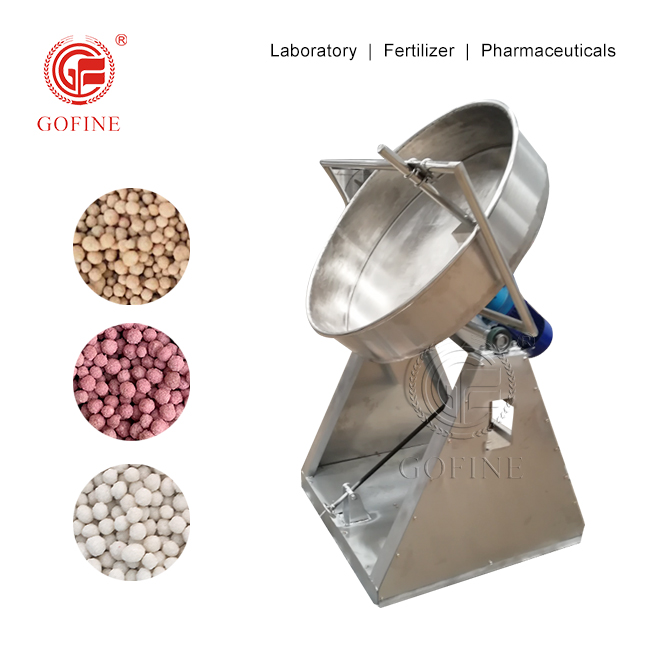
Disc Granulator (Pan Granulator) Mechanics and Best Use Cases
The operational mechanics of a disc granulator rely on a balance of centrifugal force, gravity, and friction. Raw mixed powder feeds onto a rotating, tilted pan. As the pan spins, centrifugal force pushes the material upward along the rim, while gravity pulls it back down. A liquid binder sprays continuously onto the moving bed of material through atomized nozzles. This tumbling action causes the powder particles to agglomerate, growing in size layer by layer until they reach the desired diameter and naturally exit over the edge of the pan.
This technology works well for formulations requiring liquid binders. It offers a distinct advantage for R&D teams: intuitive visual monitoring. Operators watch the granule formation in real time, making immediate adjustments to the liquid spray rate or the feed rate. This immediate feedback loop proves invaluable when testing unfamiliar chemical combinations.
The pan method presents specific limitations. It offers a lower throughput compared to extrusion methods. It relies heavily on operator skill. Achieving the perfect granule requires dynamic adjustments to the pan's tilt angle (typically between 40 and 55 degrees) and rotational speed, demanding an experienced technician to maintain optimal production parameters.
Double Roller Extrusion Granulators for Dry Granulation
Dry granulation operates on entirely different mechanical principles. A double roller extrusion granulator forces dry powder chemical materials between two counter-rotating metal rollers. Materials like urea and ammonium sulfate are subjected to extreme mechanical pressure, compressing them into dense, solid sheets. These sheets immediately pass through a crushing chamber and then screen to isolate the correctly sized granules. This method relies purely on physical compaction rather than chemical binding agents.
The primary advantage of this process is the elimination of subsequent drying and cooling steps. Because no water or liquid binder is introduced, the granules exit the machine ready for final screening and packaging. This reduces the overall footprint of the testing line and cuts energy consumption significantly, making it an ideal choice for laboratories with limited space and power capacity.
The trade-offs involve equipment longevity and material constraints. The intense pressure causes higher initial equipment wear, requiring more frequent replacement of the roller skins. This method imposes strict requirements on raw material moisture levels. The input powders must remain below 5% moisture; otherwise, the material sticks to the rollers and jams the extrusion mechanism.
Rotary Drum Granulators for Scaled Pilot Testing
Rotary drum technology utilizes a large, rotating cylinder slightly inclined from the horizontal. Inside the drum, raw materials tumble continuously. Operators inject steam, water vapor, or specific chemical binders directly into the material bed. The combination of heat, moisture, and the rolling action agglomerates complex NPK chemical reactions, forming dense, spherical granules. This method handles high capacities and complex chemical interactions seamlessly.
For advanced R&D facilities, this technology acts as the ultimate scaling tool. It suits facilities aiming to directly replicate the exact thermodynamic conditions of large-scale commercial NPK plants. By utilizing a scaled-down drum, engineers accurately map the thermal transfer rates and retention times required for specific formulations, providing data that translates directly to commercial fertilizer testing equipment.
Granulator Type
Primary Mechanism
Moisture Requirement
Best Laboratory Use Case
Key Advantage
Disc (Pan) Granulator
Centrifugal force & liquid binder
Medium (10% - 20%)
Visual prototyping of new blends
Real-time visual monitoring
Double Roller Extrusion
Mechanical compaction
Very Low (< 5%)
Heat-sensitive chemical materials
No drying or cooling required
Rotary Drum Granulator
Tumbling & steam injection
Variable (depends on binder)
Direct commercial scale-up mapping
Replicates commercial thermodynamics
Evaluating a Small Fertilizer Machine: Key Technical Dimensions
Granulation Rate and Yield Consistency
When assessing pilot equipment, the granulation rate serves as a primary performance metric. This rate defines the percentage of raw powder that successfully converts into the target granule size during the first pass through the machine. Acceptable granulation rates range from 70% to 90%, depending heavily on the chosen technology and the specific chemical properties of the formulation. Extrusion methods hit the higher end of this spectrum, while pan methods vary based on operator input.
To maximize yield, a high-quality NPK granulation machine handles material recirculation efficiently. Ungranulated fine powder and oversized particles route back to the initial mixing phase automatically. This continuous recirculation loop ensures yield consistency remains high across the entire batch, providing accurate material consumption data for commercial scale-up calculations.
Material Compatibility and Chemical Handling
NPK formulations involve highly corrosive or hygroscopic materials. Urea rapidly absorbs ambient moisture and becomes sticky. Potassium chloride is notoriously abrasive and corrosive to standard metals. Testing equipment must demonstrate absolute resilience when processing these challenging inputs to ensure accurate results and prevent premature machine failure.
Metallurgical requirements are non-negotiable. Components making direct contact with the chemical inputs must be constructed from high-grade stainless steel, specifically 304 or 316L. Carbon steel components degrade quickly, leading to rust contamination in the fertilizer samples and severe equipment degradation. Evaluating the material construction of the mixing blades, pan surfaces, and discharge chutes ensures long-term laboratory success.
Energy Consumption and Operational Footprint
Laboratory environments operate under strict utility constraints. Evaluating the power requirements of small-scale units relative to their output ensures you do not overload facility circuits. Equipment featuring variable frequency drives (VFDs) and high-efficiency motors provides the energy conservation needed for testing facilities. These features allow operators to fine-tune power usage based on the specific load of the experimental batch.
Spatial constraints dictate equipment selection. A testing setting cannot accommodate heavy industrial infrastructure or massive concrete foundations. Facilities require compact, modular designs. Equipment mounted on movable skids allows researchers to reconfigure the micro-production line as needed, adapting the workflow to different granulation technologies without requiring extensive facility modifications.
Operational Simplicity and Maintenance Accessibility
Researchers focus their cognitive efforts on chemical formulation, not on mechanical troubleshooting. Simple operation interfaces keep the focus on the data. Modern testing units utilize automated Programmable Logic Controllers (PLCs) with intuitive touchscreens. These systems allow operators to set precise rotational speeds, binder spray rates, and temperature controls, ensuring every batch processes under exact, repeatable conditions.
Maintenance accessibility directly impacts testing efficiency. Between distinct chemical batches, the equipment requires thorough cleaning to prevent cross-contamination. Machines designed with easy-access panels, quick-release clamps, and smooth internal welds facilitate rapid sanitization. If a machine requires hours of disassembly to clean the internal mixing chamber, it bottlenecks the laboratory's testing schedule.
Integrating the Laboratory Fertilizer Granulator into a Pilot Production Line
Pre-Granulation Requirements: Crushing, Batching, and Mixing
Raw material preparation is a non-negotiable prerequisite for accurate testing. If the input materials are inconsistent, the final granules fail agronomic standards regardless of the granulator's quality. Large lumps of raw chemicals must be pulverized into a uniform powder using chain crushers or cage mills. This uniform particle size ensures the subsequent chemical reactions and binding processes occur evenly across the entire batch.
Following pulverization, precision batching scales and homogenous mixing take over. Every small-batch granule must contain the exact targeted NPK ratio. Automated micro-batching systems weigh each component down to the gram using sensitive load cells. The materials then enter a high-shear mixer or twin-shaft blender, which disperses the nutrients evenly. Without this rigorous pre-granulation preparation, the testing data reflects mixing errors rather than the true viability of the formulation.
Post-Granulation Processing: Drying, Cooling, Screening, Coating, and Packaging
A standalone granulator does not produce a finished product. Following wet granulation methods, the material moves through the complete standard 9-step NPK production process. The newly formed granules contain high moisture levels and are structurally fragile. They immediately enter a small-scale rotary dryer, where controlled heat removes excess moisture and hardens the outer shell.
Once dried, the granules are too hot to package and may cake together. Small-scale rotary coolers drop the temperature rapidly using ambient air sweeping, stabilizing the granule structure. Next, screening equipment isolates the target particle size. Granules that are too large or too small separate out; oversized lumps crush down, and all out-of-spec materials return to the mixer for reprocessing.
The validated granules pass through micro-coating and packaging units. Coating applies oil-based anti-caking agents or micronutrient layers. Packaging the granules in sealed containers allows for accurate shelf-life assessments, caking tests, and moisture-resistance evaluations over time. Skipping any of these post-granulation steps renders the pilot test incomplete.
Trade-Offs Between Organic Fertilizer Granulators and NPK Compound Systems
Moisture Content Management and Binder Requirements
The fundamental difference between processing organic and chemical fertilizers lies in moisture management. Organic materials, such as composted manure or crop residues, naturally possess high moisture levels and fibrous textures. They require 20% to 30% moisture to agglomerate effectively. Chemical NPK compounds have strict moisture limitations. Introducing too much water to synthetic chemicals causes them to dissolve or turn into an unworkable slurry.
Facilities often wonder if a hybrid organic fertilizer granulator effectively processes synthetic NPK formulations. While technically possible with certain disc models, it requires extensive mechanical reconfiguration. The binder spray nozzles require recalibration for much lower flow rates, and the scraper blades inside the machine need adjustments to handle denser, stickier chemical buildup. Using dedicated machines for each material type yields far more accurate and reliable test results.
Equipment Wear and Maintenance Schedules
The physical characteristics of the raw materials dictate the wear and tear on the equipment. Mineral-based NPK ingredients are highly abrasive. Processing these chemicals accelerates the degradation of internal machine components. Organic inputs, while sometimes sticky, are softer and fibrous, causing significantly less friction against metal surfaces.
These differences dictate strict maintenance intervals. When processing chemical NPK, engineers inspect roller skins, scraper blades, and drum linings frequently for signs of pitting or excessive wear. Organic processing allows for longer intervals between physical component replacements but requires more frequent cleaning to prevent biological buildup and odors. Understanding these maintenance trade-offs keeps laboratory budget planning accurate.
Implementation Risks and Mitigation Strategies
Addressing Particle Size Inconsistencies
A major risk in pilot testing occurs when the small fertilizer machine produces a wide variance in granule sizes. If a test batch yields granules ranging from 1mm to 6mm unpredictably, it skews all subsequent agronomic test results. Dissolution rates and crush strength metrics become unreliable, making it impossible to validate the formulation for commercial use.
To mitigate this risk, facilities implement strict pre-conditioning of all raw materials. Uniform pulverization guarantees the granulator receives a consistent feed. Operators routinely calibrate the binder spray nozzles. Ensuring a consistent droplet size prevents localized over-wetting, which causes oversized lump formation in the pan or drum.
Managing Equipment Clogging and Downtime
Hygroscopic materials present a constant operational hazard. Chemicals like urea actively absorb ambient moisture from the laboratory air. During processing, this moisture causes the powder to become highly adhesive, leading to severe buildup and clogging on the granulator walls, scraper assemblies, or discharge chutes. This clogging forces sudden machine shutdowns and ruins the experimental batch.
Mitigating this requires environmental and mechanical interventions. Laboratories testing NPK maintain climate-controlled environments with strict humidity regulation via HVAC dehumidification. Mechanically, the equipment utilizes active anti-clogging scrapers or UHMWPE liners that continuously clear the internal surfaces during operation. Establishing strict post-operation cleaning protocols ensures no residual chemicals remain inside the machine to absorb moisture overnight.
Conclusion
Conduct a physical material feasibility test with the equipment manufacturer using your specific NPK blend before finalizing any procurement.
Consult with process engineers to design a complete micro-production layout that includes proper ventilation, climate control, and material handling space.
Define the exact moisture thresholds and hygroscopic behaviors of your raw materials to determine if dry or wet granulation is required.
Establish a strict, documented cleaning and maintenance protocol to prevent cross-contamination between distinct experimental batches.
FAQ
Q: What is the average granulation rate of a small NPK granulation machine?
A: The average first-pass granulation rate ranges from 70% to 90%, depending on the formulation and technology used. High-quality systems ensure zero waste discharge by automatically capturing the remaining ungranulated powder and oversized particles, recycling them back into the mixer for continuous reprocessing.
Q: What are the standard steps in a complete small-scale NPK fertilizer production line?
A: A complete testing line requires 9 essential steps: crushing, batching, mixing, granulation, drying, cooling, screening, coating, and packaging. Every step is necessary to accurately replicate commercial conditions, stabilize the granule structure, and conduct valid shelf-life and agronomic testing.
Q: Can a laboratory fertilizer granulator process both organic and chemical fertilizers?
A: While certain disc granulators process both, it is not ideal. Organic materials require high moisture (20-30%), whereas chemical NPK requires strict moisture limits. Processing both in one machine requires extensive mechanical reconfiguration and intensive cleaning. Dedicated machines yield much more accurate test results.
Q: Why is a double roller granulator preferred for certain NPK testing?
A: Double roller granulators utilize a dry compaction process ideal for powder chemical materials like urea. Because it uses mechanical pressure instead of liquid binders, it completely eliminates the need for subsequent drying and cooling equipment, saving significant space and energy in a laboratory setting.
Q: What pre-processing equipment is required for a small fertilizer machine?
A: Accurate granulation requires uniform input materials. Essential upstream components include precision crushers to ensure uniform powder sizing and automated micro-batching and mixing units. These ensure every small-batch granule contains the exact, homogenous NPK ratio dictated by the formulation.
Q: How do you scale up formulations from fertilizer testing equipment to commercial production?
A: Scaling up involves meticulously recording variables in the lab, such as binder ratios, moisture tolerances, rotational speeds, and thermodynamic responses. Engineers use this empirical data to establish the baseline operational parameters and safety thresholds for the PLCs running the commercial-scale production line.
Q: What is the ideal moisture content for an NPK granulation machine?
A: The ideal moisture content depends entirely on the technology. Dry extrusion methods require moisture levels strictly below 5% to prevent jamming. Wet granulation methods typically require 10% to 20% moisture, introduced via steam or liquid binders, to properly agglomerate the chemicals.