Selecting the appropriate granulator is a critical decision for any fertilizer production line. The choice directly impacts product quality, operational efficiency, and overall profitability. Among the most widely used granulation technologies, the disc granulator and the double roller extrusion granulator stand out for their distinct advantages and applications. This article provides a comprehensive comparison of these two machines, covering key aspects such as applicable raw materials, working principles, granulation processes, production capacity, and more, to help you make an informed decision.
1. Applicable Raw Materials
Disc Granulator: The disc granulator is highly versatile and suitable for a wide range of materials, particularly those with good adhesion properties. It is ideal for organic fertilizer production, including composted animal manure, agricultural waste, and sludge. It is also effective for compound fertilizers that require the incorporation of powdered additives. However, it performs best with materials that have a moderate moisture content (typically 25–35%) and fine particle sizes.
Double Roller Extrusion Granulator: This machine is designed for dry granulation and excels with materials that are sensitive to moisture or heat. It is perfect for inorganic fertilizers such as ammonium chloride, potassium sulfate, and powdered NPK blends. It can also process organic-mineral mixtures but requires the raw materials to be completely dry (moisture content below 10–15%). Its ability to handle powdered materials without binders makes it a preferred choice for chemical-based fertilizers.
2. Working Principles
Disc Granulator: The disc granulator operates on a tumbling and layering mechanism. Raw materials are fed onto a rotating, inclined disc. As the disc rotates, the materials are lifted by centrifugal force and then cascade downward. A liquid binder (usually water or a solution) is sprayed onto the materials, causing fine particles to adhere and form spherical granules. The angle and speed of the disc can be adjusted to control granule size.
Double Roller Extrusion Granulator: This machine employs a dry compaction process. Powdered materials are fed between two counter-rotating rollers. Under high mechanical pressure, the particles are compressed into a dense sheet, which is then broken and screened into uniform granules. No liquid binders or heat are required, making it an energy-efficient and environmentally friendly option.
3. Granulation Process
Disc Granulator:
Process Type: Wet granulation.
Binder Requirement: Liquid binders are essential for particle aggregation.
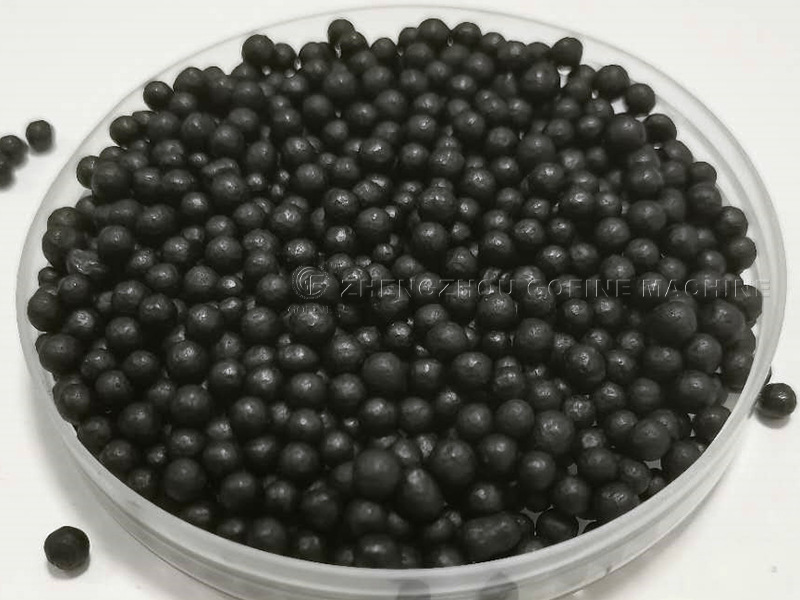
Granule Shape: Produces spherical pellets with smooth surfaces.
Post-Processing: Granules often require drying and cooling to reduce moisture content.
Flexibility: Allows for easy adjustment of granule size by changing disc parameters.
Double Roller Extrusion Granulator:
Process Type: Dry granulation.
Binder Requirement: No binders needed; relies solely on mechanical pressure.
Granule Shape: Produces irregularly shaped granules or tablets with high density.
Post-Processing: No drying is required, reducing energy consumption.
Consistency: Ensures uniform granule size and high hardness.
4. Production Capacity
Disc Granulator:
Suitable for small to medium-scale production.
Typical capacity ranges from 1 to 10 tons per hour, depending on the disc diameter and material properties.
Ideal for organic fertilizer plants with variable feedstock.
Double Roller Extrusion Granulator:
Designed for medium to large-scale production.
Capacity can range from 5 to 20 tons per hour, making it suitable for industrial fertilizer manufacturing.
High output with minimal downtime due to its robust design.
Low energy consumption during the granulation phase.
Easy to operate and maintain.
Disc Granulator Limitations:
Requires additional drying equipment.
Not suitable for completely dry or heat-sensitive materials.
Granule strength may be lower compared to extruded granules.
Double Roller Extrusion Granulator Advantages:
No drying process needed, saving energy and time.
Handles moisture-sensitive materials effectively.
Produces high-density granules with excellent crushing strength.
Minimal dust generation and waste.
Double Roller Extrusion Granulator Limitations:
Granules are not spherical, which may affect marketability.
Higher initial investment for the machine and auxiliary equipment.
Limited flexibility for raw material changes.
6. Key Considerations for Selection
Raw Material Properties: Assess moisture content, adhesion, and sensitivity to heat.
Product Requirements: Determine if spherical shape or high density is more critical.
Production Scale: Match the machine’s capacity with your operational goals.
Budget Constraints: Consider both upfront costs and long-term operational expenses.
Environmental Factors: Evaluate energy consumption and waste management needs.
Conclusion
Choosing between a disc granulator and a double roller extrusion granulator depends on your specific production needs. If you prioritize spherical granule production and work with moist, adhesive materials, the disc granulator is an excellent choice. On the other hand, if you require high-density granules from dry, powdered materials and seek energy efficiency, the double roller extrusion granulator is the superior option. Both machines offer unique benefits, and understanding their differences will help you optimize your fertilizer granulation process for quality, efficiency, and profitability.
Contact us today for expert advice on selecting the right granulator for your fertilizer production line!