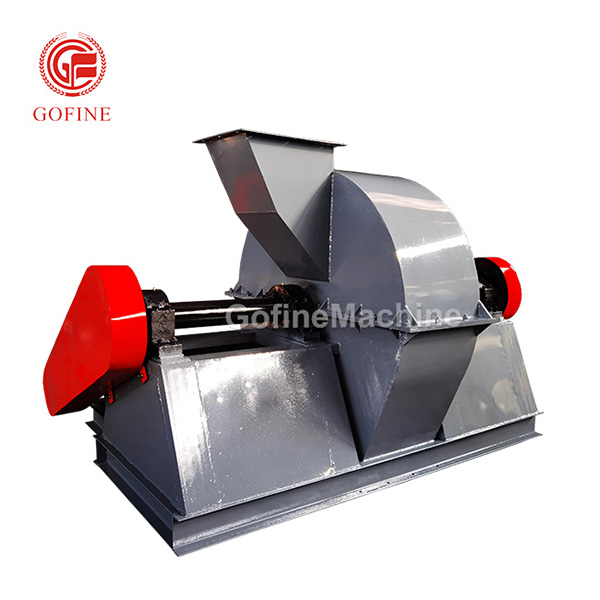
Inconsistent particle size distribution in raw materials directly compromises the granulation process. This leads to off-spec yields and increased recycle rates in fertilizer plants. Plant operators must balance high-throughput size reduction with equipment durability. Processing abrasive phosphates or mixed materials rapidly degrades standard milling equipment. The cage crusher serves as a specialized, impact-based solution engineered for these rigorous demands. Its mechanics offer a distinct advantage over traditional compression or shear-based mills. Fertilizer plants experiencing bottlenecks do not need a full system overhaul. A heavy-duty fertilizer crusher can be integrated as a standalone unit. This immediately resolves crushing inefficiencies and restores optimal production flow. We will examine how impact breaking mechanics work, compare alternative milling options, and outline how to optimize your production line for maximum yield.
Mechanism Advantage: Cage crushers utilize an impact breaking principle via counter-rotating cages, delivering superior particle uniformity essential for premium compound fertilizer formulations.
Operational Efficiency: Modular, low-profile designs allow for rapid grind adjustments (coarse to medium) by altering mill speed, minimizing downtime during product changeovers and maximizing high crushing speeds.
Comparative Superiority: For mixed, slightly tacky, or highly abrasive materials (like phosphate fertilizers), cage crushers generally outperform vertical chain crushers and hammer mills in wear-life and output consistency.
Implementation Reality: While highly efficient, optimal performance requires strict moisture content management to prevent cage blinding and maintain throughput capacity.
The Structural Mechanics of a Cage Crusher
The Impact Breaking Principle Explained
The core functionality relies on counter-rotating bar cages. These cages spin in opposite directions at high velocities, typically between 500 and 1000 RPM depending on the motor configuration. Raw materials enter the center eye of the innermost cage through a gravity-fed chute. Centrifugal force immediately pushes the material outward. As the material travels radially, it strikes the massive steel pins of the first spinning cage. This high-velocity impact shatters the materials along their natural cleavage lines.
The broken particles are then thrown outward into the path of the second cage, which is rotating in the opposite direction. This creates a massive compounding of kinetic energy. The process repeats as the particles pass through successive, alternating rows of pins. Impact crushing produces a highly uniform, cubical particle shape. Compression crushers often yield elongated or flat particles. Cubical particles interlock better during downstream granulation. This shape profile improves the structural integrity of the final fertilizer pellet. The kinetic energy transferred during impact ensures that even hard agglomerates break down instantly. Operators achieve a consistent powder without relying on restrictive bottom screens.
Material Suitability in Fertilizer Plants
Plant operators process diverse feedstocks daily. Phosphate rock, urea, potassium chloride, and mixed NPK formulations present unique handling challenges. A heavy-duty compound fertilizer crusher handles these variations effectively when configured correctly. Phosphate rock is highly abrasive and ranks between 4 and 5 on the Mohs hardness scale. Urea is hygroscopic and tends to become sticky under mechanical friction. Potassium chloride requires precise sizing to blend uniformly without segregating in the hopper.
The impact mechanism handles these materials without generating excessive heat. The open-discharge design allows material to exit the chamber the moment it reaches the correct size. This prevents the melting or smearing of heat-sensitive urea. These units also excel in secondary applications. Pulverizing organic compost materials requires high shear and impact to break down fibrous matter. Reworking off-spec fertilizer pellets back into the production line is another common use case. The machine reduces hardened pellets back to a fine powder instantly. This allows the plant to recycle waste without disrupting the primary feed.
Feedstock Material
Mohs Hardness
Abrasiveness
Recommended Pin Configuration
Phosphate Rock
4.0 - 5.0
High
Tungsten Carbide Hard-Facing
Urea
1.5 - 2.0
Low (Sticky)
Standard High-Carbon Steel
Potassium Chloride
2.0 - 2.5
Moderate (Corrosive)
Stainless Steel or Anti-Corrosion Coating
Off-Spec NPK Pellets
2.5 - 3.5
Moderate
High-Chrome Alloy Pins
Technical Evaluation: Cage Crushers vs. Alternative Fertilizer Crushing Equipment
Cage Crusher vs. Vertical Chain Crusher
Evaluating the right equipment requires understanding operational mechanics. Counter-rotating cages rely on multi-stage impact in mid-air. Vertical chain crushers use high-speed rotor chains attached to a central shaft to beat materials against a stationary housing. Chain crushers handle higher moisture levels better, often processing wet manure or compost up to 15% moisture without blinding. They also have a lower initial setup requirement and a simpler drive mechanism.
However, chain crushers struggle to produce a tightly controlled particle size distribution. The chains wear down quickly, and the gap between the chain tip and the housing wall increases, leading to coarse, irregular output. When selecting equipment for compound fertilizer production, the decision framework is clear. Specify a chain crusher when processing wet, sticky organics where precision is secondary. Specify a cage crusher when you need a tight particle size distribution. The counter-rotating design generates premium powders necessary for high-grade NPK blending. The capacity for continuous, high-volume processing makes the cage design superior for large-scale operations.
Cage Crusher vs. Hammer Mills
Hammer mills utilize swinging hammers mounted on a horizontal rotor to crush material against a heavy grate or screen. This screen determines the final particle size. Processing abrasive phosphate fertilizers degrades hammer mill screens rapidly. The continuous friction wears down the hammer tips and enlarges the screen holes. This leads to inconsistent output and frequent maintenance shutdowns. If the material has even a slight moisture content (above 3%), the screen holes will blind, forcing operators to shut down and manually chip out the hardened material.
The cage design eliminates the bottom grate entirely. There is no screen to plug or wear out. Material flows freely through the bottom discharge via gravity. This open-discharge design drastically reduces the risk of plugging. Processing slightly damp or mixed materials becomes much more reliable. Wear part degradation is isolated to the heavy-duty pins, which are easier to inspect and replace than internal screens.
Operational Metric
Cage Crusher
Vertical Chain Crusher
Hammer Mill
Primary Mechanism
Multi-stage impact via counter-rotating pins
Rotor chains beating against housing
Swinging hammers against a screen
Particle Uniformity
Excellent (Cubical shape)
Moderate (Irregular)
Good (Dependent on screen wear)
Plugging Risk
Low (Open discharge)
Low (Wide clearance)
High (Screen binding)
Abrasive Handling
High (With hard-faced pins)
Low to Moderate
Low (High screen wear)
Moisture Tolerance
Up to 6-8%
Up to 15-20%
Under 3%
Key Performance Dimensions for Fertilizer Processing Equipment
Particle Size Uniformity and Grind Adjustment
Modern fertilizer processing equipment relies on precise control systems to maintain product quality. Variable frequency drives (VFDs) allow operators to adjust the rotational speed of the cages independently. Changing the frequency (Hz) alters the motor RPM, which directly changes the impact velocity at the pin tips. This allows you to dial in specific coarse-to-medium grind profiles without stopping the machine or swapping out internal parts.
A higher tip speed yields a finer powder, ideal for pan granulation. A lower tip speed produces a coarser granular output, often preferred for bulk blending. Uniform powder generation directly impacts downstream granulation efficiency. Rotary drum and pan granulators require a consistent feed. Irregular particles cause uneven agglomeration. This results in weak pellets that break during bagging or transport. Maintaining a strict particle size distribution ensures the binder liquid coats the particles evenly. This maximizes the yield of on-spec fertilizer pellets and reduces the load on the recycle elevator.
Throughput Capacity, Crushing Speed, and Scalability
Capacity baselines vary based on plant requirements and material bulk density. Standard models comfortably process 10 tons per hour of mixed NPK. Scaling up to 50+ tons per hour for industrial operations requires significant engineering adjustments. The structural integrity of the housing must handle the increased kinetic energy. High crushing speeds directly translate to overall plant efficiency. Faster processing clears bottlenecks at the raw material intake and increases daily tonnage.
The relationship between motor horsepower, cage diameter, and tons-per-hour output is non-linear. Doubling the cage diameter does not simply double the output. It exponentially increases the impact zones and requires substantially larger motors to maintain rotational speed under heavy loads. Engineers must calculate the exact material bulk density (lbs/ft⊃3; or kg/m³) to match the motor size. Undersized motors will stall during surge loads, while oversized motors waste electricity and increase the initial capital expenditure.
Modular Design and Footprint Constraints
Plant layouts often have strict space limitations, especially when retrofitting older facilities. Integrating new machinery requires careful planning regarding chute angles and discharge clearances. Low-profile designs allow these units to fit into existing gravity-fed production lines. They operate effectively as standalone upgrades. You can position them directly beneath batching hoppers or at the discharge end of a bucket elevator.
Maintenance accessibility is a primary design consideration. The crushing chamber must be easy to open. Quick-release housings, sliding tracks, or hydraulically assisted doors allow technicians to inspect the cages rapidly. Clean-out procedures take minutes instead of hours. This modularity ensures that routine inspections do not disrupt the daily production schedule.
Isolate power to the dual motors and apply lockout/tagout (LOTO) devices.
Engage the hydraulic hand pump to retract the outer housing shell.
Inspect the inner and outer cage pins for uneven wear or missing hard-facing.
Clear any minor material buildup on the housing walls using a pneumatic air chisel.
Close the housing, secure the heavy-duty locking bolts, and remove LOTO devices.
Operational Trade-offs and Equipment Durability
Heavy-Duty Construction and Wear Parts Durability
Processing raw minerals subjects machinery to extreme mechanical stress. High-wear components include the inner and outer cage pins, impact bars, and main shaft bearings. Expertly engineered, sturdily constructed housings are non-negotiable for heavy-duty fertilizer processing. The steel casing must absorb continuous vibration and impact shocks without cracking or warping over time.
Implementing a strict preventative maintenance schedule prevents catastrophic failure during peak production seasons. Operators must inspect the hard-facing on the pins weekly. Once the hard-facing wears down to the base metal, degradation accelerates rapidly, altering the particle size output. Replacing individual pins or swapping the entire cage assembly must be planned during scheduled downtime. Tracking the tons processed between replacements provides a realistic framework for managing spare parts inventory.
Bearing maintenance is equally critical. The main shafts spin at high speeds while supporting the massive weight of the steel cages. Spherical roller bearings must be lubricated according to a strict schedule. Over-greasing blows out the seals, while under-greasing leads to thermal expansion and bearing seizure. Automated greasing systems are highly recommended for continuous operations.
Energy Consumption Metrics
Heavy machinery draws significant power. Dual-motor setups drive the counter-rotating cages independently. Understanding the energy requirements in kilowatt-hours (kWh) per ton is essential for operational planning. The initial startup requires a high amperage draw to overcome the inertia of the heavy steel cages. Soft starters or star-delta configurations are required to prevent tripping the plant's main breakers during startup.
Once at operating speed, the momentum of the heavy cages assists in maintaining velocity, stabilizing the power draw. Impact crushing offers distinct energy efficiency advantages. Shear-based fertilizer crushing equipment wastes significant energy overcoming mechanical friction. The material drags against screens or housing walls. In contrast, the open-discharge impact design transfers kinetic energy directly into breaking the material. The material exits the chamber immediately upon reaching the desired size. This prevents over-grinding and reduces wasted electricity.
Implementation Realities and Adoption Risks
Moisture Content Limitations and Clogging Risks
Every mechanical system has vulnerabilities. The primary limitation here is handling materials with high free-moisture content. Wet, sticky materials adhere to the impact pins and the inner walls of the housing. This buildup reduces the clearance between the inner and outer cages. Eventually, the material bridges the gap, causing cage blinding. This stalls the motors, trips the thermal overloads, and halts production.
Mitigation strategies are straightforward but require upstream planning. Pre-drying feedstocks is the most effective solution. Keeping the moisture content strictly below the 6% to 8% operational threshold ensures uninterrupted flow. Some advanced setups utilize heated cages or steam-jacketed housings. The radiant heat prevents damp powders from sticking to the cold steel surfaces. Managing moisture guarantees consistent throughput capacity and prevents hours of manual clean-out labor.
Integration with Upstream and Downstream Systems
Standalone units must integrate seamlessly with existing infrastructure. Upstream magnetic separators are an absolute requirement. Front-end loaders often pick up tramp metal, such as stray bolts, rebar, or bucket teeth, from the raw material yard. If tramp metal enters the crushing chamber, it will destroy the high-speed rotating cages instantly. The metal object will shatter the impact pins, bend the main shafts, and destroy the bearings. Installing a strong overband magnet on the feed conveyor eliminates this risk.
Downstream integration focuses on air quality and material transport. Impact breaking generates a high volume of fine dust due to the high-velocity shattering of dry minerals. Proper dust extraction and ventilation systems must be connected to the discharge chute. Negative pressure systems pull the airborne fines into a baghouse or cyclone separator. This recovers valuable material, prevents dust explosions, and maintains a safe, compliant working environment for plant personnel.
Conclusion
Conduct a material pilot test with the equipment manufacturer to validate throughput, crushing speed, and wear rates before finalizing procurement.
Audit your upstream conveyors to ensure overband magnetic separators are installed, calibrated, and functioning correctly.
Calculate the required motor horsepower based on your target tons-per-hour and the specific bulk density of your raw materials.
Establish a preventative maintenance schedule for inspecting hard-faced impact pins and greasing main shaft bearings.
Verify the maximum moisture content of your raw feed material to ensure it falls below the 8% threshold to prevent cage blinding.
FAQ
Q: What is the primary difference between a cage crusher and a standard fertilizer crusher?
A: The primary difference lies in the crushing mechanism. Standard crushers use swinging hammers, blades, or chains to force material through a restrictive bottom screen. A cage unit uses counter-rotating bar cages to shatter material via high-velocity impact in mid-air. It features an open-discharge design with no screens, which drastically reduces the risk of plugging and material buildup.
Q: Can a cage crusher handle high-moisture compound fertilizer materials?
A: It handles moderate moisture, but strict limits apply. The realistic threshold is typically under 6% to 8% free moisture. If the moisture exceeds these operational limits, the damp material will stick to the internal pins. This leads to cage blinding, where the material bridges the gap between the rotating cages, eventually stalling the machine.
Q: Is a cage crusher suitable for reworking off-spec pellets and compost?
A: Yes. The high crushing speed and intense impact mechanics are highly effective for pulverizing hardened, off-spec fertilizer pellets back into a fine powder. It also breaks down dry organic compost efficiently. This allows fertilizer plants to recycle waste materials and re-introduce them into the granulation line without causing blockages.
Q: How do you adjust the output size on a cage mill crusher?
A: Output size is adjusted by altering the rotational speed of the cages. Operators use Variable Frequency Drives (VFDs) to increase or decrease the motor RPM. Higher speeds generate greater impact force, resulting in a finer powder. Lower speeds produce a coarser, medium grind. This eliminates the need to manually swap out internal screens.
Q: What capacity range is typical for compound fertilizer production using this equipment?
A: Capacities range widely based on the machine's physical size and motor power. Pilot-scale or small commercial operations typically use models processing 1 to 5 tons per hour. Heavy-duty industrial processing plants utilize large-scale units capable of handling 50 to over 80 tons per hour of continuous material feed.
Q: Why is tramp metal removal critical before the fertilizer crushing stage?
A: Tramp metal, such as stray bolts or loader teeth, causes catastrophic damage to high-speed machinery. When heavy metal objects strike the rapidly spinning cages, they shatter the impact pins, bend the main shafts, and destroy the bearings. Upstream magnetic separation is mandatory to protect the equipment and prevent costly downtime.
Q: How often do the cages need to be replaced in a heavy-duty fertilizer processing environment?
A: Replacement intervals depend entirely on material abrasiveness and operating hours. Processing highly abrasive phosphate rock wears down pins faster than processing soft urea. Hard-faced components rigidly tested for industrial use can last several months under continuous operation. Routine weekly inspections are necessary to monitor wear and schedule replacements.