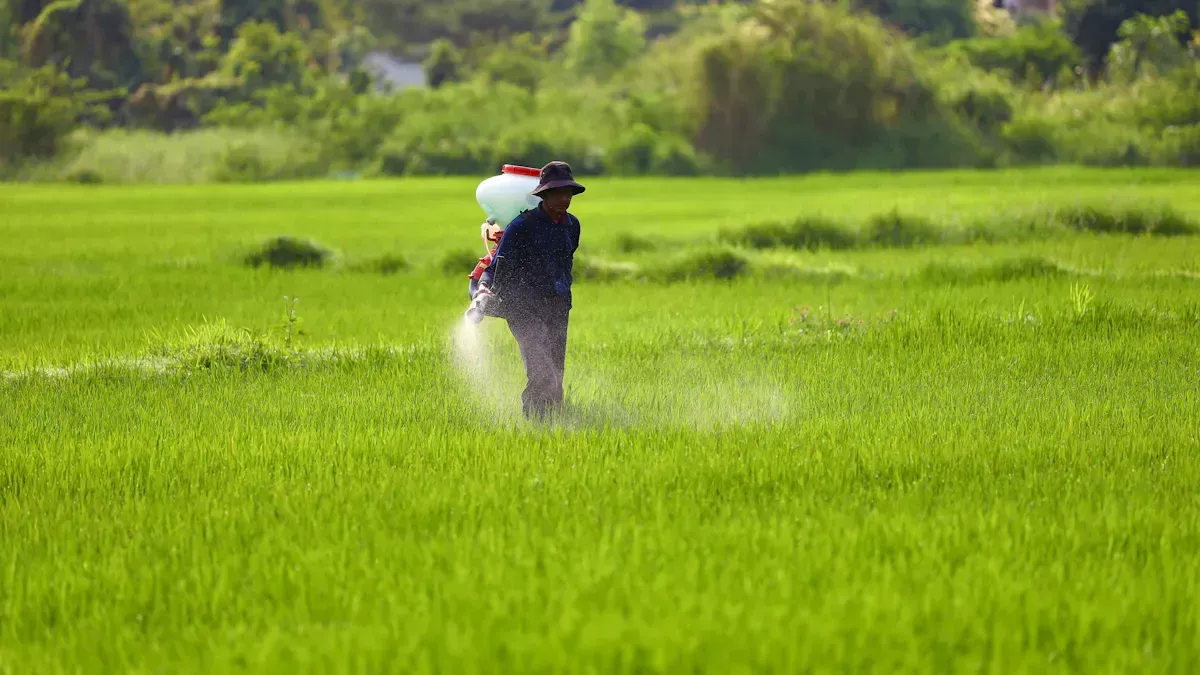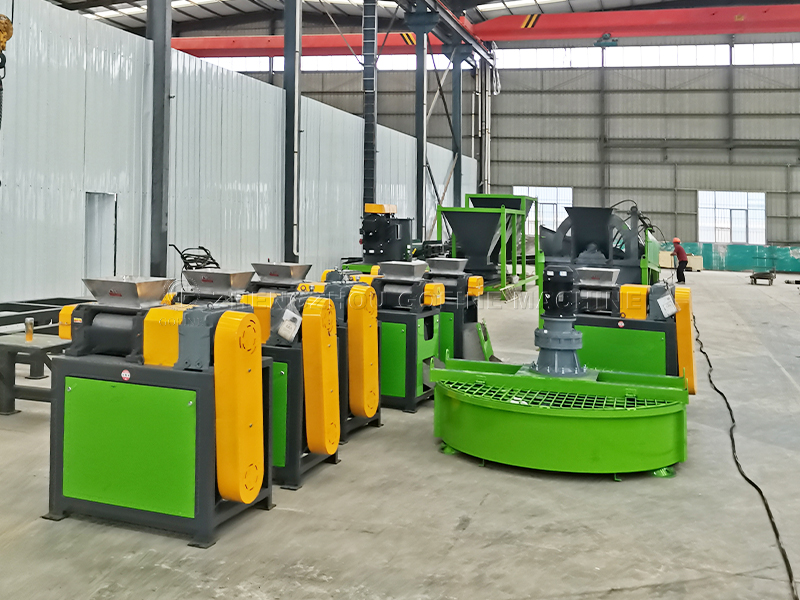
You get good results with an NPK granulator by picking the right granulation method. Keep raw materials and process conditions steady. Do regular maintenance. Try to have steady output, even pellets, and less downtime. Control equipment settings and check material quality. This helps use less energy and make more product.
Key Takeaways
Pick the best NPK granulator for your needs. Make sure the machine fits your process, space, and product goals. This helps you get the best results.
Keep moisture levels steady and control how much you feed in. This makes strong, even pellets and cuts down on waste.
Check important things like feed rate, moisture, and temperature often. Watching these helps make better pellets and stops problems in production.
What NPK granulation does
Production line role
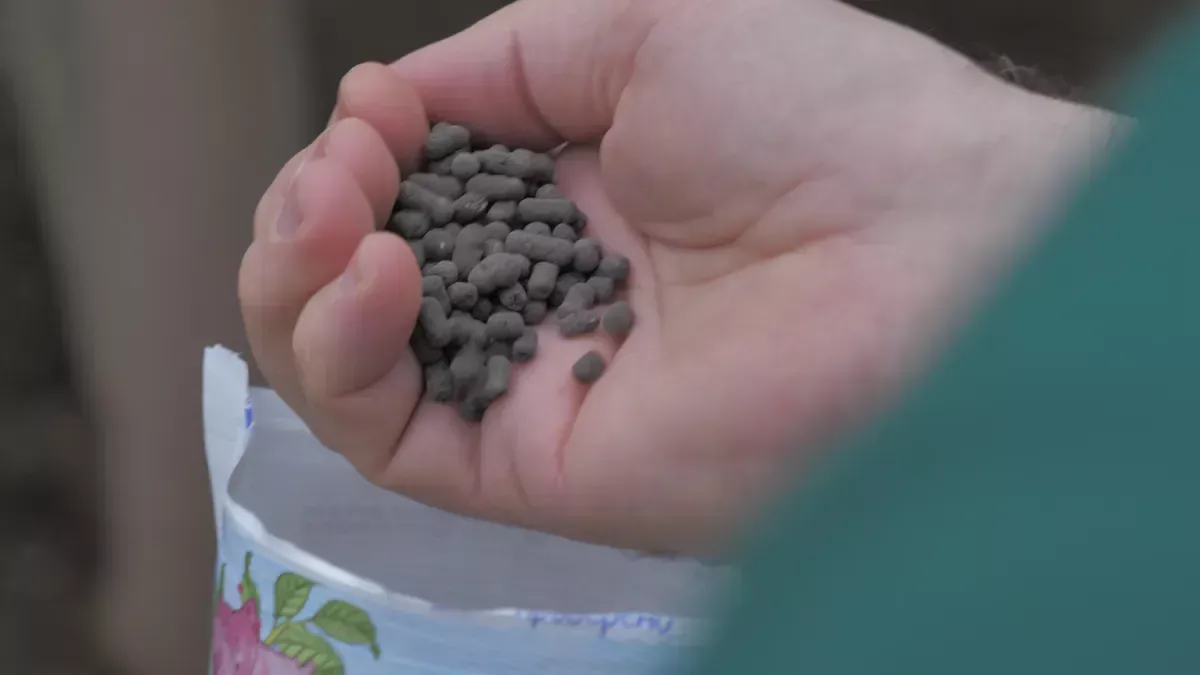
An NPK granulator changes powdery materials into solid pellets. This step is very important in making fertilizer. The granulator takes mixed materials and forms them into small, even granules. These granules are easy to move, store, and use. You can keep feeding the machine with materials. This helps your production line keep going without stopping.
Tip: Put the NPK granulator after the mixing step and before drying or screening. This way, you can control how your product moves and its quality.
A good granulator lets your plant need less hand work. You can use machines to feed and collect pellets. This saves time and stops mistakes. The right granulator works well with other machines. This helps you make a smooth and fast production line.
Product quality impact
The NPK granulator decides how your fertilizer looks and feels. You get pellets that are all the same size and shape. This makes your fertilizer work better for plants. Even granules spread out well and break down at the right speed for crops.
You do not get dust or clumps, so your fertilizer is safer to use.
Strong pellets do not break when you move them.
Same-sized pellets mean less waste and better results for buyers.
If you control the granulation step well, your product is worth more and your plant works better.
Choose an NPK granulator
Selecting the right NPK granulator is a key decision for your fertilizer plant. Each type of granulator fits different needs. You want to match the machine to your process, space, and product goals.
Drum granulator
A drum granulator uses a large rotating cylinder. You feed in powder and liquid. The drum spins and rolls the mix into round pellets. This method works well for high-capacity plants. You can make a lot of fertilizer in a short time. Drum granulators handle wet granulation, so you need to add water or steam. After granulation, you must dry the pellets. This adds steps and energy use.
Note: Drum granulators need more space and a drying system. Choose this if you want to run a big, wet process line.
Pan granulator
A pan granulator uses a shallow, round pan that tilts and spins. You add powder and binder. The pan forms small, round granules. This machine is easy to watch and control. You can change the tilt and speed to get the size you want. Pan granulators work best for small to medium plants. You still need to dry the pellets after granulation.
Pan granulators are simple to operate.
You can see the granulation process clearly.
Good for flexible, smaller-scale production.
Double roller press
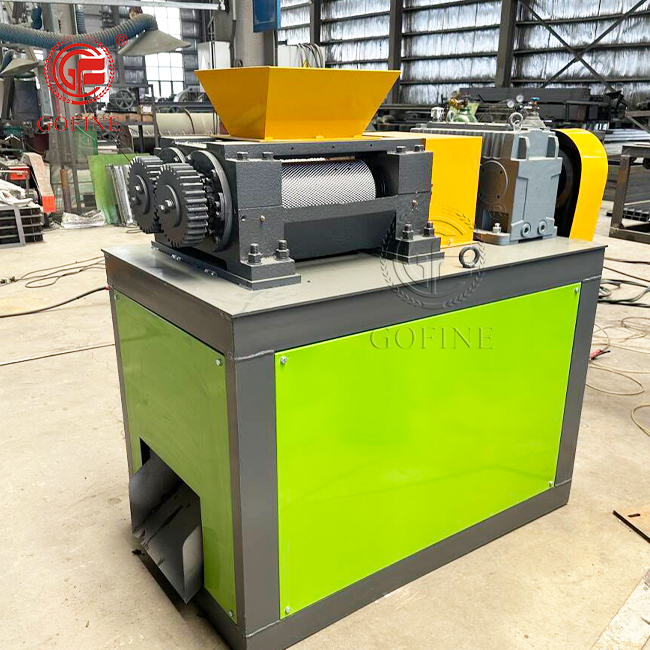
A double roller press uses two rollers to squeeze powder into solid pellets. This NPK granulator works with dry materials. You do not need to add water or binder. The machine presses the powder into shape. You get strong, even pellets right away. You can skip the drying step. This saves energy and time.
Double roller press granulation fits plants that want low energy use.
You can set up the machine in a small space.
The process is clean and does not make waste water or gas.
You can run the line without stopping for drying.
Tip: If you want a compact, continuous production line, the double roller press is a smart choice.
Wet granulation options
Wet granulation uses water or liquid binder to help form pellets. Drum and pan granulators both use this method. Wet granulation can give you rounder pellets. You must dry the product after granulation. This means you need extra equipment and more energy. Wet granulation works well if you want to make special blends or add coatings.
Process fit
You should choose dry granulation if you want to save energy and keep your process simple. The double roller press NPK granulator lets you skip water and drying. This lowers your costs and makes your line easier to run. Dry granulation also helps if you have limited space or want to avoid waste. Wet granulation fits best if you need special pellet shapes or have a large plant with drying equipment.
Remember: Match your NPK granulator to your plant’s needs. Think about space, energy, and how much product you want to make.
Use the granulation line
Prepare materials
First, get your raw materials ready. Keep moisture levels steady. For dry granulation, aim for 2% to 5% moisture. This stops sticking and caking. Check the size of the particles. Use a crusher or mill if needed. Make sure your formula stays the same. Weigh each ingredient with care. Mix everything until it looks even.
Tip: Keeping moisture and particle size steady helps you make strong pellets.
Control feeding
Feed materials into the granulation line at a steady speed. Use a feeder that fits your production rate. Change the flow if you see clumps or gaps. Watch for blockages. Keep the hopper clean. If you use a double roller press, do not overfeed. Too much material makes uneven pellets. Too little material lowers your output.
Use sensors to check feeding.
Set alarms for low or high feed rates.
Check the feeder every shift.
Run the NPK granulator
Turn on the NPK granulator. Set the pressure or speed for your material type. For dry double roller press machines, keep rollers clean. Adjust the gap to control pellet size. Watch the output. If you see dust or weak pellets, check your settings. Keep the machine running at a steady pace. Listen for strange sounds. Stop the machine if you need to clear jams.
Note: Dry granulation lines go from granulation to screening. Wet granulation lines need drying before screening.
Dry or cool product
If you use wet granulation, dry the pellets after granulation. Use a dryer to remove extra moisture. Set the temperature so pellets do not crack. For dry granulation, you skip this step. Sometimes you need to cool the pellets. Use a cooler to lower the temperature. This keeps pellets strong.
Granulator Type | Drying Needed | Cooling Needed |
Drum/Pan (Wet) | Yes | Sometimes |
Double Roller Press | No | Sometimes |
Screen and recycle
Screen your pellets to sort them by size. Use a vibrating screen or rotary sieve. Collect pellets that are too big or too small. Send them back to the granulator or crusher. Keep the recycle loop tight. This helps you get more uniform pellets. Remove dust and fines. Pack the finished product for storage or shipping.
Tip: Dry double roller press lines often go from granulation to screening and recycling. This saves energy and time.
You control each step to get the best results. Stable materials, steady feeding, and proper machine settings help you make strong pellets. Change your process if you see problems. Keep your line clean and organized.
Control key parameters
Moisture control
You need to keep the right moisture in your materials. For dry granulation, try for 2% to 5% moisture. If there is too much water, pellets stick and break easily. If there is too little water, the powder is hard to press. Use a moisture meter to check each batch. Change the water before you feed materials into the NPK granulator.
Formula and size
Follow your formula carefully. Weigh each ingredient with care. Mix them until the blend looks even. Particle size is important too. Use a crusher or mill to get small, even particles. This helps you make strong and uniform pellets.
Temperature control
Watch the temperature during granulation. High heat can make pellets crack or break. Low temperatures may slow the process. Use a thermometer to check the machine and product. Keep the temperature steady for best results.
Speed and pressure
Set the roller speed and pressure for your material. High pressure makes harder pellets. Low pressure can cause weak granules. Change the speed if you see dust or uneven pellets. Try different settings to find what works best for your line.
Residence time
Residence time means how long materials stay in the machine. Short times may cause incomplete granulation. Long times can waste energy. Adjust the feed rate and machine speed to control this. Watch your output and make changes as needed.
Tip: Check these parameters every shift. Small changes can make a big difference in pellet quality.
Improve granule quality
Raise granulation rate
You can boost your granulation rate by keeping your feed steady and your material mix consistent. Use a feeder that delivers powder at a constant speed. Check your moisture level often. For dry granulation, keep it between 2% and 5%. If you use the dry roller press method, make sure your powder is fine and well-mixed. This helps the NPK granulator press more powder into strong pellets with less waste.
Tip: Watch your output every hour. Adjust your settings if you see more dust or weak pellets.
Keep size uniform
Uniform pellet size makes your fertilizer easy to handle and spread. Use a screen to sort out pellets that are too big or too small. Feed only even-sized powder into the granulator. Adjust the roller gap or pan tilt to control pellet size. If you see many odd-sized pellets, check your feed and machine settings.
Reduce recycle load
A high recycle load means you send too many off-size pellets back for reprocessing. You can lower this by keeping your feed steady and your machine settings correct. Use a good screen to separate finished pellets from fines and oversize pieces. Try to keep your recycle rate below 10% for best results.
Protect pellet strength
Strong pellets do not break during transport. Use the right pressure in your granulator. For a double roller press, set the rollers to press hard enough but not too hard. Keep your moisture level steady. If pellets break, check for too much water or not enough pressure. Test pellet strength often to catch problems early.
Fix common problems
Weak granules
You may see weak granules if your pressure is too low or your material is too wet. Check your roller gap and increase the pressure if needed. Test your moisture level. Keep it between 2% and 5% for dry granulation. Use a fine, even powder for better strength.
Tip: Test pellet strength by squeezing a few in your hand. Strong pellets should not break easily.
Sticking and buildup
Sticky material can cause buildup on rollers or pans. This slows your line and makes cleaning harder. Lower the moisture in your mix. Clean the rollers or pan often. Use a scraper if your machine has one. Check for sticky ingredients in your formula.
Dust issues
Too much dust means your granules are not forming well. Check your feed rate and roller pressure. Use a dust collector to keep your plant clean. Make sure your powder is not too dry or too fine.
Problem | Solution |
Too much dust | Raise pressure, add dust collector |
Uneven size
Uneven pellets can come from poor mixing or wrong machine settings. Mix your materials until they look even. Adjust the roller gap or pan tilt. Screen your pellets and recycle the off-size ones.
Low output
Low output can happen if you feed too little material or your rollers slip. Check your feeder and set it to the right speed. Make sure your rollers grip the powder well. Clean the rollers if you see slipping.
High wear
High wear means you need to replace parts more often. Use the right materials and keep your machine clean. Lubricate moving parts. Check for hard or sharp particles in your mix.
Note: Regular checks help you spot wear early and avoid breakdowns.
Maintain the NPK granulator
Daily checks
Check your NPK granulator every day. Look for loose bolts or leaks. Watch for any signs of damage or wear. Check the rollers for buildup or cracks. Listen for strange sounds when it runs. Make sure the feeder and hopper are clean. Test the control panel to see if all lights work. Write down what you find in a logbook.
Tip: Finding problems early helps stop bigger issues. This keeps your production line working well.
Periodic service
Plan regular service for your NPK granulator. Change the oil and grease the moving parts. Look at belts, chains, and gears for damage. Put in new filters and check the sensors. Make sure the machine is set right. Use a service calendar so you do not forget important jobs.
Service Checklist:
Wear parts
Some parts wear out faster than others. Rollers, bearings, and seals need extra care. Keep spare parts ready. Change them before they break. Use a table to help you know when to replace them.
Part | Check Frequency | Replacement Interval |
Rollers | Weekly | Every 6 months |
Bearings | Monthly | Yearly |
Seals | Monthly | Yearly |
Cleaning and shutdown
Clean your NPK granulator after every shift. Take off dust and leftover bits from rollers and screens. Use a brush or vacuum for small spaces. When you turn off the machine, follow the maker’s steps. Turn off the power, lock the controls, and make sure parts do not move. Store the machine in a dry place.
Note: Clean machines last longer and make better pellets.
Upgrade line control
Monitor key signals
You need to watch important signals on your NPK granulation line. These signals help you keep the process stable and spot problems early. Start by checking the feed rate. If the feed rate drops, your output will fall. If it rises too fast, you may get uneven pellets. Use sensors to track the moisture of your raw materials. Stable moisture means better pellet quality.
Keep an eye on the roller pressure and speed. If the pressure drops, pellets may turn out weak. If the speed changes, pellet size can shift. You should also monitor the temperature of the machine. High temperatures can damage pellets or cause safety risks.
Tip: Write down key readings every hour. This habit helps you see trends and fix issues before they grow.
Here is a simple table of signals to monitor:
Signal | Why It Matters |
Feed Rate | Controls output |
Moisture Level | Affects pellet strength |
Roller Pressure | Impacts pellet shape |
Machine Temp | Prevents overheating |
Add automation
Automation makes your granulation line smarter and more reliable. You can use automatic feeders to keep a steady flow of materials. Install moisture sensors that adjust water or binder levels without your help. Set up alarms for low pressure or high temperature. These alarms warn you before problems stop your line.
You can also add a control panel that shows all key signals in one place. This panel lets you change settings quickly. Some systems let you track data on your phone or computer.
Automation helps you save time, reduce mistakes, and keep your product quality high.
Upgrade line control
Monitor key signals
You must watch important signals on your NPK granulation line. These signals help you keep the process steady. They also help you find problems early. First, check the feed rate often. If the feed rate drops, you make less product. If it goes up too fast, pellets can turn out uneven. Use sensors to check the moisture in your raw materials. When moisture stays steady, pellet quality gets better.
Watch roller pressure and speed closely. If pressure drops, pellets can be weak. If speed changes, pellet size can change. You should also check the machine’s temperature. High temperatures can hurt pellets or cause safety problems.
Tip: Write down key numbers every hour. This habit helps you see changes and fix problems before they get worse.
Here is a simple table of signals to watch:
Signal | Why It Matters |
Feed Rate | Controls output |
Moisture Level | Affects pellet strength |
Roller Pressure | Impacts pellet shape |
Machine Temp | Prevents overheating |
Add automation
Automation makes your granulation line work smarter and better. You can use automatic feeders to keep materials flowing steady. Put in moisture sensors that change water or binder levels for you. Set alarms for low pressure or high temperature. These alarms warn you before problems stop your line.
You can also add a control panel that shows all signals in one spot. This panel lets you change settings fast. Some systems let you check data on your phone or computer.
Automation helps you save time, make fewer mistakes, and keep your product quality high.
You get the best results with an NPK granulator when you pick the right machine for your process. Keep your materials steady and take care of your equipment. Prepare your materials carefully. Control moisture and pressure every time. Manage screening and recycling so pellets stay even. Fix problems quickly when they show up. Think of granulation as a system to make reliable and uniform fertilizer.
FAQ
How often should you check the moisture of raw materials?
Check moisture before you start each batch. Keeping moisture steady helps you make strong pellets. It also helps pellets stay the same size.
What is the best way to keep pellet size uniform?
Use a screen to sort pellets by size. Change your granulator settings if needed. Feed powder that is all the same size. This helps you get pellets that match your goal.
Can you use the double roller press for other materials?
Yes! You can use it for chemical fertilizers. You can also use it for animal feed or pharmaceutical granules. Always check if your material works with the machine.