Composting organic waste such as food scraps and yard trimmings is one of the best ways to recycle materials while enriching soil quality. With the increasing focus on sustainability, composting has become more efficient and accessible through the use of Compost Fertilizer Machines. These machines accelerate the composting process, creating high-quality organic compost in less time and with minimal manual labor. But with so many different types of machines available, how do you choose the best one for making organic compost? In this article, we’ll explore the different types of Compost Fertilizer Machines, the factors to consider when selecting the best one, and the advantages of using a composting machine.
What is a Compost Fertilizer Machine?
A Compost Fertilizer Machine is an automated device designed to speed up the composting process. Composting is the natural decomposition of organic material, but using a machine makes the process faster, more efficient, and more controlled. A Compost Fertilizer Machine typically turns organic waste like food scraps, manure, and yard trimmings into compost in a matter of weeks, compared to months in traditional composting methods.
How Does a Compost Fertilizer Machine Work?
The basic function of a Compost Fertilizer Machine is to create an optimal environment for decomposition. It works by:
Aerating: The machine continuously provides oxygen to the compost pile, which is essential for aerobic microorganisms to break down the organic material.
Turning and Mixing: The machine churns the organic materials to ensure they are evenly mixed, providing consistent decomposition throughout the pile.
Moisture Regulation: These machines maintain the correct moisture levels in the compost, ensuring that decomposition occurs at an optimal rate.
Temperature Control: The composting process generates heat, and Compost Fertilizer Machines monitor and regulate the temperature to ensure efficient microbial activity and prevent the pile from overheating.
By providing these conditions, Compost Fertilizer Machines accelerate the composting process, produce higher-quality compost, and reduce the need for manual labor.
Types of Machines Used to Make Organic Compost
There are various types of Compost Fertilizer Machines, each designed for specific needs. The machine you choose depends on the scale of your composting operation, the materials you’re composting, and the speed at which you want to process the organic waste.
1. Compost Turners
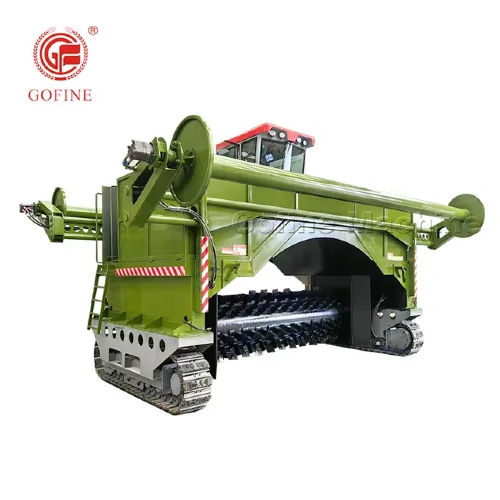
Compost turners are widely used for large-scale composting operations. They are available in different models, including crawler compost turners and windrow compost turners.
Crawler Compost Turners
Crawler compost turners are designed to operate on large compost piles, often seen in agricultural or municipal composting operations. These machines use crawler tracks to move over piles of organic waste, turning them over and aerating the materials to speed up the decomposition process.
Windrow Compost Turners
Windrow compost turners are typically used to manage long rows (windrows) of composting material. These machines are often used in industrial composting operations, where large amounts of organic waste are processed at once.
2. In-Vessel Composting Machines
In-vessel composting systems are fully enclosed composting machines that allow for more controlled conditions. These machines are ideal for processing smaller batches of organic waste in urban or indoor settings.
Benefits of In-Vessel Composting:
Faster composting cycle: In-vessel composting typically takes less time than open-air methods.
Space-efficient: These systems are perfect for smaller spaces where large piles of compost aren’t practical.
Control: The system provides optimal control over temperature, moisture, and airflow.
3. Aerated Static Pile Systems
Aerated static pile systems use perforated pipes underneath a compost pile to deliver air to the material. These systems are ideal for large-scale operations and provide efficient aeration without needing frequent turning.
Key Features:
Low-maintenance: These systems require minimal labor since the compost is aerated automatically.
Consistent decomposition: Ensures uniform airflow and temperature, leading to more consistent compost quality.
4. Tumbler Composters
Tumbler composters are smaller, more compact machines ideal for home gardeners or small-scale composting operations. These machines consist of a rotating drum that helps aerate the material and speed up the composting process.
Benefits of Tumbler Composters:
Table: Comparing Different Types of Compost Fertilizer Machines
Machine Type | Composting Speed | Ideal For | Key Features |
Windrow Compost Turners | Medium | Large-scale composting | High capacity, efficient aeration |
In-Vessel Composting Machines | Fast | Small to medium-scale operations | Controlled environment, faster composting |
Aerated Static Pile Systems | Medium | Large-scale operations | Low maintenance, automated aeration |
Tumbler Composters | Slow to medium | Home gardens, small-scale | Compact, easy to use, fast processing |
Factors to Consider When Choosing the Best Machine for Organic Composting
When selecting the best Compost Fertilizer Machine for making organic compost, there are several factors to consider. Each machine type has its strengths, and choosing the right one depends on your specific needs.
1. Scale of Operation
The size of your composting operation determines which machine is most suitable. For example, large-scale farms or municipalities may need a high-capacity Compost Fertilizer Machine, while small-scale composters can benefit from compact, easy-to-use machines like tumbler composters or small in-vessel systems.
2. Material Type
Different Compost Fertilizer Machines are designed to handle specific types of organic waste. Consider whether you will be composting food scraps, yard waste, agricultural residues, or a combination of materials. Some machines are designed to handle larger particles, while others may be more suited for finer materials.
3. Composting Speed
If you need compost quickly, look for machines that have faster composting cycles. In-vessel composting machines and compost turners typically offer faster results than traditional composting methods, which can take several months.
4. Ease of Use and Maintenance
Consider how easy the machine is to operate and maintain. Machines with automatic aeration, moisture control, and turning mechanisms will require less manual effort. Regular maintenance tasks, such as cleaning and lubricating parts, should also be easy to perform.
5. Environmental Impact
Choose machines that are designed to be environmentally friendly. Look for features that reduce odors, promote aeration, and minimize the release of greenhouse gases. A Compost Fertilizer Machine with a well-designed aeration system and moisture regulation can ensure a cleaner, more sustainable composting process.
Advantages of Using a Compost Fertilizer Machine for Organic Composting
There are many advantages to using a Compost Fertilizer Machine to create organic compost, including:
1. Faster Results
Machines dramatically reduce the time needed for composting, producing high-quality compost in just a few weeks.
2. Less Labor Intensive
Automating the composting process reduces the need for manual labor, saving both time and effort.
3. Consistent Compost Quality
By regulating the temperature, moisture, and aeration, a Compost Fertilizer Machine ensures consistent compost quality, which is harder to achieve with traditional methods.
4. Eco-Friendly
By reducing the amount of organic waste sent to landfills, Compost Fertilizer Machines contribute to waste reduction and promote a more sustainable environment.
Maintenance and Care for Your Compost Fertilizer Machine
To ensure your Compost Fertilizer Machine runs efficiently for years, it is essential to maintain it regularly. Here are some maintenance tips:
1. Regular Cleaning
Clean the machine regularly to remove any build-up of compost material, which can cause clogs and affect its performance.
2. Lubrication
Ensure that all moving parts, such as the turning mechanism and conveyor systems, are properly lubricated to minimize friction and wear.
3. Inspection and Repairs
Inspect the machine periodically for signs of damage, such as cracks or broken parts. Regular inspections help catch potential problems early, preventing costly repairs.
Conclusion
Choosing the right Compost Fertilizer Machine is essential for producing high-quality organic compost efficiently and sustainably. Whether you're managing a small-scale composting project at home or overseeing a large commercial operation, there is a machine tailored to meet your specific needs. By investing in a Compost Fertilizer Machine, you can significantly speed up the composting process, reduce the amount of manual labor involved, and contribute to more sustainable waste management practices and agricultural methods.
At Zhengzhou Gofine Machine Equipment Co., Ltd., we specialize in providing advanced Compost Fertilizer Machines designed to suit a wide range of composting needs. Our machines are built for efficiency, durability, and ease of use, helping you achieve faster, more consistent results. Whether you're looking to improve waste recycling at a small scale or streamline compost production on an industrial level, our machines can support your goals.
Contact us today to learn more about how our Compost Fertilizer Machines can enhance your composting operations and contribute to a greener, more sustainable future. We’re here to help you find the right solution for your composting needs.
FAQ
Q1: What is the fastest type of machine for making organic compost?
In-vessel composting machines and windrow compost turners are the fastest types, offering quicker composting cycles due to controlled environments and efficient aeration.
Q2: Can a Compost Fertilizer Machine handle both food scraps and agricultural waste?
Yes, many Compost Fertilizer Machines are designed to handle a wide variety of organic materials, including food scraps, yard waste, and agricultural residues.
Q3: How does a windrow compost turner differ from an in-vessel composting machine?
A windrow compost turner is used for large piles of organic waste and aerates them using a turning mechanism. In contrast, an in-vessel composting machine uses an enclosed system to maintain optimal conditions for faster decomposition.
Q4: How often should I maintain my Compost Fertilizer Machine?
Regular maintenance, such as cleaning and lubrication, should be done monthly, with periodic inspections to ensure all components are functioning properly.
Q5: How long does it take for a Compost Fertilizer Machine to produce compost?
The composting cycle typically takes 3 to 6 weeks, depending on the machine type and the materials being composted.


