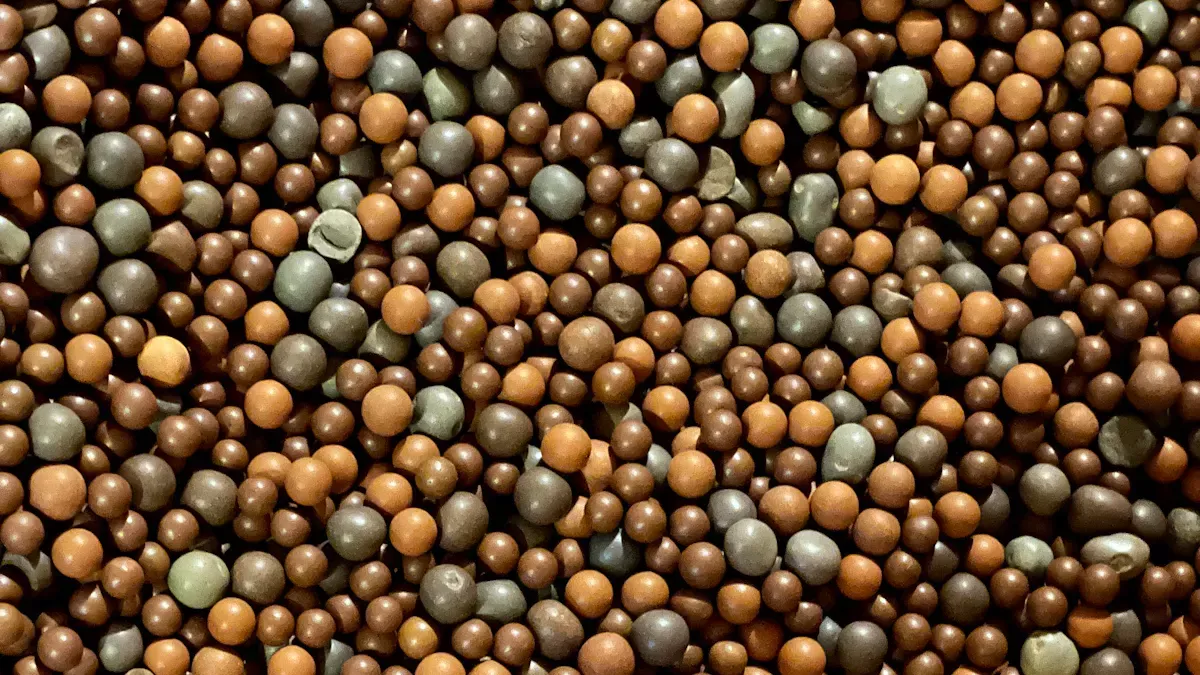
Granular fertilizer serves as the foundational nutrient delivery system for modern agriculture. We define it as solid, uniformly sized pellets containing blended essential nutrients. These formulas tightly pack Nitrogen (N), Phosphorus (P), Potassium (K), and various micronutrients into a stable form. We design these pellets for slow, targeted release directly into the soil.
Commercial growers and turf managers face constant operational pressure. They must carefully balance nutrient uptake efficiency against rising labor costs. Furthermore, they must reduce equipment wear and comply with strict environmental regulations regarding nutrient runoff and volatilization. Solving these challenges requires a strategic approach to soil nutrition.
Market demand for sustainable, slow-release nutrients is surging. Because of this, agricultural businesses are pivoting. They no longer merely optimize field applications. They actively evaluate in-house manufacturing capabilities. Controlling the supply chain allows them to dictate formulation quality and drive down costs.
This guide explores the specific biochemical mechanics of granular fertilizers. We objectively compare them to liquid alternatives across commercial scenarios. Finally, we outline the critical criteria for scaling commercial production efficiently.
Key Takeaways
Sustained ROI: Granular formulas leverage "spatial difference" to break down slowly, reducing application frequency and lowering total cost of ownership (TCO) for large-scale operations.
Storage & Stability: Unlike liquid counterparts, solid granules do not suffer from cold-weather precipitation ("salting out") or ingredient settling, ensuring long-term shelf stability.
Application Science: Maximizing effectiveness requires adherence to the "4Rs Framework" (Right Source, Right Rate, Right Time, Right Place) and careful monitoring of soil pH to prevent nutrient lockout.
Production Scalability: Transitioning to commercial production requires investing in the right Fertilizer Granulator Machine and partnering with an experienced fertilizer equipment supplier to ensure consistent particle size and distribution.
The Mechanics of Granular Fertilizer: How It Works in the Soil
Understanding granular nutrients requires examining their physical and biochemical properties. Manufacturers consolidate Nitrogen (N), Phosphorus (P), and Potassium (K) into dry, solid forms. Once applied, these pellets rely on environmental triggers to activate. Moisture levels and soil microbial action primarily dictate the dissolution timeline. Quick-release, water-soluble formulations typically dissolve within 24 to 48 hours after heavy irrigation. In contrast, slow-release formulations feature advanced chemical structures or protective coatings. They take four to six weeks to fully metabolize and feed the plant.
The "Spatial Difference" Concept
Agronomists often refer to a concept called "spatial difference." Granular nutrients do not immediately bathe the entire root zone in liquid nutrition. Instead, the granules sit in specific soil locations. They must structurally break down and slowly dissolve into the surrounding soil water. This physical separation creates a prolonged feeding cycle. Roots gradually intercept the expanding nutrient zones. This process prevents the immediate, sometimes volatile flush of nutrients associated with liquid applications. It ensures a steady diet for developing crops.
Modern Advancements: Sparged Technology
The fertilizer industry continuously innovates to improve absorption rates. Modern granulars often incorporate "sparged" liquid coatings. Manufacturers spray liquid nutrient solutions over the solid granules during the final production stages. This process hybridizes the distinct benefits of both fertilizer types. You get the reliable solid structure of a granule combined with an immediate, liquid-like nutrient availability upon first contact with field water. Plants receive a quick energy boost while waiting for the core granule to break down.
Granular vs. Liquid Fertilizer: A 4-Dimensional Commercial Comparison
No single fertilizer type dominates every agricultural scenario. You must evaluate the choice between solid and liquid formulations based on specific operational needs. We analyze this comparison across four critical dimensions.
Dimension 1: Spatial & Mobility Factors
Liquids move uniformly through soil water. They deliver immediate nutrients to the entire root mass. However, this high mobility increases the risk of leaching, especially for nitrogen components during heavy rainfall. Solid granular fertilizers behave differently. Solid phosphorus, for example, is highly immobile. It stays exactly where you place it. This immobility acts as a safeguard. It prevents vital nutrients from washing away during severe weather events.
Dimension 2: Salt Index & Burn Risk
Fertilizers carry a salt index. High-nitrogen and high-potassium granular bands can run "hot." They possess a high salt concentration. If you apply them incorrectly near young plants, delicate new roots will actively avoid these hot zones. This avoidance stunts early growth. Liquids generally provide safer "starter" options. Their diluted nature poses a much lower risk of osmotic burn to germinating seeds.
Dimension 3: Consistency & Uniformity
Liquid fertilizers offer perfect homogeneity. Every single drop contains the exact same ratio of NPK. Granular applications face distribution challenges. Lower-quality granular batches contain inconsistent pellet sizes. Smaller dust particles fall close to the spreader, while larger pellets fling further out. This creates uneven field distribution. You must prioritize high-quality manufacturing to ensure uniform particle size.
Dimension 4: Storage & Equipment Viability
Granular fertilizer holds a massive commercial advantage in bulk storage and handling. Solid granules do not freeze during harsh winters. They do not suffer from ingredient settling. They never require strict, constant agitation in holding tanks. Furthermore, dry broadcast spreaders cost significantly less to purchase and maintain than complex, high-maintenance liquid spraying rigs. For large-scale baseline nutrition, solids drastically lower equipment overhead.
Comparison Summary Chart
Evaluation Dimension | Granular Fertilizer | Liquid Fertilizer |
Mobility & Leaching | Low mobility; highly resistant to leaching during heavy rain. | High mobility; uniform soil movement but prone to washout. |
Salt Index & Burn Risk | Can be "hot"; requires careful placement away from new roots. | Lower salt concentration per application; safe as a starter. |
Nutrient Uniformity | Dependent on pellet size consistency and spreader quality. | Perfectly homogenous; every drop contains the exact NPK ratio. |
Storage & Equipment | Easy bulk storage; no freezing or settling; low equipment cost. | Requires agitation; risks winter freezing; high equipment cost. |
Maximizing Field ROI with the 4Rs Framework & ESG Benefits
Achieving optimal crop yield requires more than simply buying quality nutrients. You must apply them scientifically. The industry-standard "4Rs Framework" provides a proven methodology to maximize your return on investment while minimizing environmental impact.
Applying the 4Rs Framework
Right Source: You must match the specific granule formulation to precise crop needs. For example, use a high-phosphorus blend for rapid root establishment during early growth phases. Switch to a high-potassium blend in the fall to build turfgrass disease resistance.
Right Rate: Never guess application volumes. Use calculated metrics derived from laboratory soil tests. Applying the exact required rate prevents excess material costs and limits toxic soil buildup.
Right Time: Timing dictates absorption efficiency. Schedule applications based on the specific granule's release speed. Apply slow-release granules well before the growing season or pre-dormancy. Apply quick-release formulas during active growth windows.
Right Place: Placement determines availability. Utilize precision agriculture technologies like GPS-guided spreaders. Ensure operators rake or till granules 1-2 inches deep into the topsoil. This specific placement minimizes atmospheric ammonia volatilization.
Sustainability & Carbon Sequestration
Modern commercial farming recognizes granular fertilizer as a vital Environmental, Social, and Governance (ESG) asset. When applied using the 4Rs, solid granules minimize nutrient runoff into local watersheds. Furthermore, they promote massive, deep root system development. These dense root networks lock carbon into the earth. By sustaining robust plant growth over long periods, agricultural operations indirectly convert atmospheric carbon dioxide into stable organic soil carbon. This process actively supports global carbon sequestration goals.
Scaling Operations: Evaluating a Fertilizer Granulator Machine
Many agricultural businesses are transitioning from mere consumers of fertilizer to active producers. Agricultural cooperatives, large-scale commercial farms, and emerging chemical brands increasingly formulate proprietary blends. Producing your own pellets allows you to monetize agricultural waste, control supply chain delays, and tailor exact NPK ratios for local soil deficiencies.
Equipment Selection Criteria
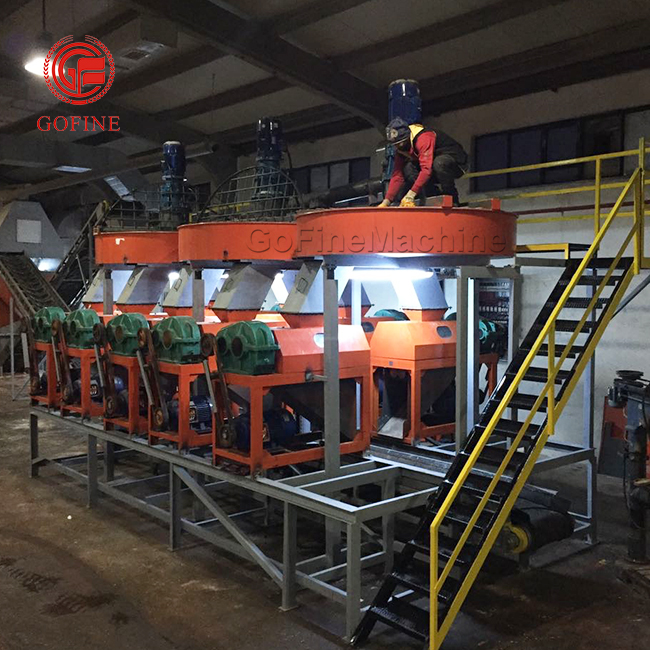
The foundation of this transition lies in heavy equipment. Transitioning to commercial production requires investing in the right Fertilizer Granulator Machine to ensure consistent particle size and distribution. You must evaluate several technologies.
Rotary Drum Granulators: These machines handle massive output capacities. They utilize a tumbling action combined with steam or liquid binders. They excel in large chemical fertilizer plants.
Disc Pan Granulators: Disc granulators offer excellent control over particle size. The operator adjusts the pan angle and rotation speed to influence the final granule. They provide high energy efficiency for mid-sized operations.
Extrusion Granulators: These machines force dry materials through a die. They work exceptionally well for organic materials with varying moisture contents, producing dense, uniform cylindrical pellets.
When selecting machinery, closely analyze the power consumption per ton of output. Additionally, verify the equipment's ability to process raw materials with fluctuating moisture levels without jamming.
The Importance of a Reliable Supplier
Purchasing heavy industrial machinery involves more than just calculating the upfront capital expenditure (CapEx). The true cost of ownership depends heavily on vendor support. Partnering with an experienced fertilizer equipment supplier ensures smooth facility commissioning. You must assess their expertise in navigating localized compliance and safety standards. Furthermore, production halts cost thousands of dollars per hour. Ensure your chosen vendor guarantees the rapid availability of wear parts. Robust post-installation technical support separates profitable plants from failed ventures.
Implementation Risks and Mitigation Strategies
Even perfectly manufactured granules fail if applied under the wrong conditions. Field operators must understand common biochemical risks and proactively mitigate them.
Soil pH & Nutrient Lockout
Soil pH dictates nutrient solubility. If the soil pH is suboptimal, chemical reactions bind the nutrients tightly to soil particles. For example, in highly acidic soil with a pH of 5.8, phosphorus becomes chemically locked. The granular nutrients remain completely unavailable to the plant roots, regardless of how much volume you apply.
Mitigation: Prioritize comprehensive soil testing. Execute lime treatments to raise the pH to optimal levels (usually between 6.5 and 7.0) well before applying expensive granular formulas.
Surface Application Inefficiencies
Leaving certain fertilizer types exposed on the soil surface destroys their commercial value. Urea-based granules are particularly vulnerable. If left on the surface during dry, hot weather, urea converts into ammonia gas. This process, known as volatilization, strips the nitrogen away into the atmosphere before roots can absorb it.
Mitigation: Never leave urea granules exposed. Ensure immediate mechanical incorporation into the soil. Alternatively, time the application just prior to a moderate rainstorm or schedule immediate mechanical irrigation.
Foliar Burn Avoidance
Improper application damages existing foliage. Applying solid granules to wet grass or crop leaves causes a localized chemical burn. The water on the leaf partially dissolves the outer layer of the granule. The pellet sticks aggressively to the plant tissue. The resulting high salt concentration scorches the leaf, creating necrotic brown spots.
Mitigation: Provide strict guidance to your operators. Apply broadcast granules to dry foliage only. Once spread, water the field thoroughly. This washes any stray dust off the leaves and moves the nutrients safely down into the soil profile.
Conclusion
Granular fertilizer firmly remains the backbone of cost-effective, large-scale agricultural and turf management. Its superior storage stability, combined with sustained nutrient release mechanisms, provides unmatched long-term value. While liquid alternatives serve specific early-growth needs, solid granules deliver the enduring foundational nutrition required for massive commercial yields.
We encourage readers to conduct comprehensive soil testing before adjusting any field application protocols. For B2B buyers looking to control their supply chains, take action today. Request total cost of ownership (TCO) modeling and detailed machinery spec sheets from a trusted vendor to assess your own in-house production viability.
FAQ
Q: How long does granular fertilizer take to dissolve?
A: The dissolution timeline depends heavily on the specific formulation. Water-soluble, quick-release granules typically take 24 to 48 hours to dissolve completely when exposed to adequate moisture. Conversely, slow-release or specially coated formulations take 4 to 6 weeks to fully metabolize and release their nutrients into the soil profile.
Q: Can you combine liquid and granular fertilizers?
A: Yes, operators frequently combine them. A highly effective commercial strategy involves using granular fertilizer as the steady, "long-term base" for sustained feeding. Growers then supplement this base using liquid fertilizer as a rapid "quick fix" or starter foliar spray to address immediate, short-term nutrient deficiencies.
Q: Is granular fertilizer safe for pets and wildlife?
A: Granular fertilizer is generally safe for animals only after proper dissolution. You must heavily water the applied area to break down the granules and wash the chemical components deep into the soil. Once the application area has completely dried, it is widely considered safe for pets and wildlife to re-enter.
Q: How do you calculate the exact amount of fertilizer needed?
A: You calculate the requirement by referencing your soil test results, which state the exact pounds of nitrogen needed per acre. You map this requirement against the specific N-P-K ratio printed on the fertilizer bag. Divide the required nitrogen weight by the nitrogen percentage in the bag to find the total product weight needed.


