Understanding the Fundamental Choice in Cat Litter Manufacturing
The selection between organic and inorganic raw materials is the first critical decision when designing a cat litter production line. This choice determines not only your product's performance characteristics—absorption rate, clumping strength, dust control—but also dictates the specific cat litter granulator technology required. For manufacturers evaluating a cat litter making machine, understanding these fundamental differences is essential for aligning equipment investment with market positioning -9.
Inorganic Cat Litter: The Bentonite Standard
Bentonite cat litter dominates the global market due to its superior clumping properties. Sodium bentonite, when hydrated, can absorb 3–5 times its own weight, expanding to form tight, scoopable clumps -6.
Granulation Requirements for Bentonite
Bentonite processing typically employs either:
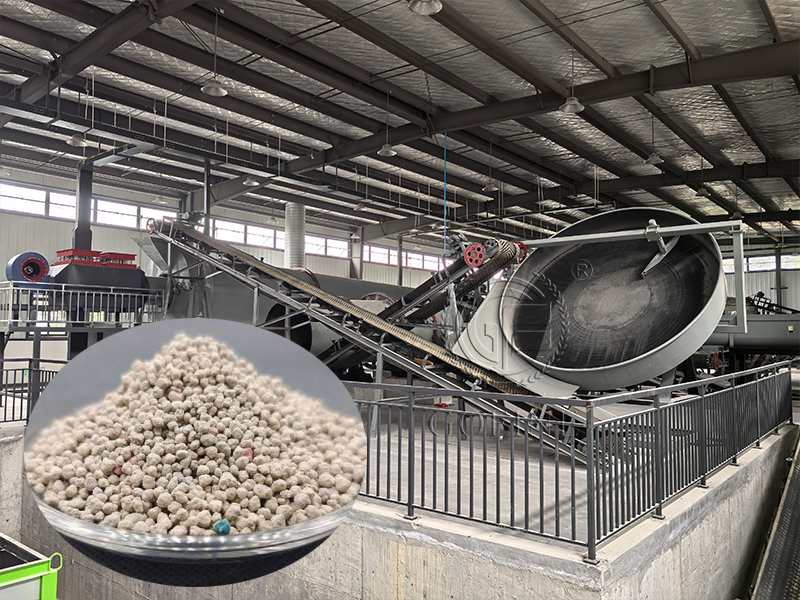
Disc Granulator (Pan Granulator) : Suitable for bentonite cat litter production with capacities ranging from 1–6 tons per hour. The rotating disc (inclination adjustable between 35–55°) produces spherical particles with diameters of 0.5–3mm, achieving a granulation rate of up to 95% -1-6.
Double Roller Press Granulator: This cat litter granulator uses extrusion pressure (typically 20–50 MPa) to form oblate or pillow-shaped particles without moisture addition. For bentonite with 8–12% inherent moisture, this dry process eliminates subsequent drying, reducing energy consumption by an estimated 30–40% compared to wet granulation methods -1-6.
Production Parameters
Standard bentonite cat litter specifications require:
Organic cat litters—derived from wood, tofu byproducts, corn, wheat, or paper—have captured growing market share, particularly in Europe and North America, where sustainability concerns drive purchasing decisions -4-9.
Raw Material Considerations
Organic materials present different processing challenges:
Wood-based litter: Requires fine grinding (particle sizes <840 μm) before granulation -2
Tofu/plant-based litter: Typically utilizes extrusion technology with screw speeds of 300–800 rpm to achieve uniform pellet formation -2-7
Paper/cellulose: Often requires binder addition (3–10 parts by weight of natural polymers) to achieve adequate particle cohesion -2
Granulation Equipment for Organic Materials
The cat litter making machine for organic production differs fundamentally:
Extrusion Granulators: Create cylindrical pellets (typically 2–6mm diameter) through die plates. Operating pressures range from 15–30 MPa, with production capacities of 200–500 kg/h for mid-sized systems -7-8.
Post-granulation drying: Organic granules require controlled drying to 8–12% moisture using rotary dryers with inlet temperatures of 80–120°C, preventing microbial growth during storage -7.
Decision Framework for Equipment Selection
Parameter
Inorganic (Bentonite)
Organic (Plant-based)
Recommended Granulator
Disc or Double Roller Press
Extrusion Granulator
Raw Material Moisture
8–15% (as received)
40–80% (requires pre-drying)
Granule Shape
Spherical/Oblate
Cylindrical
Drying Requirement
Often none (dry process)
Required to 8–12% moisture
Typical Capacity (Mid-scale)
3–8 tons/hour
0.5–2 tons/hour
Conclusion
The choice between organic and inorganic cat litter production fundamentally shapes your equipment strategy. For bentonite-based production, a cat litter granulator utilizing disc or roller press technology offers proven efficiency with minimal energy consumption. For organic formulations, extrusion-based cat litter equipment with integrated drying systems provides the necessary process control. Contact our engineering team to discuss your raw material specifications and target production capacity for a customized solution.