For commercial growers, large-scale turf managers, and agricultural producers, fertilizer selection represents a massive operational expense. Choosing the wrong format often leads to severe nutrient runoff, wasted labor hours, and eventual yield loss. Liquid fertilizers might offer quick green-ups, but they frequently fall short regarding long-term soil health and budget predictability. We must move past basic agronomy and evaluate granular fertilizer through a strictly commercial lens. This article analyzes essential cost-to-benefit ratios, long-term soil health impacts, and Total Cost of Ownership (TCO). You will learn how modern production scalability and advanced application strategies deliver a superior return on investment. By understanding the core agronomic mechanisms, you can build a more sustainable and economically predictable nutrient management program.
Key Takeaways
Granular formulations offer superior slow-release capabilities, feeding crops over 4–6 weeks and reducing application frequency.
In a head-to-head TCO evaluation, dry granular formats typically require less specialized storage infrastructure and boast lower application hardware conversion costs than liquid alternatives.
Advanced coating technologies (e.g., polymer-coated urea) allow for precise nutrient timing without the volatility risks of gaseous or liquid formats.
For commercial operations, controlling custom blends via in-house or contracted granulation (utilizing modern production machinery) drastically reduces bulk procurement costs.
Agronomic data suggests a "hybrid" approach—using granular for baseline soil health and liquid for acute correction—yields the highest ROI.
The Core Agronomic Mechanisms: Why Granular Delivers Sustainable ROI
To understand the financial benefits of dry fertilizers, we must first look at how they interact with soil chemistry. The physical nature of a solid pellet dictates its release profile. This mechanism directly impacts your labor costs and crop yields over a full growing season.
The "Spatial Difference" and Slow Release
Liquids instantly saturate the soil solution. They flood the root zone with available nutrients all at once. Granules operate on a principle called "spatial difference." They require microbial activity and physical moisture to break down. This separation prevents immediate nutrient leaching. It provides a steady, reliable baseline of nutrition. As microbes slowly digest the solid materials, they release nitrogen, phosphorus, and potassium at a pace the plant can actually utilize. You avoid the feast-or-famine growth cycles commonly associated with water-soluble sprays.
Salt Index and Root Safety
High-salt liquids can shock tender roots. Quick-release fertilizers often cause severe burning if applied incorrectly. Granular formats mitigate these risks beautifully. Organic or controlled-release variants slowly introduce nutrients into the soil profile. They prevent root avoidance behaviors in new plantings. When young roots encounter a highly concentrated saline liquid, they often alter their growth path to survive. Solid pellets distribute this salt load over time. They ensure roots grow deep and strong without chemical stress.
Environmental Compliance & Carbon Sequestration
Granular formats actively improve soil structure. Compost-based mixes boost microbial biodiversity in ways synthetic liquids cannot. They promote steady plant growth over extended periods. Because they last longer, you make fewer tractor passes across the field. Fewer tractor passes mean you reduce fuel consumption and soil compaction. This directly supports carbon sequestration. Capturing carbon in the soil represents a growing ESG (Environmental, Social, and Governance) priority for large-scale agricultural operations.
Best Practices for Agronomic Success
Match pellet size to crop: Use micro-granules for fine turf and standard bulk pellets for row crops.
Monitor soil moisture: Ensure adequate irrigation follows application to activate microbial breakdown.
Prioritize organics for poor soil: Use compost-based pellets to rebuild depleted organic matter faster.
Strategic Advantages Across the "4R" Nutrient Stewardship Framework
Commercial agriculture relies on the "4R" framework to maximize crop uptake and minimize environmental loss. Solid fertilizers align perfectly with these globally recognized stewardship principles.
Right Source: You must evaluate how specific N-P-K bases react to soil pH. Acidic soils severely limit phosphorus availability from certain solid sources. Alkaline soils lock up iron and zinc. By selecting the correct dry compound, you prevent nutrient lockout.
Right Rate: Dry granules simplify bulk calculations. You measure them by weight, avoiding the complicated dilution math required for liquids. This reduces operator error during mixing and loading.
Right Time: Slow-release pellets excel in seasonal timing. Fall applications of high-P/K granulars fortify winter dormancy. The nutrients sit safely in the soil until spring. Spring applications establish deep root networks. These robust roots help plants resist summer droughts.
Right Place (Precision Agriculture Integration): Commercial farms now map applications digitally. They connect this data to GPS-guided variable-rate broadcast equipment. The spreader adjusts the drop rate automatically based on soil zones. This ensures precise placement. You drastically reduce wasted tonnage compared to blanket liquid sprays.

Granular vs. Liquid: A Realistic Cost and TCO Evaluation
Agronomy only tells half the story. The true value of a fertilizer format lies in its Total Cost of Ownership (TCO). When we compare liquids and solids side-by-side, the logistical advantages of dry pellets become obvious.
Storage and Stability
Granular fertilizer remains highly stable over long periods. Liquids suffer from "salting out" or precipitation in freezing temperatures. They require agitated, climate-controlled storage tanks to prevent separation. Dry pellets simply need a dry, covered space. You do not need expensive pumps, tank heaters, or specialized containment berms to store them safely.
Hardware and Equipment Conversion
Retrofitting agricultural equipment costs significant capital. Handling liquid or anhydrous ammonia involves complex engineering. You must install high-pressure pumps, sealed tanks, and specialized injection knives. Dry broadcast spreaders represent a much lower barrier to entry. They rely on simple gravity and mechanical spinners. Maintenance costs stay incredibly low. Repairs usually require basic hand tools rather than specialized hydraulic technicians.
Cost Volatility
Historically, dry bulk fertilizers offer more stable pricing. Think of commodities like granular urea. They boast lower transportation costs per unit of active nutrient. Heavy liquid alternatives consist mostly of water. You pay freight charges to transport water across the country. Volatile gases like anhydrous ammonia fluctuate wildly in price based on natural gas markets.
TCO Comparison Chart
Cost Factor | Granular Fertilizer | Liquid / Gas Alternatives |
Storage Requirements | Dry shed, basic hoppers | Agitated, climate-controlled tanks |
Shelf Life | Indefinite (if kept dry) | Prone to separation and freezing |
Equipment Cost | Low (Broadcast spreaders) | High (Pumps, seals, injection knives) |
Freight Efficiency | High (100% active material) | Low (Paying to ship water weight) |
Supply Chain Scalability: In-House Blending and Granulation
For regional co-ops, large estates, or commercial agriculture producers, relying on pre-mixed commercial bags cuts deeply into profit margins. The markup on branded bags is substantial. You pay for their marketing, their packaging, and their specific blend ratios.
Taking Control of the Formula
You need to take control of the formula. By procuring raw materials in bulk, operations can formulate the exact N-P-K ratios their soil tests demand. You stop paying for filler materials you do not need. This localized control insulates your business from national supply chain shocks.
Machinery and Production ROI
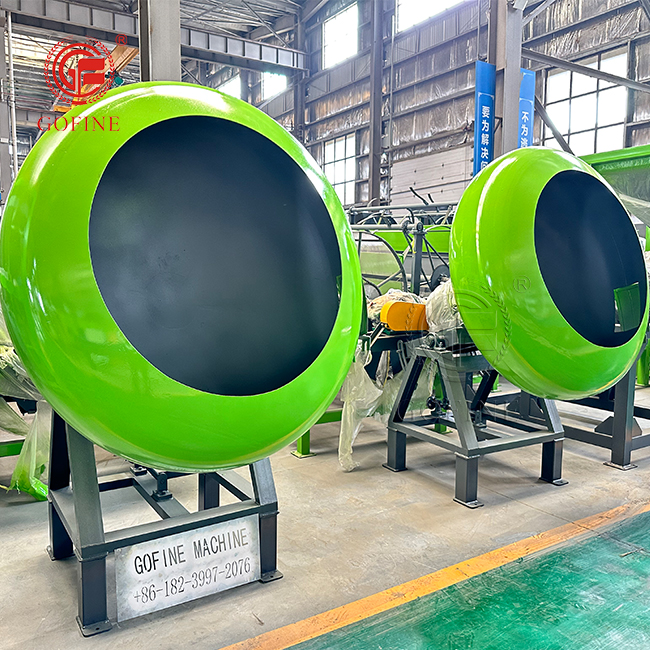
Many mid-to-large operations evaluate TCO differently today. They bring production in-house. They produce custom blends right on-site. Investing in a commercial Fertilizer Granulator Machine fundamentally changes the game. Facilities can process raw organic matter seamlessly. They turn custom synthetic mixes into uniform, dust-free pellets. This machinery ensures every single pellet contains the identical nutrient ratio. It eliminates the uneven field distribution caused by dry blending different sized raw ingredients.
Global Sourcing
The capital expenditure required for granulation has dropped significantly over the past decade. Sourcing a high-efficiency China Fertilizer Granules Making Machine empowers modern producers. They can create custom-coated, slow-release pellets independently. This happens at a fraction of the historical cost. You secure exact nutrient consistency. More importantly, you stop relying on premium-priced external suppliers. You transform a static line item into a dynamic operational asset.
Mitigating Implementation Risks (What the Data Says)
Despite the clear advantages, dry pellets require specific management practices. Failing to understand these operational nuances will result in wasted money and poor crop performance. Data from agricultural extension programs highlights several critical risk factors.
The Moisture Requirement (Avoid the 60% Loss Trap)
Granular fertilizer strictly requires moisture to activate. You must water it in. This is not optional. Data from institutions like the University of Maryland shows stark realities regarding nitrogen loss. Surface-applied nitrogen left without moisture activation can lose up to 60% of its efficacy. It escapes into the atmosphere through a process called volatilization. If rain is not in the forecast, you must run irrigation systems immediately after spreading.
Application Uniformity
You must choose the correct application method for your specific crop. Consider the trade-offs carefully:
Broadcasting: Spreads pellets widely across the surface. It is fast and efficient for turf and pastures. However, it requires immediate watering to prevent atmospheric loss.
Side-Dressing: Drops pellets directly beside growing crop rows. It concentrates nutrients where roots easily reach them. It prevents feeding weeds in the middle of the rows.
Soil Incorporation: Mixes pellets into the top 3-5 inches of soil prior to planting. This method practically eliminates runoff. It maximizes nutrient uptake efficiency from day one.
Terrain Limitations
Sloped terrains present unique challenges. Heavy spring rains can wash away granules before they ever dissolve. Physical runoff carries your investment directly into local waterways. This causes financial loss and potential environmental compliance issues. On steep grades, you must utilize soil incorporation or vegetative buffer strips to lock the pellets in place.
Common Mistakes to Avoid
Applying pellets to wet foliage. (They stick to the leaves and burn the plant).
Ignoring soil pH before spreading bulk phosphorus.
Leaving urea on the soil surface for days without irrigation.
The Verdict: Shortlisting a Combined Fertilizer Strategy
Modern agronomy rejects black-and-white thinking. The most profitable commercial operations do not choose exclusively between liquids and solids. They combine them.
Moving Past "Either/Or"
Long-term studies from institutions like the United States Golf Association (USGA) prove a critical point. Combined nutrient programs consistently outperform isolated ones. Top-tier agronomy universities echo these findings. They demonstrate that relying solely on liquids depletes soil organic matter over time. Relying solely on solids can leave plants vulnerable during acute, mid-season stress events.
The Baseline + Spike Model
We recommend the "Baseline + Spike" model for maximum ROI. Use bulk granular fertilizer as your absolute foundation. It builds necessary organic matter. It sustains complex microbial life. It provides a reliable 4-to-6-week feeding baseline.
Then, use liquid applications strictly as strategic tools. Deploy them for targeted micro-nutrient corrections. Use them for immediate "green-up" responses right before a harvest or a major golf tournament. This hybrid approach leverages the cheap, stable power of dry pellets while retaining the rapid agility of foliar sprays.
Next-Step Actions
Do not wait for the next growing season to optimize your strategy. Audit your current soil pH immediately. Evaluate your existing spreading equipment for wear and calibration accuracy. Finally, calculate the true cost-per-acre of your current liquid program. Compare that figure against switching to a bulk granular base. The savings usually justify the transition.
Conclusion
Granular fertilizer is far more than a legacy format. It remains a highly stable, environmentally scalable, and economically predictable solution. It supports long-term soil health while protecting your bottom line from volatile liquid pricing. By leveraging advanced slow-release technologies, you reduce application frequency and lower mechanical wear on your fleet. We encourage all commercial buyers to review their infrastructure today. Examine your storage capabilities. Assess your current spreader equipment. Consider the massive ROI of installing potential in-house granulation machinery. By taking these strategic steps, you will fully capitalize on granular cost efficiencies and build a more resilient agricultural operation.
FAQ
Q: How long does granular fertilizer take to dissolve and show results?
A: It typically requires 24 to 48 hours post-watering to begin breaking down. You will usually see visible results in 1 to 2 weeks for standard synthetic mixes. For slow-release or polymer-coated formulations, expect results to unfold steadily over 4 to 6 weeks.
Q: Can granular and liquid fertilizers be applied in the same season?
A: Yes. A hybrid approach is actually an industry best practice. Use dry pellets for foundational, slow-release nutrition. Use liquid formulas for targeted foliar feeding or immediate micro-nutrient corrections during periods of acute plant stress.
Q: Does granular fertilizer expire or lose potency in storage?
A: If kept completely dry and protected from heavy humidity, synthetic granular fertilizers possess an indefinite shelf life. Unlike liquid formats, they will not separate, settle out, or degrade chemically during prolonged warehouse storage.


