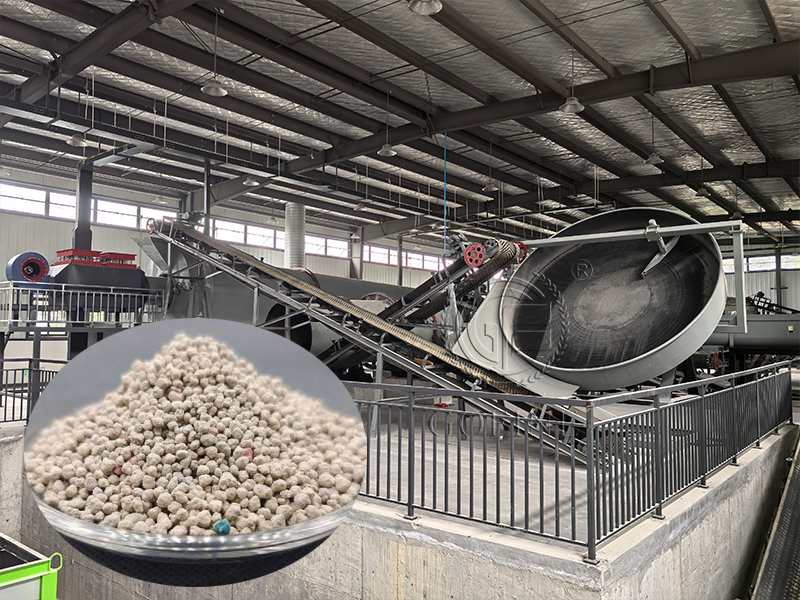
Predictability in nutrient release remains the defining factor for both commercial crop yield and high-end turf management. Agronomists and landscapers rely on precise timing to maximize plant health. However, unpredictable dissolution often leads to costly agronomic failures. You might experience nutrient runoff, burned root zones, or a frustratingly delayed plant response. These issues directly impact the ultimate return on investment for your fertilizer program.
Fortunately, we can manage this dual-natured timeline. Dissolving rates depend heavily on environmental application conditions. This environment gives you end-user control. Conversely, the physical properties engineered into the granule represent manufacturer control. The factory floor dictates how well a product performs in the field.
We will explore how different formulas break down and how soil conditions alter these timelines. You will discover why manufacturing quality matters. Ultimately, you will learn actionable steps to evaluate application methods and product specifications for superior agronomic results.
Key Takeaways
Standard synthetic granular fertilizers typically require 24 to 48 hours to dissolve with adequate moisture.
Controlled-release and organic granules operate on a timeline of weeks to months, relying on specific soil temperatures and microbial activity.
Visual residue does not equal failure; modern fertilizers utilize insoluble carriers that remain long after the active NPK has leached into the soil.
The consistency of the dissolve rate is heavily dependent on the quality of the Fertilizer Granulator Machine used during production, which dictates particle size, density, and coating integrity.
The Baseline Timeline: Granular Fertilizer Dissolution by Type
Nutrient release timelines vary drastically based on chemical composition. Agronomists design different products for specific growth stages. Understanding these baseline timelines helps you set accurate field expectations.
Standard Synthetic (Fast-Release)
Standard synthetic formulas deliver immediate nutrition. They dissolve rapidly upon contact with water. These simple salts break down quickly because they lack protective barriers. Visual breakdown typically occurs within 24 to 48 hours. Once dissolved, the nutrients enter the soil matrix immediately. You will usually observe an agronomic response, such as rapid turf greening, within 1 to 5 days. However, this fast action comes at a cost. Heavy rainfall can easily wash these unprotected nutrients past the root zone.
Slow-Release and Coated Synthetic
Manufacturers engineer slow-release products for extended lifecycles. These formulas typically feed plants for 2 to 6 months. Producers coat the urea or mineral core using polymers or sulfur. These physical barriers intentionally throttle water ingress. Moisture slowly permeates the shell, dissolving the core. The internal pressure then pushes the liquid nutrients out gradually. They do not dissolve all at once. This slow osmotic release provides a steady, predictable feeding cycle. It prevents sudden growth spikes and reduces leaching risks.
Organic Granular Formulations
Organic options behave entirely differently. An organic granular fertilizer does not truly "dissolve" in water like synthetic salts. Instead, it relies on biological decay. These products contain complex proteins and carbohydrates. It takes 2 to 6 weeks for them to break down. This process requires active soil biology. Soil microbes must consume the organic matter to mineralize nutrients into plant-available forms. Therefore, organic timelines depend completely on a healthy microbial ecosystem.
Summary Chart of Dissolution Times
Fertilizer Type | Visual Breakdown Time | Plant Response Time | Release Mechanism |
Standard Synthetic | 24 - 48 Hours | 1 - 5 Days | Immediate water solubility |
Coated Slow-Release | Remains visible for months | 1 - 2 Weeks (sustained) | Osmotic pressure through coating |
Organic Granular | 2 - 6 Weeks | 2 - 6 Weeks | Microbial mineralization |
Environmental Triggers vs. Physical Barriers
Even the highest-quality fertilizer cannot overcome poor environmental conditions. Field variables dictate the actual dissolve rate. You must actively manage these triggers to unlock your fertilizer's potential.
Moisture as the Primary Catalyst: Granules require significant water to activate. Deep watering or natural rainfall initiates the chemical breakdown. Insufficient moisture halts dissolution entirely. If dry salts sit on plant tissue, they pull water out of the leaves. This osmotic imbalance increases the risk of surface-level plant burn. You must ensure adequate irrigation immediately after application.
Soil Temperature and Metabolism: Temperature regulates both biological and chemical speed. Cold soils severely limit microbial activity. This essentially stalls organic decomposition. Cold conditions also reduce plant root metabolic rates. Even if synthetic nutrients dissolve, dormant roots will not absorb them. Conversely, warm soils accelerate the breakdown and absorption process. You should time applications alongside optimal soil temperatures for your specific plant species.
Physical Soil Barriers (Compaction & Thatch): Soil structure impacts nutrient travel. Heavy clay compaction restricts downward water movement. Similarly, a thick thatch layer acts like a sponge. It traps dissolved nutrients above the soil line. These physical barriers prevent essential elements from reaching the root zone. This creates the illusion of fertilizer failure. Core aeration and dethatching remain critical practices to ensure unhindered nutrient pathways.
pH and Nutrient Lockout: Soil chemistry matters just as much as physical structure. Extreme alkaline or acidic soil pH causes nutrient lockout. For example, high pH soils quickly bind up dissolved iron. The roots cannot absorb it. Even if granules dissolve perfectly, adverse pH levels negate visual results. You must test and amend soil pH to guarantee nutrient availability.
The "Leftover" Myth: Active Ingredients vs. Insoluble Carriers
Landscapers frequently receive panicked calls from clients. The complaint usually sounds like this: "The granules are still there after two weeks." This common observation causes unnecessary alarm. You need to understand chemical architecture to demystify granule residue.
Chemical Architecture
Modern bags containing N-P-K blends are highly engineered. They often only utilize slow-release technology for Nitrogen. Nitrogen represents the most volatile element. It easily leaches into groundwater or turns into a gas. Phosphorus and Potassium generally stabilize better in the soil. Therefore, manufacturers focus complex coatings primarily on the nitrogen components. The rest of the blend might behave differently.
Inert Carriers
Granules are rarely 100% pure active ingredients. Manufacturers use inert carriers to bind the chemicals into a spreadable form. They commonly use clay, limestone, or biosolid sludge as the base. These materials do not dissolve easily. Clarify this fact for your operators and clients. What remains on the soil surface is often just the insoluble carrier. The active nutrients have already dissolved and entered the soil matrix. The empty shell left behind simply indicates successful nutrient delivery.
Visual Success Criteria
Do not judge fertilizer efficacy by disappearing granules. You should train your team to look for actual agronomic indicators.
Stem Thickening: Look for robust, sturdy plant stems within two weeks.
Leaf Area Growth: Observe the expansion of new foliage and canopy density.
Color Shift: Note the transition from pale green to deep, vibrant hues.
Root Density: Pull a soil core to check for aggressive, white root proliferation.
Instruct operators to prioritize plant response over the disappearance of physical shells. A lingering shell often signifies a high-quality polymer coating doing its job perfectly.
Manufacturing Impact: How Equipment Dictates Dissolving Rates
Dissolution predictability actually starts on the factory floor. Application techniques cannot fix poorly made products. We must shift the focus to manufacturing standards. Equipment quality dictates how well a granule performs in the field.
Particle Size Distribution (PSD)
Particle Size Distribution measures the uniformity of the granules. Uniformity determines the release curve. Granules sized too large dissolve much too slowly. Conversely, excessive "fines" or dust dissolve too quickly. Dust washes away or causes immediate turf burn. You need absolute consistency for predictable results. High-tier Fertilizer Granulator Machine technology ensures uniform PSD. Precision machinery prevents irregular sizing. This guarantees that every square foot of your application receives an identical nutrient load and dissolve rate.
Crush Strength and Density
A granule must survive a harsh journey. It travels from the factory bag to the mechanical spreader, and finally to the soil. Poorly granulated fertilizer lacks internal integrity. It crumbles under friction. When it breaks apart in the hopper, it alters the intended dissolve rate completely. Fractured granules release nutrients instantly. Optimal density ensures the granule survives transport intact. A dense, well-formed pellet only breaks down reliably when hydrated in the field.
Sourcing Accountability
Commercial applicators and bulk buyers must scrutinize their supply chains. You should ask your suppliers about their production methods. Vetting the Chemical Fertilizer Machine Manufacturer used by the supplier provides valuable insight. It serves as a direct proxy for evaluating product reliability. Superior production machinery lowers your Total Cost of Ownership (TCO). It reduces wasted product, eliminates callbacks, and prevents turf damage. Quality machinery guarantees a quality agronomic response.
Troubleshooting and Evaluation: When to Change Tactics or Suppliers
Even seasoned professionals encounter application issues. When results fall short, you need a systematic approach. Diagnostic evaluation helps you pinpoint the exact failure point.
Diagnostic Checklist
Use this checklist before assuming the fertilizer failed.
Have you verified irrigation depth? Rule out a lack of moisture first. Use a soil probe to check water penetration. Surface moisture is not enough. You need water to push the nutrients into the root zone.
Are mower blades picking up granules? This indicates surface stickiness due to insufficient watering-in. The coating has softened but not dissolved. You should raise the mower deck temporarily and increase irrigation.
Is the soil compacted? Check for heavy resistance when inserting a screwdriver into the ground. Compaction prevents dissolved nutrients from moving downward.
Evaluating Fertilizer Quality
Sometimes the product itself is the problem. You must evaluate the physical condition of the fertilizer before application. If granules clump severely prior to application, moisture breached the packaging. If the bag exhibits severe dustiness, the manufacturing process is flawed. You cannot achieve an even spread with dusty products. Furthermore, assess your product choice. Switching from a homogenous granule to a blended product might solve regional issues. Ensure your choice aligns with specific local soil and climate realities.
Next-Step Actions
Commercial applicators must take proactive steps to ensure success. First, test soil pH annually. Correct pH imbalances to prevent nutrient lockout. Second, aerate compacted areas regularly. This creates physical channels for dissolved nutrients to reach deep roots. Finally, demand tighter particle uniformity specs from your suppliers. Do not accept dusty, inconsistent bags. Holding your suppliers accountable ensures better results in the field.
Conclusion
Managing dissolution time requires strategic alignment. You must pair the right fertilizer type with accurate environmental data. Water volume, soil temperature, and overall soil health dictate your success. We cannot ignore these field variables.
Furthermore, commercial success relies heavily on uniform physical properties. Whether you apply the fertilizer or manufacture it, consistency is paramount. Irregular granules lead to unpredictable nutrient delivery. You lose money and compromise plant health when quality slips.
We encourage all buyers and applicators to audit their current fertilizer specifications. Evaluate your product density, particle size, and coating integrity. Verify whether your nutrient delivery systems or production equipment meet modern agronomic standards. Upgrading your material quality directly elevates your operational success.
FAQ
Q: Do I need to water in granular fertilizer immediately?
A: Yes, you should water it in immediately. Moisture initiates the dissolution process. It washes the salts off the plant tissue, preventing severe turf burn. Furthermore, deep watering pushes the dissolved nutrients safely into the root zone and minimizes nitrogen volatilization into the atmosphere.
Q: Is undissolved granular fertilizer safe for pets?
A: Most modern inert carriers are entirely harmless. Once you water in the active chemical, the remaining shell is typically safe. However, explicit label guidelines must dictate your site reentry times. Always follow the manufacturer's recommended waiting period before allowing pets back onto the treated area.
Q: What happens if it rains heavily right after application?
A: Standard fast-release granules face high risks during heavy rain. The rapid water flow may wash them away entirely or leach them deeply past the root zone. Conversely, high-quality slow-release granules feature robust protective coatings. Manufacturers engineer these coatings to withstand heavier environmental stress without flash-releasing their core nutrients.


