Transitioning from basic N-P-K selection to optimizing large-scale commercial application requires evaluating more than just nutrient labels. Farmers and landscapers often underestimate the physical mechanics of nutrient delivery. You cannot rely on a simple chemical breakdown when managing massive acreages. Poorly chosen granular fertilizers often lead to uneven crop yields, equipment clogging, and a heavily wasted budget.
A successful purchasing decision balances biological plant needs with physical granule quality. You must also consider application equipment compatibility and long-term cost-efficiency. Relying on generic bulk products risks severe environmental runoff and frustrating operational bottlenecks.
This guide explores the critical physical, operational, and sourcing factors buyers must evaluate. We will help you select the right granular fertilizer for commercial agriculture or large-scale landscaping. You will learn how to navigate manufacturing nuances, cost structures, and strict compliance standards.
Key Takeaways
Physical consistency dictates performance: Evaluate Size Guide Number (SGN) and Uniformity Index (UI) to prevent uneven nutrient distribution.
Manufacturing processes matter: Homogeneous granules offer distinct advantages over mechanically blended options, heavily dependent on the supplier’s production technology.
TCO favors bulk granular: Despite initial spreader equipment investments, the slow-release nature and long shelf-life of granular formulations drastically reduce seasonal labor and application costs.
Risk mitigation is essential: High salt indices and poor moisture control can lead to crop burn and environmental runoff, necessitating strict compliance with regional slow-release mandates.
Assessing Physical Quality: Size Guide Number (SGN) and Uniformity Index (UI)
Simply matching N-P-K ratios based on a routine soil test falls short during commercial procurement. Soil tests tell you what nutrients the earth lacks. They do not tell you how those nutrients will travel through a mechanical spreader. If you ignore the physical traits of a granular fertilizer, you risk erratic plant growth and severe turf damage.
Defining SGN (Size Guide Number)
The Size Guide Number (SGN) measures the average physical diameter of fertilizer granules. It calculates the millimeter size multiplied by 100. Matching the SGN to your specific application environment prevents equipment issues and ensures proper soil contact.
For example, applying oversized granules to dense golf greens causes uneven feeding. The mower blades might even sweep the large particles away before they dissolve. Conversely, using tiny granules in broad agricultural settings wastes money and increases wind drift.
SGN Range | Granule Size (mm) | Primary Application | Characteristics |
80 - 100 | 0.8 - 1.0 | Golf Greens / Dense Turf | High particle count, rapid soil canopy penetration. |
125 - 150 | 1.25 - 1.5 | Tees and Fairways | Balanced size for medium-height grass, good spread width. |
200 - 250+ | 2.0 - 2.5+ | Agriculture / Roughs | Heavy weight, wide broadcast range, wind resistant. |
Evaluating UI (Uniformity Index)
Think of the Uniformity Index (UI) as your ultimate quality control metric. UI measures how consistent the granules are in size within a single bag. A higher score means tighter sizing tolerances.
A high UI score (typically 40 to 50+) guarantees reliable ballistic performance. When granules exit a broadcast spreader, consistent sizes fly predictable distances. If the UI falls below 30, tiny particles drop near the machine while large chunks fly far away. This erratic spread causes "striping"—visible bands of dark green and pale yellow grass across your fields.
Evaluation Action: Always request exact SGN and UI specifications from suppliers during your shortlisting phase. Use these numbers to quickly filter out low-tier, poorly manufactured products before committing to bulk purchases.
Evaluating the Sourcing: Blended vs. Homogeneous Manufacturing
Buyers must understand how their chosen fertilizer is actually made. The production method directly impacts nutrient delivery, storage stability, and overall field performance. You will generally choose between two solution categories: mechanically blended fertilizers and homogeneous pellets.
Solution Categories
Mechanically blended products combine separate nitrogen, phosphorus, and potassium particles into one bag. They are cost-effective but prone to segregation. During transport, vibrations cause smaller, heavier particles to settle at the bottom. This settling destroys the intended N-P-K ratio before you even open the bag.
Homogeneous pellets solve this problem. Every single granule contains the exact stated nutrient ratio. Plants receive identical feeding regardless of where the pellet lands.
Feature | Mechanically Blended | Homogeneous Pellets |
Nutrient Distribution | Varies per particle | Identical in every granule |
Segregation Risk | High during transit | None |
Production Cost | Lower | Higher |
Ideal Use Case | Broadacre standard crops | Precision agriculture and fine turf |
The Role of Production Technology
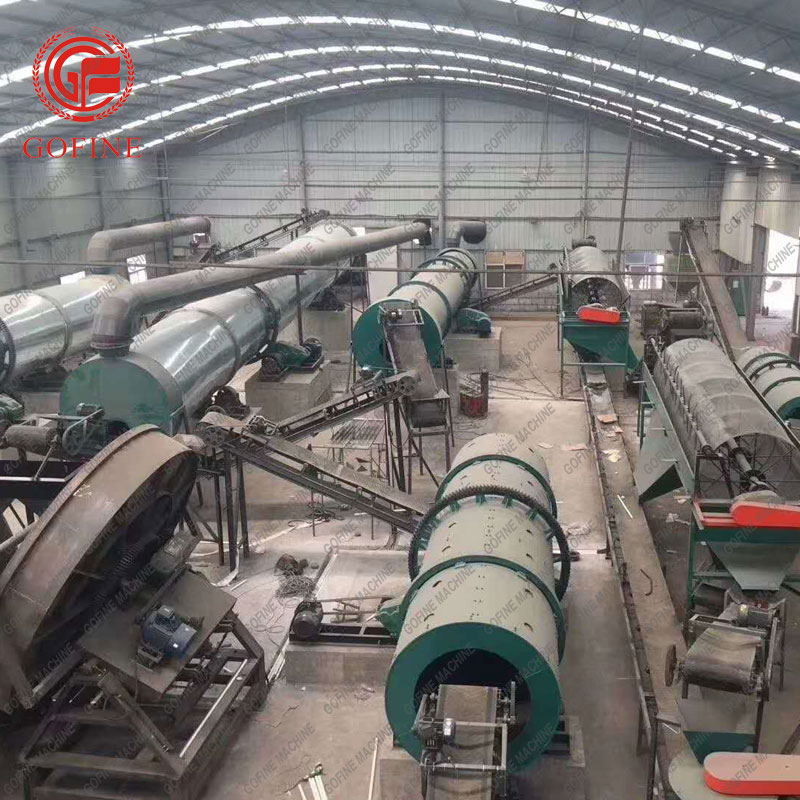
A supplier's manufacturing infrastructure heavily impacts product stability. Producing high-quality homogeneous pellets requires significant engineering. Factories rely on an advanced Fertilizer Granulator Machine to ensure precise chemical bonding.
These machines control moisture, temperature, and rotational speed to build perfectly round, hard pellets. Superior granulation technology also reduces dust. Dust wastes product volume, poses respiratory hazards to your workers, and clogs spreader mechanisms.
Vetting Suppliers
When sourcing at scale, you must look past the sales representative and evaluate the supply chain. Vetting the Chemical Fertilizer Machine Manufacturer that supplies your vendor provides incredible insight. Understanding the vendor's internal processing equipment tells you about granule durability, expected shelf-life, and resistance to degradation during transport. Ask potential vendors about their granulation processes to ensure you receive a structurally sound product.
Operational Logistics and the 4R Nutrient Stewardship Framework
Selecting the best granular fertilizer means nothing if you apply it incorrectly. Commercial farming operations must align their purchasing choices with modern agronomic standards to maximize ROI.
Implementation Realities: The 4R Framework
The industry-standard 4R Nutrient Stewardship Framework ensures sustainable and efficient feeding. You must integrate these four pillars into your granular strategy:
Right Source: Match the granule's nutrient profile to the crop's specific growth stage.
Right Rate: Calibrate spreaders to deliver exact tonnage, preventing waste and runoff.
Right Time: Apply slow-release granular products ahead of high-growth phases.
Right Place: Ensure granules reach the root zone, often requiring mechanical incorporation or timed irrigation.
Equipment Compatibility
Granular products demand specialized broadcast or drop spreaders. You must evaluate how granule density and hardness affect equipment calibration. Soft granules crush easily under the weight of a full hopper. This crushing creates powder, altering the flow rate and jamming the spreader chute. Always match your fertilizer's physical hardness to the aggression of your spreading equipment.
Precision Agriculture Integration
For large-scale commercial farms, precision agriculture is non-negotiable. Modern tractors use GPS-guided pneumatic delivery systems to inject fertilizer directly into soil rows. You must match granule specifications precisely with these systems. Irregularly shaped or dusty granules will cause severe tube blockages in pneumatic lines. A blocked line leaves an entire crop row unfed, devastating your final yield.
Layering Strategy
Smart operators do not rely on just one application method. Consider implementing a layered feeding strategy. Use your chosen granular fertilizer as the long-term "foundation" to build baseline soil fertility. Because it breaks down slowly, it provides weeks of steady feeding. You can then reserve liquid fertilizers for immediate, localized nutrient corrections. If a crop shows sudden yellowing, a quick liquid foliar spray solves the emergency while the granular base continues working in the soil.
Total Cost of Ownership (TCO) vs. Liquid Alternatives
Buyers frequently debate whether to use liquid or granular fertilizers. While liquid options look attractive for quick results, total cost of ownership (TCO) often heavily favors bulk granular products for large operations.
TCO Drivers
Understanding the hidden costs and savings reveals why granular fertilizer remains the industry standard.
Storage & Shelf Life: Granular dominates in bulk storability. Liquids require specialized tanks, secondary containment berms, and climate control to prevent freezing or separation. Granular products simply need a dry warehouse. This longevity allows you to capitalize on off-season bulk purchasing discounts.
Labor Efficiency: Granular formulations feature slow-release and controlled-release mechanisms. They feed plants steadily over several weeks or months. This means your crews make fewer passes over the field per season. Reducing tractor passes sharply lowers diesel fuel consumption and hourly labor costs.
Equipment Trade-offs: We must acknowledge the upfront cost of high-capacity granular spreaders. However, liquid sprayers require constant maintenance. Sprayer nozzles clog frequently, pumps fail, and hoses degrade. Granular systems have fewer moving parts, resulting in a much lower maintenance overhead.
Decision Framework
You can calculate the exact break-even point for your operation. First, determine your total acreage. Next, estimate the required application frequency based on your crop's uptake speed. Finally, multiply the tractor hours by your local fuel and labor rates. In almost every scenario exceeding 50 acres, the reduced application frequency of granular products offsets the initial equipment investment within two seasons.
Risk Mitigation: Salt Content, Runoff, and Compliance
Commercial agriculture faces intense environmental scrutiny. Choosing the cheapest available fertilizer often introduces hidden liabilities. You must actively mitigate risks related to soil health, local water supplies, and legal compliance.
Crop and Soil Risks
Many budget granular fertilizers utilize cheap chemical salts as nutrient carriers. These products possess dangerously high salt indices. High-salt granules create negative osmotic pressure in the soil, effectively pulling water out of the plant roots. This causes severe dehydration, root avoidance, or lethal "burn" if you do not water the product in adequately. Always review the salt index before purchasing, especially for sensitive crops or drought-prone regions.
Environmental Impact
Nutrient runoff represents a massive threat to local ecosystems. When heavy rain washes dissolved granular fertilizer into nearby streams, it causes eutrophication. This nutrient overload feeds explosive algae blooms, which deplete oxygen and kill aquatic life. To prevent this, you must prioritize products featuring verified slow-release nitrogen (SRN). SRN mimics natural nutrient cycling, feeding the plant only what it can absorb and leaving nothing behind to wash away.
Regulatory Compliance
Environmental protection is no longer just voluntary. Local compliance mandates strictly dictate procurement filters. For example, several states now require commercial fertilizers to contain a minimum of 30% slow-release nitrogen for certain applications. Ignoring these regulations invites severe environmental fines and public relations disasters. By proactively selecting compliant granular products, you support sustainable agriculture initiatives and protect your company's operational license.
Conclusion
Choosing the right granulated fertilizer goes far beyond matching nitrogen, phosphorus, and potassium numbers. It requires a comprehensive evaluation of physical engineering, operational logistics, and long-term costs. By building a strict procurement framework, you protect your crop yields and your budget.
Follow a simple shortlisting logic to secure the best product:
Start with soil-test-driven NPK needs to establish biological baselines.
Filter options by mandatory SGN and UI metrics to guarantee compatibility with your spreader equipment.
Decide between mechanically blended versus homogeneous granules based on your budget constraints and precision farming needs.
Verify the supplier’s manufacturing quality to ensure durable, low-dust pellets.
Take immediate action before signing your next bulk contract. Advise your purchasing team to request small sample batches first. Run these samples through your spreaders for accurate calibration tests. Finally, always demand a guaranteed analysis document that explicitly includes UI metrics and salt indices.
FAQ
Q: How long does granular fertilizer take to dissolve and become active?
A: Granular fertilizers generally require 24 to 48 hours of moisture exposure to begin dissolving into the soil profile. They are not instantly active. Depending on the specific polymer coatings and slow-release technologies used, the efficacy window usually lasts anywhere from one to six weeks.
Q: Can granular and liquid fertilizers be applied together?
A: Yes, applying them together forms an excellent layered feeding strategy. You should use granular fertilizer as a slow-release, sustained basal feed for the roots. You can then reserve liquid fertilizers for foliar emergency responses to quickly correct sudden, visible nutrient deficiencies.
Q: Why is dust control important when choosing a granular fertilizer?
A: Dust control protects your bottom line and your workers. Excessive dust means you lose actual product volume to the wind during application. Furthermore, inhaled chemical dust poses serious respiratory hazards for farmworkers. High dust levels usually indicate poor processing by the granulator machine.


