Applying granular fertilizer is only half the process. Water serves as the necessary catalyst. It activates dormant nutrients in the soil. Incorrect watering schedules often result in two expensive outcomes. You either cause fertilizer burn through under-watering or trigger nutrient runoff through over-watering. Either scenario wastes time and damages grass.
We provide a no-nonsense breakdown of exact timing and watering volumes below. You will discover product-specific variations and weather optimization strategies. This knowledge helps you maximize your lawn care ROI. It also ensures you prevent irreversible turf damage. Read on to master the exact science of irrigation timing after feeding your lawn.
Key Takeaways
Pure Granular Fertilizer: Water immediately or within 24 hours to wash granules off leaf blades and into the soil.
Weed & Feed Blends: Do not water immediately; these typically require application on wet grass followed by a 24-hour dry period.
Water Volume: Aim for 1/4 to 1/2 inch of water (usually 15–30 minutes of sprinkler time) to achieve proper soil penetration.
Timing: Morning watering is optimal to prevent overnight fungal growth associated with high moisture and heat.
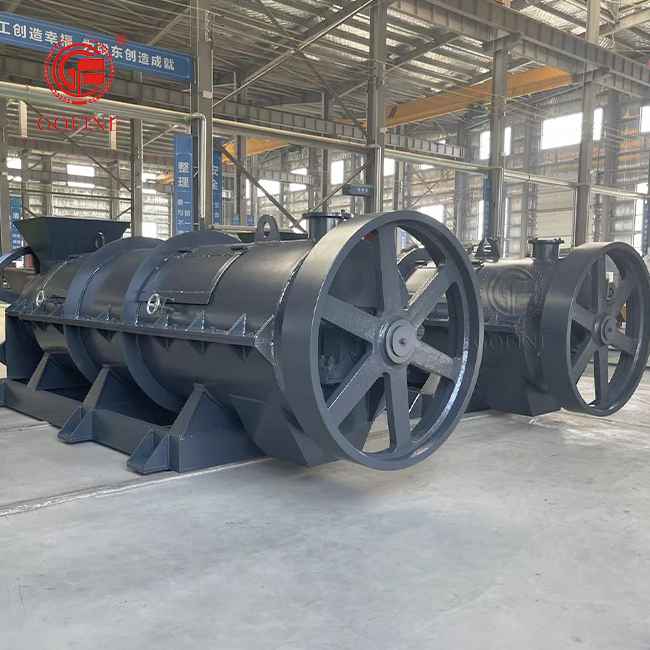
Material Consistency: The dissolution rate of your fertilizer heavily depends on granule uniformity, an output quality determined by the fertilizer granulator machine used during manufacturing.
The Core Rule: Pure Granular Fertilizer vs. "Weed and Feed"
The most common cause of turf damage stems from a simple misunderstanding. Many property owners treat composite products like pure fertilizer. Composite products blend fertilizer elements and active herbicides. You must audit the bag label before turning on your sprinklers. Treating a weed-and-feed product like a standard nutrient blend ruins the application.
Solution Categories and Mechanisms
Different product types require entirely different moisture strategies. We categorize lawn treatments into three main groups based on their absorption mechanisms.
Systemic Pure Granular: This category relies purely on root absorption. It requires immediate watering. Moisture initiates the N-P-K (Nitrogen, Phosphorus, Potassium) breakdown process. Without water, these granules sit uselessly on top of the soil.
Weed & Feed (Contact Herbicides): These formulas must adhere to weed foliage to work effectively. Applying water too soon washes the active herbicide away. They require a strict 24-hour dry window after application.
Organic/Slow-Release: Products like Milorganite act differently. They are highly forgiving. You face a lower risk of burning the grass if you delay watering. However, moisture is still eventually required to fuel microbial breakdown in the soil.
Implementation Risks
Failing to distinguish between these product types renders your application useless. In worst-case scenarios, it actively harms the turf. If you water a weed-and-feed too early, weeds survive. If you leave pure synthetic nitrogen dry on a sunny lawn, the grass burns.
Fertilizer Product Type | Primary Mechanism | When to Water | Burn Risk if Left Dry |
Pure Synthetic Granular | Root Absorption | Immediately (or within 24 hrs) | High |
Weed & Feed Blends | Foliar Contact | Wait strictly 24 hours | Medium |
Organic / Slow-Release | Microbial Breakdown | Within a few days | Low |
Exactly How Soon and How Much to Water
Evaluating your watering strategy requires two main metrics. You must measure the time to irrigation and the total water volume. Guessing these numbers often leads to patchy lawn growth.
Execution Strategy: Timing
For pure granular fertilizer, activate irrigation immediately. First, grab a broom or blower. Sweep stray granules off driveways and sidewalks. Once hardscapes are clear, start the sprinklers. Do not wait longer than 24 hours to supply moisture.
Execution Strategy: Volume
Your target goal is simple. You want to wet the top 0.25 to 0.5 inches of soil. This typically requires 15 to 30 minutes of runtime. The exact duration heavily depends on your specific irrigation system output.
Validation Frameworks
You should not rely solely on timers. Use practical validation frameworks to confirm adequate moisture levels.
The Screwdriver Test: Push a standard flathead screwdriver into the soil. It should slide in easily for the first few inches. If it meets heavy resistance, you need more water.
The Catch-Can Method: Place empty tuna cans in your sprinkler zones. Turn on the water. Stop watering when the cans collect 1/4 inch of water. Note the time it took. You can use this exact duration for future applications.
Soil Type Adjustments
Soil texture dramatically alters how water penetrates the ground. Sandy soils drain rapidly. They require shorter, more frequent watering bursts to prevent nutrient leaching. Clay soils present the opposite challenge. They pack tightly and resist water entry. Clay requires slower, longer soaking periods to prevent surface pooling.
The Financial and Environmental Costs of Watering Mistakes
Improper watering carries severe financial and environmental consequences. The total cost of ownership (TCO) for lawn care spikes when mistakes happen. You face wasted product costs. Municipal water bills increase unnecessarily. You also risk permanent property damage.
The Risk of Under-Watering (Fertilizer Burn)
Under-watering creates a destructive chemical reaction. Unactivated nitrogen sits directly on the grass blade. This highly concentrated salt draws moisture out of the plant cells through osmosis. The plant dehydrates rapidly. This results in scorched, yellow-brown patches across your lawn. Recovery from severe fertilizer burn often requires complete reseeding.
The Risk of Over-Watering (Runoff)
Over-watering introduces entirely different hazards. Excess water flushes expensive nutrients past the root zone. This process is called leaching. Roots cannot access nutrients buried too deep. Heavy watering also pushes dissolved fertilizer into storm drains. This pollutes local waterways and promotes toxic algae blooms.
Best Practices to Avoid Property Damage
Many premium fertilizers contain iron to promote deep green color. Iron causes severe issues on hard surfaces. If you leave iron-rich granules on concrete driveways, water transforms them into rust. These hard-to-remove rust stains ruin your curb appeal. Always sweep hardscapes before you turn the sprinklers on. Do not wash stray granules into the street using a hose.
Optimizing Application Windows: Time of Day and Weather Variables
Strategic scheduling elevates your lawn care results. You must align your watering efforts with favorable natural conditions. Poor timing negates even the highest quality lawn treatments.
Scheduling Logic
Always water in the early morning. Aim for the hours just around sunrise. Morning watering allows the soil to absorb moisture efficiently. The rising sun then dries the grass blades throughout the day. Dry blades resist disease better than wet blades.
Risk Mitigation: Night Watering
Watering in the evening invites disaster. It leaves the grass wet overnight. Combined with summer heat, lingering moisture creates an ideal breeding ground for fungal diseases. Conditions like brown patch and powdery mildew thrive in dark, damp, and warm environments.
Leveraging Natural Rain
You can save money by leveraging the weather forecast. Applying granular fertilizer the day before a forecasted light rain is highly efficient. A light rain usually provides about 1/4 inch of moisture. This acts as a perfect natural irrigation cycle.
Temperature Constraints
Ensure soil temperatures remain ideal for nutrient uptake. Different grass species have unique preferences. Cool-season grasses absorb nutrients best between 60-70°F. Warm-season grasses prefer temperatures between 75-85°F. You must avoid fertilizing during extreme droughts. Turf dormancy naturally pauses nutrient absorption. Feeding dormant grass only feeds the surrounding weeds.
B2B Insight: How Granule Quality Impacts Water Absorption
For commercial lawn care operators and bulk producers, watering effectiveness is dictated by physical integrity. The physical shape of the fertilizer matters just as much as its chemical makeup.
The Role of Equipment
Inconsistent granule sizes lead directly to uneven watering requirements. If a batch contains dust-sized particles, they dissolve instantly. This spikes local nitrogen levels and burns the grass. Conversely, oversized chunks fail to break down. They sit on the soil surface for months. This uneven distribution forces operators to over-water in an attempt to dissolve stubborn clumps.
Shortlisting Logic for Producers
Commercial producers must source their manufacturing hardware from a reputable fertilizer equipment supplier. Utilizing a high-grade Fertilizer Granulator Machine ensures uniform shape, density, and moisture-activation rates across the entire batch. Uniform granules dissolve predictably. Predictable dissolution means less water waste and zero chemical burns.
Next-Step Action
For bulk buyers, evaluating granulation technology is a mandatory step. It remains just as critical as analyzing the NPK ratio. Quality manufacturing guarantees that a standard 15-minute irrigation cycle works perfectly every single time.
Conclusion
Watering after granular fertilizer application is a mandatory step, not an optional enhancement. Moisture unlocks the chemical potential of your lawn treatments. It moves essential nutrients out of the granule and into the root system.
Always verify your environment before proceeding. Sweep hardscapes to prevent ugly rust stains. Use the catch-can method to verify precise water volume. Above all, confirm you are not using a weed-and-feed composite before applying immediate moisture.
Take action today. Assess your current irrigation setup to ensure even coverage. Verify the exact formulation of your chosen fertilizer. Align your watering schedule with early morning hours for optimal turf health.
FAQ
Q: Can I apply granular fertilizer to wet grass?
A: For pure fertilizer, it is not recommended, as granules will stick to wet blades and increase the risk of burning. For weed-and-feed, it is often required so the herbicide sticks to the weeds. Check the label.
Q: How long should I keep kids and pets off the lawn after fertilizing?
A: The standard safety rule is to wait 24 hours after the fertilizer has been watered in and the grass has completely dried.
Q: What if it rains unexpectedly right after I apply weed control?
A: If heavy rain occurs within 2 hours of applying liquid weed control or a weed-and-feed, the herbicide may be washed away. Monitor the turf for 10-14 days before considering a reapplication.
Q: How do I fix fertilizer burn if I forgot to water?
A: Flush the affected area with deep, heavy watering every day for a week to dilute and push the excess salts/nitrogen past the root zone.


