Selecting the right granular fertilizer is more than matching an NPK ratio. It is a strategic decision. This choice impacts nutrient runoff, application labor costs, and crop yield predictability. Relying on outdated application methods often leads to wasted resources and poor soil health.
For commercial agriculture, turf management, and fertilizer manufacturers, the physical and chemical properties of a granule dictate equipment compatibility. They also determine strict environmental compliance. Regulatory bodies increasingly monitor nutrient leaching and soil toxicity across modern farming operations. A poor choice directly harms operational budgets.
This guide breaks down granular formulations by physical morphology, release mechanisms, and specific production requirements. We help buyers and producers evaluate total cost of ownership (TCO) alongside operational scalability. You will learn exactly how to align your agronomic timeline and equipment capabilities to maximize long-term crop performance.
Key Takeaways
Physical morphology dictates application: Distinguishing between standard granules, prills, and crystalline forms prevents equipment jamming and uneven nutrient distribution.
Size and uniformity drive quality: Metrics like Size Guide Number (SGN) and Uniformity Index (UI) are non-negotiable standards for procurement and manufacturing.
Release technologies impact ROI: Coated slow-release granular fertilizers reduce labor overhead and leaching risks compared to fast-release alternatives.
Production scalability requires precision: Commercial output relies heavily on integrating an industrial-grade fertilizer granulator machine from a reputable fertilizer equipment supplier to ensure batch consistency.
Morphological Categories: Granules, Prills, and Crystalline Forms
Physical shape fundamentally changes how nutrients flow through spreading equipment. Agronomists classify these dry nutrients into three distinct morphological categories. You must match the physical form to your specific calibration standards.
Standard Granules: Smooth vs. Rough
Manufacturers produce standard granules in two primary textures. Smooth granules usually feature a specialized coating. They have no sharp angles. This smooth exterior ensures high flowability inside rotary spreaders. Smooth surfaces reduce mechanical friction. They prevent bridging inside hopper bins.
Rough or mineral granules present a different challenge. Muriate of Potash is a common example. These particles possess jagged edges. They generate slightly higher friction during application. Operators must adjust spreader gate openings carefully. Rough edges can grind against application mechanisms over time.
Prills (Micro-pellets)
Prills look perfectly spherical. They are highly water-soluble because they contain a hollow core. This hollow structure allows rapid breakdown upon soil contact. They deliver nutrients almost immediately after a watering cycle.
Risk Consideration: Prills are highly hygroscopic. They absorb moisture from ambient air rapidly. Prills require strict humidity controls during storage. Otherwise, they risk severe caking. Solidified fertilizer blocks ruin bulk procurement investments. Always store prills inside climate-controlled silos or tightly sealed moisture-barrier bags.
Crystalline Forms
Crystalline fertilizers look like slightly elongated cylinders. Ammonium sulfate frequently appears in this format. The average diameter often measures around 1.1 millimeters. Agronomists use crystalline forms for specialized applications. They require rapid soil integration. The crystalline structure dissolves quickly once exposed to morning dew or light irrigation.
Best Practices for Handling Different Forms
Calibrate your rotary spreader differently for smooth versus rough granules.
Install dehumidifiers in storage facilities housing prilled micro-pellets.
Sweep up stray crystalline particles from concrete driveways immediately to prevent staining.
Chemical Composition: Homogeneous vs. Blended
The internal chemical makeup of a granule determines application uniformity. Buyers must choose between homogeneous formulations and mechanical blends. Each option serves distinct agronomic and financial goals.
Homogeneous Granules (All-in-One)
Homogeneous granules fuse all necessary nutrients into a single particle. Every single pellet contains the identical NPK ratio. If you buy a 15-5-10 homogeneous bag, every granule delivers exactly 15% Nitrogen, 5% Phosphorus, and 10% Potassium.
ROI Driver: This format eliminates nutrient segregation during transit. Heavy vibrations inside shipping trucks cannot separate the nitrogen from the phosphorus. Homogeneous particles ensure high-density, uniform feeding. Turf managers consider them critical for high-value applications like golf greens. You never see patchy color responses.
Blended Granules (Mechanical Mixes)
Blended granules consist of physical mixtures. Manufacturers mix different individual nutrient particles together. A bag might contain white urea particles, brown phosphorus chunks, and red potash crystals.
Evaluation Criteria: Blends are highly cost-effective for large-acreage agriculture. Manufacturing them requires less energy. However, they rely heavily on strict Uniformity Index (UI) standards. If particle sizes vary too much, heavier granules settle at the bottom of the hopper. This segregation causes uneven crop responses across large fields.
Composition Comparison Chart
Feature | Homogeneous Granules | Blended Granules |
Internal Composition | Identical NPK ratio in every single particle. | Mixture of separate single-nutrient particles. |
Segregation Risk | Zero risk during transit or application. | High risk if particle sizes vary significantly. |
Primary Use Case | High-value turf, golf greens, precision agriculture. | Broadacre farming, large-scale commercial crops. |
Manufacturing Cost | Higher cost due to complex fusion processes. | Lower cost due to simple mechanical mixing. |
Grading Quality: SGN and Uniformity Index (UI)
You cannot evaluate dry fertilizers simply by looking at the bag. Industry professionals use specific mathematical metrics to guarantee quality. SGN and UI act as non-negotiable standards for procurement and manufacturing.
Size Guide Number (SGN)
The Size Guide Number measures the physical footprint of the fertilizer. SGN determines how many individual feeding sites exist per square inch of soil.
Formula: Average particle diameter (mm) × 100.
Selection Logic:
SGN 80–100 (0.8mm to 1.0mm): This ultra-fine size yields 60–70 particles per square inch. Industry standards mandate this size for closely mowed turf like putting greens.
SGN 125–150 (1.25mm to 1.5mm): Operators use this mid-grade size for sports fields and fairways.
SGN 200+ (2.0mm+): This larger size is entirely sufficient for residential lawns and broadacre crops.
Uniformity Index (UI)
The Uniformity Index measures consistency. It tells you how closely the smallest particles match the largest particles inside a single batch.
Standard Formula: D10 / D95 × 100.
Procurement Rule: A UI below 30 indicates exceptionally poor quality control. You face a high risk of spreader calibration failure. Uneven distribution burns certain plants while starving others. Premium commercial blends always demand a UI of 50 or higher. A UI of 50 means the small particles are exactly half the size of the large particles. This consistency guarantees a smooth, predictable spread pattern.
Release Dynamics: Fast-Release vs. Controlled-Release (CRF)
Nutrient release velocity dictates your application schedule. Agronomists separate release technologies into fast-acting water-soluble forms and advanced controlled-release formulations.
Water-Soluble Nitrogen (WSN)
Water-Soluble Nitrogen provides immediate green-up. Plants respond vigorously. However, this rapid response only lasts three to four weeks. WSN carries the highest risk of leaching. Heavy rains wash unbound nitrogen directly into local waterways. Over-applying WSN causes severe fertilizer burn. The high salt index pulls moisture out of plant roots.
Water-Insoluble Nitrogen (WIN) and Coated Technologies
Water-Insoluble Nitrogen offers long-term stability. Manufacturers achieve this by applying physical coatings around the nutrient core.
Polymer vs. Sulfur Coatings: Sulfur-coated granules release nutrients over approximately eight weeks. The breakdown rate depends entirely on soil moisture. Polymer-coated granules release nutrients over twelve weeks or longer. Their release rate depends primarily on soil temperature. Polymer shells expand as the soil warms, allowing liquid nutrients to seep out.
Compliance and Environmental ROI: Controlled-release technology limits nutrient lockout in adverse pH soils. Furthermore, it meets strict regional compliance laws. Many municipalities now enforce mandates requiring a minimum of 15% slow-release nitrogen for commercial labeling. Using coated technologies keeps your operation legally compliant and environmentally responsible.
Organic Granules and Temperature Dependency
Natural organic formulations operate under entirely different rules. They contain no synthetic chemical coatings.
Limitation: Organic particles rely entirely on soil microbes for decomposition. They cannot release nutrients independently.
Data Point: Microbial activity remains dormant below 50°F (10°C). Applying organic formulations in cold soils yields zero immediate ROI. The unutilized particles simply sit on the surface and risk heavy washout. Conversely, microbial activity doubles every 18°F increase in soil temperature. Always time organic applications alongside natural seasonal warming trends.
Manufacturing & Equipment: Scaling Commercial Production
Producing high-quality granules requires precise industrial engineering. The physical integrity of the final product dictates its market value. Producers must invest heavily in advanced mechanical systems.
The Role of the Fertilizer Granulator Machine
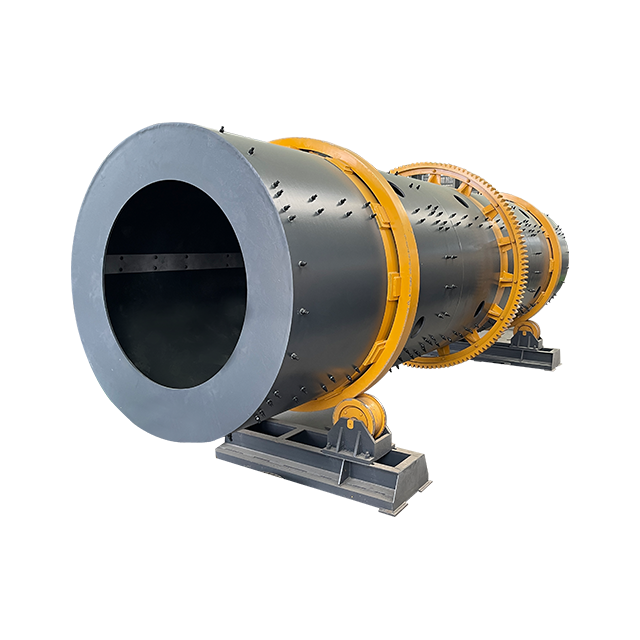
Achieving target SGN and UI at a commercial scale requires specific granulation technologies. You cannot rely on basic mixing drums. Engineers utilize advanced equipment like rotary drum granulators, pan granulators, or extrusion machines.
Business Outcome: Consistent granulation reduces airborne dust inside the factory. It strictly prevents chemical segregation. Most importantly, a high-quality Fertilizer Granulator Machine allows for the precise application of polymer or sulfur coatings. If the base granule lacks perfect spherical integrity, the liquid coating goes on unevenly. Uneven coatings cause catastrophic failures in controlled-release timelines.
Evaluating a Fertilizer Equipment Supplier
Selecting an industrial partner dictates your long-term manufacturing success. A cheap machine often produces off-spec granules.
Vendor Shortlisting Logic: Look for a fertilizer equipment supplier offering end-to-end testing protocols. Reputable vendors validate crushing strength before shipping machines. They test moisture tolerance. They prove their equipment hits your specific UI validation targets. Never finalize an equipment purchase without reviewing mechanical stress test data.
TCO Considerations: You must calculate your Total Cost of Ownership carefully. Poor machinery clogs frequently. Downtime from clogged rotating drums destroys manufacturing margins rapidly. Rejected batches due to off-spec SGN sizing cost thousands of dollars in wasted raw materials. Upfront investment in premium granulation equipment protects your bottom line.
Conclusion
Selecting the ideal nutrient delivery system requires balancing physical form, chemical composition, and release velocity. You must align the physical form (prill versus granule) and sizing (SGN) with your specific agronomic timeline. Ensure your release rate (WIN versus WSN) matches local environmental compliance mandates.
Next Steps for Buyers: Audit your current spreader equipment immediately. Verify compatibility with your desired SGN and UI ratings. Request baseline soil pH testing before purchasing new bulk orders. This simple step avoids expensive nutrient lockout scenarios.
Next Steps for Producers: Audit your existing production lines today. Ensure your current granulation equipment holds strict UI tolerances. Modern controlled-release coatings demand perfectly spherical, dust-free base granules to function correctly. Upgrade your machinery if it fails consistency tests.
FAQ
Q: How do you calculate the actual nutrient weight in a bag of granular fertilizer?
A: Multiply the bag weight by the NPK percentage decimal. For example, a 50 lb bag of 18-24-6 formulation contains 18% nitrogen. Multiply 50 by 0.18. This calculation reveals exactly 9 lbs of actual nitrogen inside the bag.
Q: How long does it take for granular fertilizer to dissolve?
A: Breakdown begins within 24–48 hours of sufficient watering. However, standard nutrients take 1-2 weeks to show visible plant results. Coated slow-release forms distribute nutrients steadily over 4–12 weeks depending on temperature and moisture levels.
Q: Can granular fertilizer replace liquid fertigation?
A: Granular is preferred for base nutrition and long-term, slow-release applications. Liquid is utilized for rapid, short-duration correction or when simultaneous irrigation is required (fertigation). Both serve distinct agronomic TCO models and rarely replace each other entirely.


