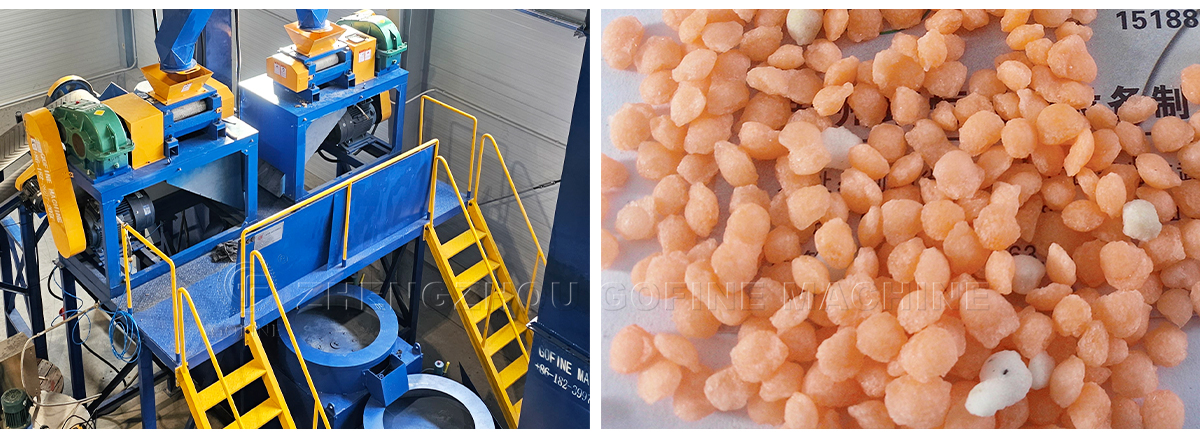
In the competitive landscape of the global agriculture industry, organic fertilizer plants are facing a dual challenge: rising operational costs and stricter environmental regulations. To maintain profitability while promoting sustainable agriculture, manufacturers are shifting away from traditional wet granulation methods toward more efficient technologies.
Among these, Dry Extrusion Granulation has emerged as the premier solution. This article explores why the double roller extrusion granulator is revolutionizing the production of granular fertilizer and why it is the most cost-effective choice for modern facilities.
1. What is Dry Extrusion Granulation Technology?
Unlike the traditional steam or disc granulation processes that require chemical binders and high moisture levels, dry granulation technology relies on mechanical pressure to compact dry powdered materials into dense, high-quality pellets.
The heart of this process is the double roller extrusion granulator. By feeding raw materials—such as processed animal manure, ammonium sulfate, or potassium chloride—between two powerful counter-rotating rollers, the material is compressed into flakes and then broken down into uniform granules.
2. Top 5 Reasons to Choose Dry Extrusion for Your Fertilizer Plant
A. Significant Energy Saving (No Drying Process)
Traditional wet granulation requires a massive amount of heat to dry the finished pellets, often consuming 60% of a plant's total energy. Because dry extrusion granulation operates at room temperature with low moisture input, it completely eliminates the need for industrial rotary dryers and coolers. This results in a drastic reduction in electricity and fuel consumption.
B. Lower Initial Capital Investment
A complete organic fertilizer production line using dry extrusion is significantly shorter. By removing the drying, cooling, and massive dust collection systems required for wet processes, investors can save up to 40% on initial equipment costs and reduce the factory footprint.
C. Superior Granule Strength and Density
The high-pressure mechanical squeeze ensures that the fertilizer granules have high physical density. This makes them easier to store, transport, and apply using mechanical seeders without the risk of crushing or "caking."
D. Versatility in Raw Material Processing
Whether you are producing NPK fertilizer, organic-inorganic composites, or specialized soil conditioners, the dry extrusion method handles a wide range of formulas. It is particularly effective for materials that are heat-sensitive or prone to chemical changes when exposed to water or steam.
E. Eco-Friendly and Low Emission
As an eco-friendly fertilizer equipment solution, dry extrusion produces minimal dust and no waste gas from combustion (since there is no dryer). This helps plants meet stringent environmental compliance standards and reduces the carbon footprint of the fertilizer manufacturing process.
3. Key Components of a Cost-Effective Production Line
Double Roller Extrusion Granulator: The core compacting unit.
Rotary Screening Machine: To separate fine powder from qualified granules.
Automated Packaging Machine: For efficient bagging and distribution.
4. The Role of Sustainable Agriculture
Modern farmers are increasingly demanding high-quality organic fertilizer that is easy to handle and provides slow-release nutrients. By adopting low-cost granulation methods, suppliers can offer competitive pricing to farmers, encouraging the transition toward soil health restoration and sustainable farming practices.
5. Conclusion
For organic fertilizer plants looking to scale up while keeping overheads low, the transition to Dry Extrusion Granulation is no longer just an option—it is a strategic necessity. By investing in a high-efficiency fertilizer granulator, you ensure long-term durability, reduced energy bills, and a superior end product.