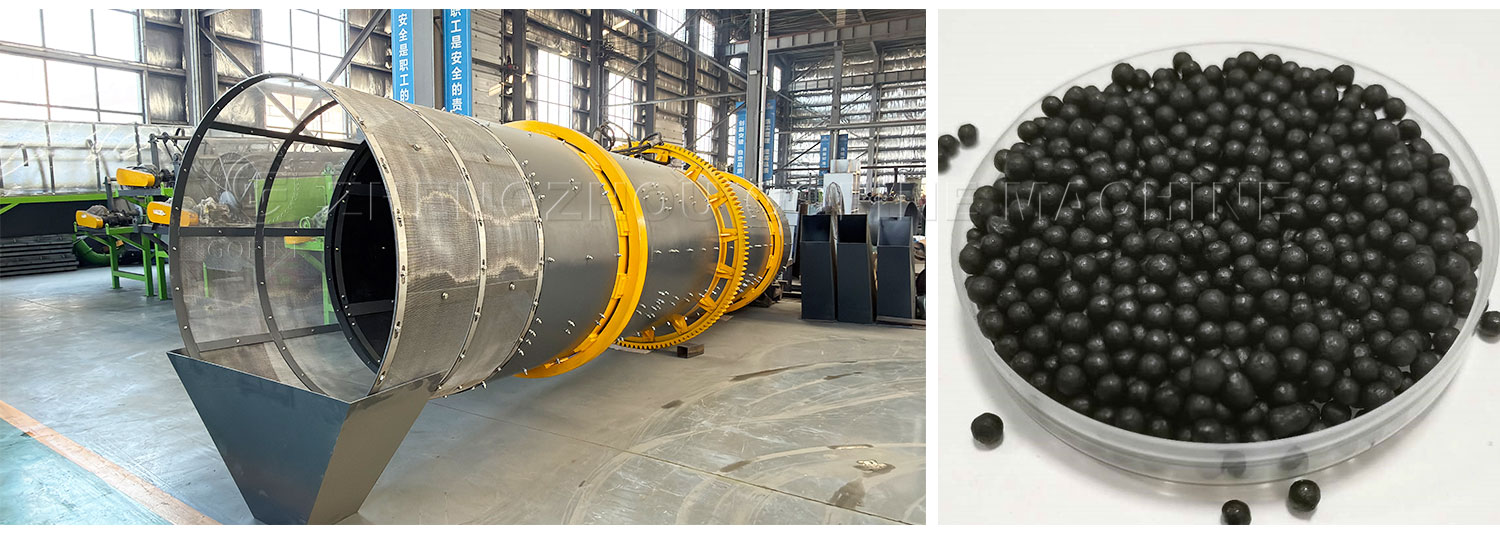
In the business of organic fertilizers, technology choices must translate to commercial success. Wet granulation dominates the market because it directly addresses the profitability equation—reducing costs, enhancing product value, and building sustainable customer relationships throughout the supply chain.
Reducing Waste Across the Value Chain
Wet granulation creates tangible savings by minimizing product loss at every stage:
Production Efficiency: The process typically achieves over 90% granulation yield, meaning less raw material ends up as waste fines needing reprocessing.
Handling & Storage: The dense, dust-free pellets experience minimal degradation during bagging, palletizing, and storage, ensuring more finished product reaches the market.
Transportation Economics: Reduced dust and breakdown mean fewer losses in transit and cleaner handling for distributors, strengthening supply chain partnerships.
Meeting Farmer Needs with Superior Performance
The end-product characteristics directly align with what modern farmers value most:
Application Precision: Uniformly sized pellets flow perfectly through mechanical spreaders, enabling even field distribution and accurate application rates.
Nutrient Efficiency: Each pellet contains a consistent nutrient blend, preventing segregation and ensuring balanced plant nutrition across the entire field.
User Experience: Clean, dust-free handling improves working conditions for farm labor, while reliable performance builds farmer trust and brand loyalty.
Premium Product Presentation: The professional appearance of spherical, uniform pellets supports value-added branding and shelf appeal in competitive markets.
Specialization Potential: The technology allows creation of custom fertilizer blends with specific nutrient ratios or added biologicals, accessing higher-margin market segments.
Quality Perception: Consistent product quality establishes reputation as a reliable supplier, justifying price premiums of 20-35% over non-granulated or poorly granulated alternatives.
Commercial Impact Analysis: Wet vs. Alternative Methods
Business Metric
Wet Granulation Impact
Dry Method Comparison
Product Waste Rate
3-5% total loss
8-15% total loss
Market Price Potential
Premium (20-35% higher)
Commodity pricing
Customer Retention
High (performance consistency)
Variable (quality fluctuations)
Brand Development
Strong differentiation possible
Limited differentiation
Conclusion: The Profitability Engine for Organic Fertilizer Businesses
Wet granulation represents far more than a production technique—it's a comprehensive business strategy for organic fertilizer manufacturers. By simultaneously reducing operational waste, creating products farmers prefer, and enabling brand differentiation, this technology delivers a measurable return on investment (ROI) that justifies the initial equipment expenditure. For businesses serious about long-term growth and profitability in the organic agriculture sector, wet granulation provides the commercial foundation for sustainable success.