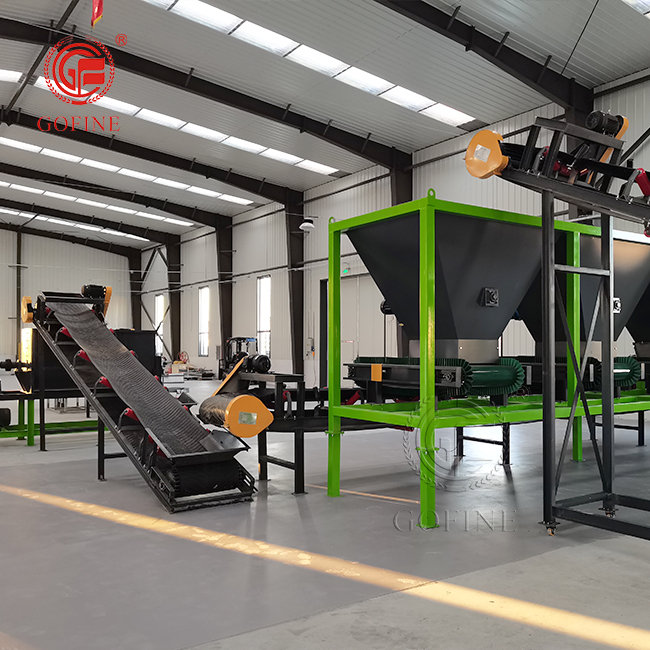
In recent years, sustainable agriculture has gained significant attention as farmers and agricultural producers seek to minimize their environmental impact while improving productivity. One of the most effective tools for achieving sustainability in farming is the use of Compost Fertilizer Machines. These machines play a crucial role in converting organic waste into valuable compost, which can enhance soil health, reduce the need for chemical fertilizers, and improve the overall sustainability of farming practices.
In this article, we will explore the numerous benefits of Compost Fertilizer Machines for sustainable agriculture. From reducing waste and improving soil quality to promoting environmentally friendly farming practices, these machines are at the forefront of a greener, more efficient agricultural future.
What are Compost Fertilizer Machines?
Compost Fertilizer Machines are specialized equipment designed to speed up the process of composting organic waste. These machines use advanced technology to facilitate the decomposition of organic materials, such as food scraps, manure, crop residues, and other biodegradable materials, turning them into nutrient-rich compost. The compost produced by these machines can be used as a natural fertilizer to improve soil quality, promote plant growth, and enhance agricultural productivity.
Composting itself is the natural process by which microorganisms break down organic matter into simpler compounds. However, traditional composting methods can be slow and require significant labor. Compost Fertilizer Machines automate this process, increasing efficiency, reducing labor, and improving the quality of the final compost product.
The Role of Compost in Sustainable Agriculture
Before we delve into the specific benefits of Compost Fertilizer Machines, it's important to understand the role of compost in sustainable agriculture. Compost is an organic material that improves soil structure, increases soil fertility, and supports the healthy growth of crops. Here are some of the ways compost contributes to sustainable farming:
Soil Health: Compost helps to restore the natural balance of soil by adding essential nutrients and improving its ability to retain water and nutrients.
Reduced Chemical Use: By enriching the soil with organic matter, compost reduces the need for chemical fertilizers, which can be harmful to the environment.
Waste Recycling: Composting organic waste, such as crop residues, food scraps, and animal manure, helps reduce landfill waste and lowers carbon emissions.
Now, let’s examine the specific advantages of Compost Fertilizer Machines in promoting sustainable agriculture.
Benefits of Compost Fertilizer Machines
1. Enhanced Soil Fertility and Plant Growth
One of the primary benefits of Compost Fertilizer Machines is their ability to produce high-quality compost, which significantly enhances soil fertility. The compost produced by these machines is rich in essential nutrients like nitrogen, phosphorus, and potassium, as well as micronutrients that are vital for plant growth.
By adding compost to the soil, farmers can:
Improve soil structure and increase its capacity to retain water.
Enhance microbial activity in the soil, leading to healthier plant roots.
Provide a steady release of nutrients to plants, improving crop yields.
In turn, this leads to healthier plants, increased crop production, and better overall agricultural productivity.
2. Reduction of Chemical Fertilizer Usage
The excessive use of chemical fertilizers has long been a concern in conventional agriculture due to its environmental impact, including soil degradation, water pollution, and greenhouse gas emissions. Compost Fertilizer Machines offer a sustainable alternative by reducing the need for synthetic fertilizers.
Here’s how:
Compost provides a natural source of nutrients for plants, reducing dependency on chemical fertilizers.
By incorporating compost into the soil, farmers can improve nutrient cycling and reduce the risk of nutrient runoff into nearby water bodies.
Compost can help neutralize soil pH, making the soil less acidic and reducing the need for lime or other chemical soil amendments.
By relying more on organic compost, farmers can reduce their environmental footprint and promote long-term soil health.
3. Waste Reduction and Resource Recycling
Composting is one of the best ways to recycle organic waste, which would otherwise end up in landfills. Compost Fertilizer Machines allow farmers to transform agricultural waste, food scraps, and other biodegradable materials into valuable compost, closing the loop on waste management.
Key benefits of waste recycling through composting:
Reduces the amount of organic waste that contributes to methane emissions in landfills.
Helps decrease the need for synthetic fertilizers, which are often derived from non-renewable resources.
Reduces transportation costs and emissions associated with waste disposal and the purchase of synthetic fertilizers.
By using Compost Fertilizer Machines, farmers can contribute to a circular economy where waste is turned into a valuable resource.
4. Time and Labor Efficiency
Traditional composting methods can be labor-intensive and time-consuming, requiring frequent turning, monitoring, and maintenance. Compost Fertilizer Machines automate much of the process, making it faster and more efficient.
The key benefits of automation include:
Faster Decomposition: Compost Fertilizer Machines speed up the decomposition process, allowing farmers to produce compost in a shorter time frame, sometimes within a few weeks.
Reduced Labor: The automation of tasks such as mixing, aeration, and moisture control reduces the need for manual labor, cutting costs and improving productivity.
Consistency: Machines provide consistent conditions for composting, ensuring uniform quality and nutrient content in the final product.
This time and labor savings can be particularly beneficial for large-scale farms and commercial composting operations, where efficiency is crucial.
5. Improved Soil Structure and Water Retention
Soil structure plays a crucial role in determining how well plants grow. Compost Fertilizer Machines contribute to improving soil structure by adding organic matter, which helps to:
Improve soil aeration and drainage, preventing waterlogging.
Increase soil’s water-holding capacity, which is especially valuable in dry or drought-prone areas.
Enhance root development and nutrient uptake, promoting healthier plants.
These improvements are vital for sustainable farming, particularly in regions facing water scarcity or soil degradation.
6. Reduced Carbon Footprint
By using Compost Fertilizer Machines to process organic waste locally, farmers can reduce their carbon footprint in multiple ways:
Less Transportation: Local composting reduces the need to transport organic waste to landfills, cutting down on carbon emissions from transportation.
Lower Fertilizer Production Emissions: Synthetic fertilizers require significant energy inputs for production, which contributes to greenhouse gas emissions. By reducing reliance on chemical fertilizers, farmers can lower their overall carbon emissions.
Methane Reduction: Composting organic waste instead of sending it to landfills helps reduce the production of methane, a potent greenhouse gas, in landfills.
Sustainable agriculture is about minimizing the environmental impact of farming, and Compost Fertilizer Machines help achieve this goal by reducing waste and promoting eco-friendly practices.
7. Customization for Different Types of Organic Waste
Another advantage of Compost Fertilizer Machines is their ability to handle various types of organic waste, from agricultural residues to food scraps and animal manure. These machines can be customized to suit different waste materials, allowing farmers to process a wide range of organic materials into valuable compost.
For example:
This flexibility makes Compost Fertilizer Machines an essential tool for farms and composting operations that handle diverse organic waste streams.
Conclusion
The use of Compost Fertilizer Machines offers numerous benefits for sustainable agriculture. By accelerating the composting process, these machines help farmers reduce their reliance on chemical fertilizers, improve soil health, and recycle organic waste into valuable compost. They contribute to a more efficient, cost-effective, and environmentally friendly farming system that benefits both farmers and the planet.
At Zhengzhou Gofine Machine Equipment Co., Ltd., we specialize in providing high-quality Compost Fertilizer Machines that support sustainable farming practices. Our machines are designed to help you improve soil fertility, reduce waste, and enhance the efficiency of your agricultural operations. Contact us today to learn more about how our products can benefit your farm and contribute to a more sustainable agricultural future.
FAQs
1. How long does it take to produce compost using a compost fertilizer machine?
The process can take anywhere from a few weeks to a few months, depending on the type of machine and the materials being composted.
2. Can compost fertilizer machines handle all types of organic waste?
Yes, most Compost Fertilizer Machines can process a wide range of organic waste, including agricultural residues, food scraps, and animal manure.
3. Are compost fertilizer machines environmentally friendly?
Yes, Compost Fertilizer Machines promote environmentally friendly practices by reducing waste, lowering carbon emissions, and minimizing the need for chemical fertilizers.


