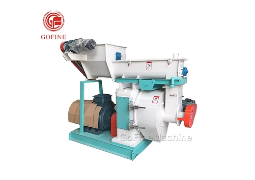
The global demand for chemical fertilizers continues to rise as agriculture plays a crucial role in ensuring food security for a growing population. Chemical fertilizers are essential in modern farming, providing key nutrients like nitrogen (N), phosphorus (P), and potassium (K) to improve crop yield and quality. Behind the production of these fertilizers is a complex system of machinery designed to efficiently process raw materials into usable products. The role of chemical fertilizer machine manufacturers is crucial, as they develop and produce the equipment needed to produce high-quality fertilizers.
As we look toward 2025, technological advancements in the fertilizer manufacturing industry will shape the future of the industry, leading to more efficient, sustainable, and environmentally friendly processes. This article will explore the key technologies that are expected to dominate the fertilizer machine manufacturing sector in 2025, focusing on innovations in automation, sustainability, energy efficiency, and machine performance.
The Role of Chemical Fertilizer Machines in Modern Agriculture
Before diving into the technological advancements of the future, it's important to understand the role of chemical fertilizer machines in the agricultural industry. Chemical fertilizers are produced by combining raw materials that supply the essential nutrients required for plant growth.
Fertilizer machines are used to process raw materials, blend them, and form them into the final product—whether that be granular, powdery, or liquid fertilizers. The manufacturing process involves multiple steps, such as:
Raw Material Processing: Raw materials like ammonium nitrate, urea, and phosphates are processed and mixed.
Granulation: This is where the raw materials are formed into small, uniform granules.
Drying: The fertilizers are dried to reduce moisture content and enhance stability.
Coating: Some fertilizers are coated to release nutrients gradually, improving their effectiveness over time.
Packaging: Finally, the fertilizers are packaged in convenient forms for distribution.
To ensure that fertilizers are made efficiently, safely, and at high quality, the machinery used in each step of production is highly specialized. The developments in these machines directly impact the effectiveness, cost-efficiency, and sustainability of fertilizer production.
Key Technologies in Chemical Fertilizer Machines for 2025
1. Automation and Smart Manufacturing
As industries continue to embrace Industry 4.0, automation is expected to be a dominant technology in fertilizer machine manufacturing by 2025. Automation in fertilizer production machines involves the use of intelligent systems, such as artificial intelligence (AI), machine learning, and robotics, to enhance the efficiency of operations.
Benefits of Automation:
Improved Efficiency: Automated systems can control the machinery precisely, reducing downtime and increasing throughput.
Consistency and Precision: Automation ensures that every batch of fertilizer is produced with consistent quality and composition, leading to uniform product output.
Real-Time Monitoring and Control: Sensors and AI-powered algorithms can continuously monitor production parameters, such as temperature, pressure, and material quality, ensuring that the machines are operating at optimal performance.
Reduced Labor Costs: With machines performing the majority of the work, human labor can be redirected to other tasks, improving overall productivity.
Future Trends in Automation:
Robotic Process Automation (RPA): Robots will be deployed in various stages of fertilizer production, such as material handling, packaging, and quality control, minimizing human intervention and enhancing precision.
Predictive Maintenance: AI will be used to predict machine failures before they happen, reducing the likelihood of downtime and extending the lifespan of equipment.
Smart Sensors: These sensors will enable real-time monitoring of raw material flow, granulation, and energy consumption, providing data to optimize production processes.
2. Energy Efficiency and Sustainability
In recent years, there has been increasing pressure on industries to adopt more sustainable practices. The fertilizer production industry, in particular, has been scrutinized for its environmental impact, with energy consumption, carbon emissions, and waste being significant concerns.
By 2025, energy-efficient machines will be standard in fertilizer manufacturing. Advances in technology will reduce energy consumption and the carbon footprint of fertilizer production.
Key Technologies for Sustainability:
Energy Recovery Systems: These systems will capture and reuse excess energy from the manufacturing process, improving overall energy efficiency. For example, waste heat recovery systems can be used to generate power or provide heating for other parts of the process.
Green Manufacturing Techniques: Machines that use bio-based feedstocks, renewable energy, and low-impact chemicals will become more common in the production of fertilizers. These green processes minimize the carbon footprint of fertilizer production.
Reduced Waste: New equipment and processes will focus on reducing the waste generated during production. Machines designed to handle recycled materials or to optimize the material conversion rate will be important for minimizing waste.
Innovations in Energy Efficiency:
High-Efficiency Motors and Drives: Fertilizer machines will use variable frequency drives (VFDs) and high-efficiency motors to reduce power consumption during operation.
Automation in Energy Management: Smart systems will automatically adjust energy usage based on production demand, ensuring that machines consume only the energy they need.
3. Advanced Granulation and Coating Technologies
Granulation is a critical step in the production of NPK fertilizers and other compound fertilizers. Traditional granulation methods, such as drum granulators, have been effective but require large amounts of energy and water. However, by 2025, the granulation process will become more energy-efficient and environmentally friendly.
Key Developments in Granulation:
Dry Granulation: This process involves compressing dry materials without the addition of water. This method uses less energy and water than wet granulation methods and results in fertilizers that have better storage stability.
Roller Compaction Granulation: In this method, raw materials are compacted using rollers, forming granules that are uniform in size and density. This technique is more efficient and results in fewer fines, leading to less waste.
Low-Energy Granulation: The development of new granulating technologies will reduce the energy required for forming granules. These methods will rely on compression rather than high temperatures, resulting in lower energy consumption.
Granulation Technology Trends:
Customized Granule Coatings: Fertilizers with slow-release or controlled-release properties are gaining popularity. The technology to coat granules with polymer films or other materials that control the release of nutrients will become more advanced.
Multi-Stage Granulators: To improve efficiency, multi-stage granulation systems will allow for continuous mixing, granulation, and drying in one machine, reducing the overall energy consumption.
4. Robust Quality Control and Testing Systems
Quality control is critical in fertilizer production to ensure that each batch meets the desired specifications. In the coming years, the integration of real-time monitoring systems and advanced testing technologies will allow for higher accuracy and efficiency in the quality control process.
Key Developments in Quality Control:
In-Line Testing Systems: Real-time sensors will be used to measure the quality of the fertilizer at various stages of production. These systems can check for consistency in nutrient composition, particle size, and moisture content without interrupting the production process.
Spectroscopic Technologies: Spectroscopic methods, such as Near-Infrared (NIR) Spectroscopy or X-ray fluorescence (XRF), will be used to rapidly analyze the chemical composition of fertilizers as they are produced. This reduces the need for manual sampling and lab testing.
Automated Sampling and Sorting: Machines will be equipped with automated sampling systems to collect samples for quality analysis and sorting. This will minimize human error and ensure uniform product quality.
5. Integration with Digital Technologies
As digitalization continues to transform industries, fertilizer machine manufacturers are increasingly incorporating digital technologies into their machines to improve efficiency and monitoring. By 2025, the integration of these technologies will become commonplace in fertilizer production.
Key Digital Technologies:
Internet of Things (IoT): IoT technology will allow machines to be connected to a central system, enabling remote monitoring and data collection. This will help operators track performance, predict maintenance needs, and optimize production.
Big Data and AI: Data collected from machines will be analyzed using AI algorithms to optimize production schedules, predict future demand, and reduce energy consumption. Big data will help manufacturers make data-driven decisions to improve efficiency.
Cloud-Based Control Systems: Cloud computing will be used to store and analyze data from production lines. These systems will allow manufacturers to track performance remotely, monitor inventory, and manage multiple production sites in real-time.
6. Modular and Flexible Machine Designs
In the fast-evolving fertilizer production industry, manufacturers are increasingly seeking flexible and modular machine designs that can adapt to changing demands. Fertilizer production needs can fluctuate depending on crop cycles, regional requirements, and environmental factors, so machines must be adaptable to handle various materials and production scales.
Modular Systems:
Customizable Modules: Modular designs allow manufacturers to customize their machines for different production scales and formulations. For instance, a basic unit can be upgraded with additional granulators, mixers, or dryers as production demands grow.
Easier Maintenance and Repair: Modular systems can also simplify maintenance, as individual components can be easily replaced or serviced without affecting the entire machine.
Conclusion
The fertilizer manufacturing industry is undergoing significant technological advancements, with innovations in automation, energy efficiency, granulation, and digitalization expected to shape the landscape of chemical fertilizer machine manufacturing in 2025. As the demand for fertilizers continues to grow, manufacturers must adapt to new technologies that improve production efficiency, reduce environmental impact, and enhance the quality of the final product.
The key technologies highlighted in this article, such as automation, energy-efficient systems, advanced granulation techniques, and digital technologies, will ensure that the fertilizer industry remains competitive and sustainable in the coming years. By embracing these innovations, fertilizer manufacturers can meet the growing demand for fertilizers while improving their operational efficiency and reducing their environmental footprint.
For those looking to invest in advanced fertilizer production equipment, it is important to choose a manufacturer that is at the forefront of these technological advancements. Zhengzhou Gofine Machine Equipment Co., Ltd. is one such manufacturer offering cutting-edge machinery designed to meet the needs of the modern fertilizer production industry. Their equipment is built with advanced technology, ensuring high performance, energy efficiency, and durability.


