Unpredictable nutrient release constantly wastes money across agricultural operations. Reapplying treatments drains limited labor hours. Worse, sudden nutrient flushes can severely burn valuable crops and pristine turf. You need predictable, reliable results. Longevity is not just a basic agronomic timeline. It drives critical ROI for commercial growers, professional landscapers, and fertilizer manufacturers. Every wasted pellet eats directly into your profit margins.
Base timelines absolutely exist. However, true longevity depends heavily on the specific soil environment and chemical formulation. The physical manufacturing quality of the granule itself also plays a massive role. In this guide, we will explore exactly how long these products last. You will discover how climate and soil type alter breakdown speeds. We also reveal how production quality dictates slow-release performance. Finally, we provide actionable steps to maximize application success and avoid costly equipment mistakes.
Key Takeaways
Standard Longevity Matrix: Granular fertilizers typically remain active in soil for 4 to 36 weeks, depending on formulation (organic vs. inorganic) and slow-release coatings.
Environmental Variables: Soil composition (sand vs. clay) and climate (temperature/rainfall) can alter breakdown speeds by up to 20%.
Shelf Life Differentiator: Pure mineral granular fertilizers have an indefinite shelf life if kept dry, but formulas with Active Ingredients (e.g., herbicides) degrade within 1–4 years.
Production Quality Matters: The uniform density and coating achieved by a professional-grade fertilizer granulator machine directly determine the predictability of nutrient release.
How Long Different Fertilizers Stay in Soil: The Baseline
Understanding baseline timelines helps you plan application schedules accurately. Different physical forms and chemical structures behave uniquely underground. We must distinguish between liquid flushes and slow-release solid applications. We also need to separate organic biological processes from synthetic chemical releases.
Granular vs. Liquid Breakdown
Physical form dictates the initial delivery speed. Liquids provide an immediate, powerful feeding. Plants absorb them quickly through leaves and shallow roots. However, liquids flush through the soil rapidly. They only last one to two weeks before total depletion. Heavy rainfall can leach them out even faster.
Conversely, a granular fertilizer sustains nutrient delivery over a much longer horizon. A standard application lasts anywhere from four weeks to nine months. You will typically see the physical pellets dissolve over 24 to 48 hours after heavy watering. The dissolved nutrients then bind to soil particles. They feed the root system slowly and consistently.
Organic vs. Inorganic Granules
Chemical composition changes the release mechanism entirely. Organic options rely heavily on biological activity. Fungi and bacteria must digest the organic matter first. They then excrete usable nutrients for the plants. This natural digestion takes time. Organic granules often take up to six weeks just to fully break down. Once active, they stay effective for several months.
Inorganic synthetic granules use engineered chemistry. Manufacturers coat pure chemical salts in specialized polymers or sulfur. These coatings meter out specific NPK ratios predictably. A classic 46-0-0 urea application releases nitrogen steadily over two to five months. The water penetrates the polymer shell slowly, dissolving the core element by element.
Fertilizer Type | Physical Form | Initial Activation Time | Average Soil Longevity |
Synthetic Liquid | Liquid | Immediate (0-24 hours) | 1 to 2 weeks |
Synthetic Granular | Solid Pellet | 24 to 48 hours | 8 to 20 weeks (2-5 months) |
Organic Liquid | Liquid | Immediate (0-24 hours) | 2 to 4 weeks |
Organic Granular | Solid Pellet | 2 to 6 weeks | 12 to 36 weeks (3-9 months) |
Core Variables Influencing Dissolution and Longevity
Baseline timelines offer a helpful starting point. Real-world conditions often alter these expectations drastically. The physical environment directly accelerates or delays nutrient release. You must adjust your expectations based on your specific location and field conditions.
Soil Physical Characteristics
Soil texture acts as a natural sponge or a natural sieve. It dictates how long dissolved minerals stay in the root zone.
Sandy Soil: Large sand particles create massive air gaps. Water drains straight through them. This fast drainage limits overall longevity to roughly three months. Nutrients wash away quickly before roots can grab them.
Clay Soil: Microscopic clay particles pack tightly together. Clay holds onto water stubbornly. It also carries a negative electrical charge. This charge attracts positively charged nutrient ions. High retention extends efficacy up to six months.
Climate and Irrigation
Weather patterns control the physical triggers for dissolution. Temperature and moisture act as the primary catalysts.
Temperature: Extreme heat accelerates microbial breakdown significantly. Warm soils digest organic matter faster. Heat also degrades synthetic polymer coatings more rapidly. High temperatures typically speed up nutrient release by roughly 20 percent.
Moisture: Water physically melts the pellet. Drought conditions completely halt dissolution. Pellets simply sit dormant on dry dirt. Conversely, excessive rainfall creates flooding. Moving water risks washing away poorly manufactured products entirely.
Physical Application Barriers
Sometimes the fertilizer dissolves properly but never reaches the roots. You might assume the application failed. In reality, physical barriers blocked the nutrients.
Thatch Buildup: Dead grass and organic debris form a dense mat above the soil. Dissolved liquid pools in this thatch layer instead of sinking into the dirt.
Severe Soil Compaction: Heavy foot traffic presses dirt into a brick-like surface. Water cannot penetrate compacted ground. Nutrients simply run off into nearby drains or pathways.
Troubleshooting and Shelf Life: Does Granular Fertilizer Go Bad?
Users constantly ask if leftover inventory remains viable for the next season. The answer depends on storage conditions and chemical ingredients. You can usually salvage old products if you understand how to test them.
Action-Oriented Viability Test
You can easily check product health using a physical test. Grab a random pellet from your storage bag. Place it on concrete. Press down firmly using your thumb or a heavy tool. Observe the breakdown pattern carefully. If the pellet shatters into dry dust, it remains perfectly viable. If it flattens into a mushy, wet paste, moisture has compromised the structure. You cannot spread mushy pellets evenly. They will jam your equipment.
Clumping vs. Degradation
Do not confuse clumping with chemical degradation. High ambient humidity often turns soft bags into hard bricks. The outer pellets absorb trace moisture and fuse together. This physical bonding does not ruin the internal nutrient value. You can simply lift the hardened bag and drop it repeatedly on a hard surface. The impact shatters the temporary bonds. You can then use the broken-up material safely and effectively.
The "Active Ingredient" Rule
Different rules apply to different chemical formulas. Pure mineral NPK products contain no organic biologicals. Elements like nitrogen and phosphorus do not expire. They boast an indefinite shelf life if kept perfectly dry. However, dual-action products behave differently. "Weed and feed" bags contain unstable pesticides or herbicides. These Active Ingredients degrade chemically over time. They typically lose all weed-killing efficacy within one to four years. Always check the manufacturing date on dual-action products.
How Manufacturing Quality Dictates Slow-Release Performance
Agronomy only explains half the longevity equation. The physical engineering of the pellet controls the other half. Poorly made spheres dissolve erratically. Perfectly engineered spheres release nutrients like clockwork. Manufacturers must focus heavily on production equipment to guarantee results.
The Physics of Granulation
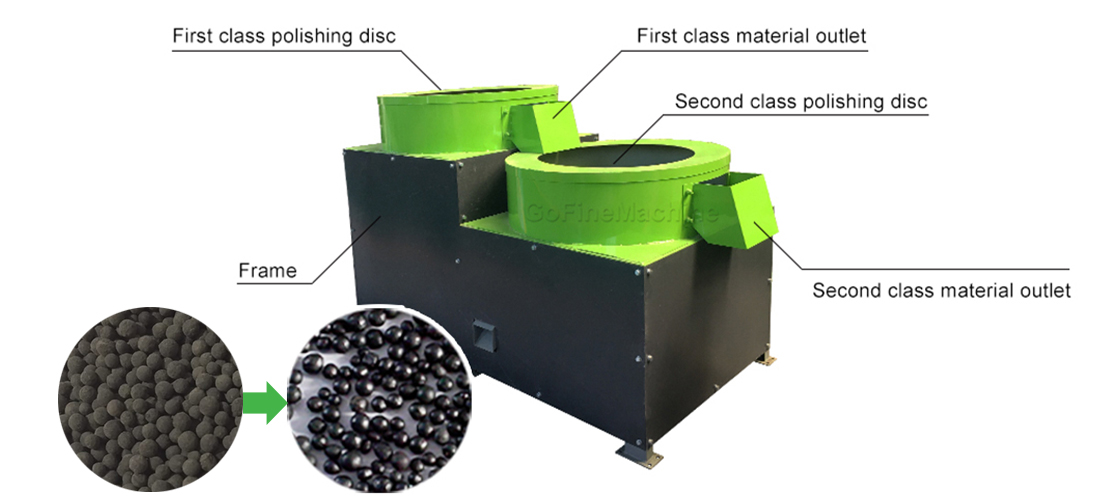
A fertilizer pellet is a tiny feat of engineering. Compression forces, size uniformity, and spherical integrity dictate its behavior. A highly compressed pellet resists water intrusion. It slowly melts away layer by layer over several months. A loosely packed pellet absorbs water instantly. It bursts open, dumping all its nitrogen at once. This sudden flush burns delicate plant roots. Smooth, round spheres also flow better. They roll through spreader hoppers evenly. Jagged, uneven chunks bind together and cause mechanical jams.
The Role of a Fertilizer Granulator Machine
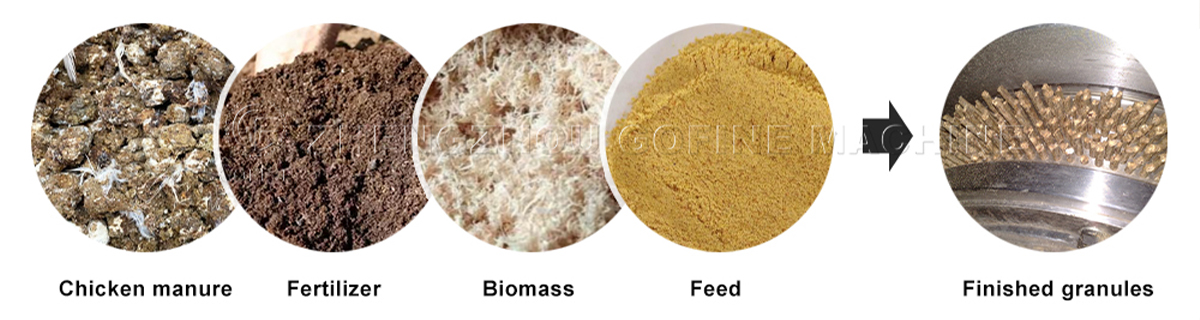
Commercial-grade equipment controls this vital density and porosity. A premium Fertilizer Granulator Machine applies exact mechanical pressure. It binds raw powders into perfectly uniform spheres. Subpar equipment fails to compress the materials adequately. Weak compression leads to massive "dusting" during transport. When farmers apply dusty fertilizer, the powder dissolves instantly in the morning dew. This creates an immediate, unintended nutrient flush. It ruins the slow-release strategy entirely.
TCO & ROI Driver
High-quality manufacturing drives massive return on investment. Consistently sized spheres reduce machine calibration errors. Operators set their spreaders once. The uniform pellets fall exactly where intended. This eliminates wasteful overlapping. It prevents patchy, under-fed crop zones. Reliable slow-release performance also lowers the frequency of re-application. Farmers buy less material. They spend less money on diesel and labor. Predictable longevity transforms fertilizer from a volatile expense into a controlled asset.
Shortlisting a Fertilizer Equipment Supplier for Commercial Production
Producers must source reliable machinery to achieve this level of quality. Upgrading your production line requires careful vendor evaluation. A bad machine purchase haunts a facility for decades.
Scalability and Yield
You must evaluate machines based on absolute tons-per-hour output. Small operations might survive using low-yield pans. Commercial facilities require massive rotary drums or heavy-duty extrusion presses. You also need material flexibility. A good machine handles various raw inputs smoothly. It should process wet organic compost just as easily as dry chemical urea. Verify these production benchmarks before signing any purchase orders.
Engineering and Compliance
Regulatory compliance protects your workforce and your business license. Processing dry chemicals generates severe airborne hazards. Ensure your chosen fertilizer equipment supplier provides robust dust-control systems. Enclosed machinery prevents respiratory dangers. Furthermore, the equipment must produce industry-standard sizes. Agricultural markets demand specific diameters, typically between 2mm and 4mm. Oversized chunks fail to spread. Undersized dust blows away in the wind.
Implementation Risks to Avoid
Avoid buying equipment based purely on today's production volume. Under-sizing machinery destroys future growth potential. You will bottleneck your facility when demand spikes. Also, never choose vendors lacking post-installation support. Heavy machinery inevitably suffers wear and tear. Belts snap. Bearings fail. You need a partner offering immediate troubleshooting and rapid parts replacement. A cheap machine becomes incredibly expensive when it sits broken for a month.
Conclusion
Granular fertilizer lasts exactly as long as its environment and manufacturing quality allow. Soil drainage, seasonal temperatures, and moisture levels constantly shift the timeline. Additionally, the physical density achieved during the granulation process controls how water interacts with the nutrients.
Audit your soil: Adjust your application frequency based on your local soil type. Feed sandy soils more frequently in smaller doses.
Test old bags: Always perform the crush test on stored products before discarding them. Crush clumps rather than wasting viable material.
Evaluate machinery: Large-scale operators must audit current granulation equipment regularly. Ensure your machines output uniform, dense spheres.
Protect your investment: Keep all dry inputs sealed away from ambient humidity. Properly stored pure minerals will last indefinitely.
FAQ
Q: How long does it take for granular fertilizer to dissolve?
A: It typically takes 24 to 48 hours for pellets to physically disappear from the surface. This timeline assumes you provide adequate irrigation immediately after application. Without sufficient watering, the pellets will remain intact on top of the soil for much longer.
Q: Why is my granular fertilizer not dissolving?
A: Pellets fail to dissolve usually due to a lack of deep watering. Cold temperatures can also initiate dormancy, preventing chemical breakdown. Severe soil compaction or heavy thatch buildup physically blocks the dissolved liquid from sinking into the ground.
Q: How often should I apply slow-release granular fertilizer?
A: You should apply it every 4 to 6 weeks for fast-draining sandy soils. For heavy clay or high-organic soils that retain nutrients well, you can stretch applications to every 3 to 4 months.
Q: Can I use granular fertilizer that got wet?
A: No. If moisture has degraded the pellets into a wet paste, you must discard them. Mushy fertilizer is impossible to spread evenly through a hopper. Clumping wet paste in one spot will cause severe nutrient burn.


